Introduction
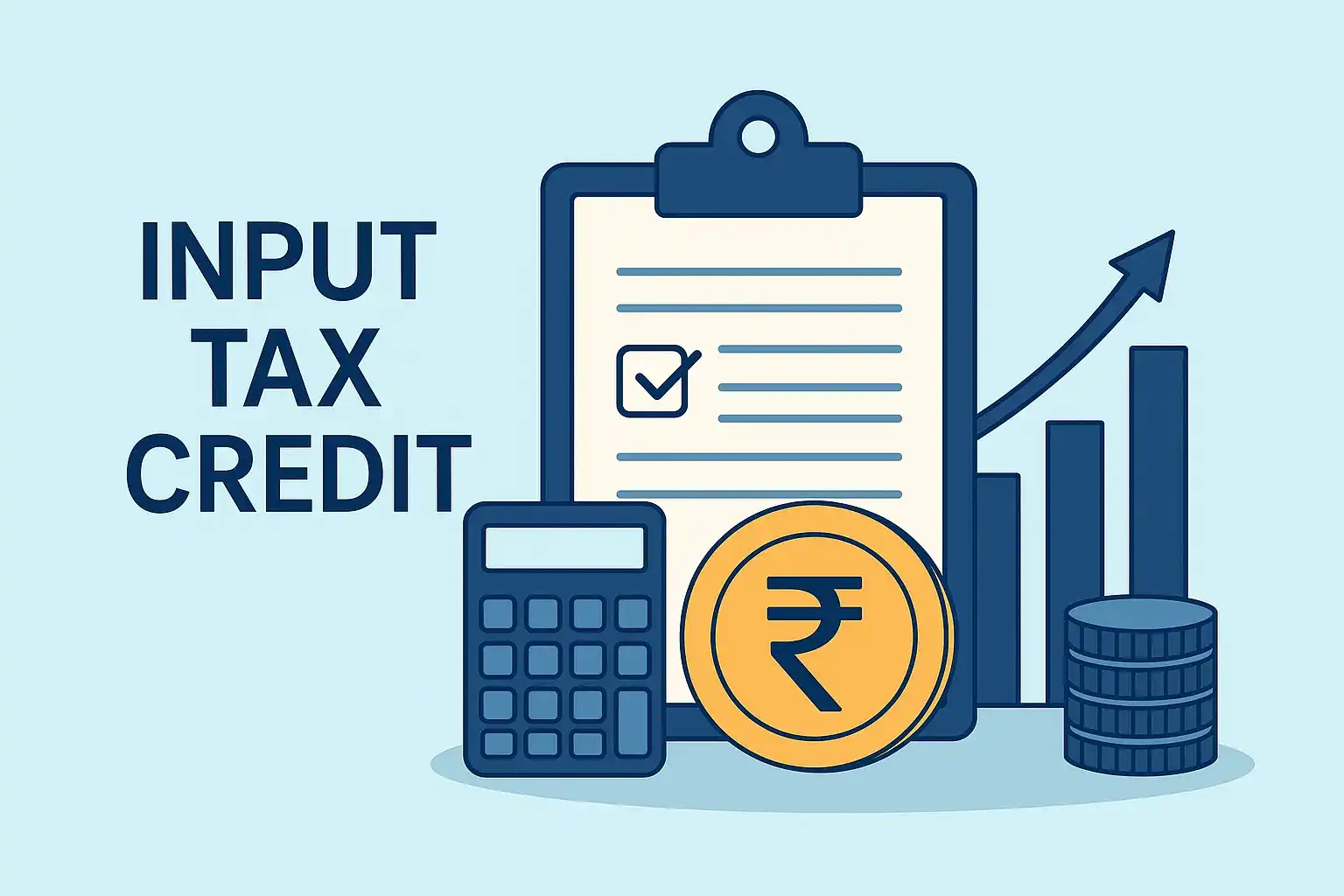
What is ITC under the Goods and Service Tax (GST India)? Our guide provides an in-depth understanding in simple language. By enabling businesses to claim credit for the taxes it has already paid on purchases, it aids in minimizing a business’s tax liability. Without ITC, businesses would end up paying tax on their costs once more, and there would be a cascading effect. Correct ITC claim for small and medium businesses translates to lesser working capital pressure, better cash flow and seamless compliance. But, ITC provisions have certain eligibility conditions, restrictions and documentation requirements. Understanding these can save businesses from notices, reversals and penalties. This guide explains what ITC is, who can claim it and when it cannot be claimed along with practical examples that will help you in understanding the concept.
What Is Input Tax Credit, And Why It Matters
Input Tax Credit enables the businesses to deduct the tax paid on inputs from that they owe to on output. For instance, if a company or business pays GST on raw materials or services, it can subtract that from the goods and services taxes it collects while selling. It’s just that because of this, you’re taxed multiple times but only on the value added at each step not the entire price. This eliminates double taxation and lowers the burden of taxation. For most businesses, ITC is the same as cash savings. As GST is supposed to work as a continuous credit chain, any break in ITC leads to loss of funds. This therefore means that it is very important to understand ITC rules.
Eligibility Criteria for Claiming ITC
There are certain conditions to be satisfied for claiming ITC. There are two conditions which you must suffice for to avail input tax credit on purchase of car being first the taxpayer should be a GST registered merchant. ITC cannot be availed without a valid GST registration. Items or services bought has to be used for business and may not be solely personal. The supplier from whom the purchase is made has to have uploaded invoice in his GSTR-1 such that it exists in recipient’s GSTR-2B. This reflection does not exist – it is a precondition for ITC eligibility.
The taxpayer needs to hold an appropriate tax invoice, debit note or other required document from the supplier. You must have taken delivery, physically, of the goods or services. Payment of the supplier should be released from 180 days, other case ITC to get reversed till payment was made. The business need to file GST returns on a regular basis as ITC cannot be availed, if the return is not filed. These terms are to protect the legitimacy and authenticity of the ITC program.
General Restrictions of Availmemnt of ITC
It has many advantages, but not all costs are eligible for ITC. There are certain restricted items which have been clearly defined in the law for ITC that is not available. One of the largest limitations is personal use. Where GST paid on goods or services are used partly/fully for personal purposes, ITC shall not be available to that extent. Secondly, ITC is not available in respect of motor vehicles designed for personal travel or transportation of passengers on such motor vehicles (unless the business itself is engaged in rendering services in relation to such motor vehicles – most likely cabs and taxis).
ITC is denied for lost, stolen or destroyed goods too. If goods are damaged, written off or distributed as free samples the ITC has to be reversed. Another limitation is expenses on employees welfare including club dues, personal insurance or entertainment etc. ITC is also barred on works contracts used for immovable property except where the business provides works contract services. These limitations restrain the credit allocation when certain acquisitions do not truly contribute for the output of the business.
Significance of correct Reconciliation in Landmark ITC Case
ITC rests heavily on the compliance from vendors. Although the business buys goods, paying GST to its supplier, but it can’t claim ITC until and unless the supplier files GSTR-1 accurately. That is why it becomes important to reconcile purchase record with gstr-2b on monthly basis. Any of those can cause ITC to be blocked, reversed or delayed. There are many companies that have problems with suppliers not loading invoices, loading incorrect information. Regular follow-ups with vendors and picking GST-compliant vendors minimises gaps of such nature.
Correct reconciliation is also a straightforward way to detect duplicate claims, missing invoices and invalid items. As GST audits and departmental checking carries a lot of weightage for ITC accuracy, it’s important for businesses to consider ITC tracking seriously. Keeping proper records and checking the bills help me in ITC claims being free of errors with adequate documentation.
Examples for the better understanding of ITC
To simplify ITC further, let us take the example of a small manufacturing company that purchases raw materials worth ₹2,00,000 with 18 percent GST. The company’s input tax is worth ₹36,000 GST. The company collects ₹50,000 GST from customers when it sells its finished goods. It can take ITC of ₹36,000 against the full ₹50,000 it owes to government. That is so the company has to shell out only ₹14,000. Without ITC, the full amount of ₹50,000 would have had to be paid and that would have rendered a lot of pain in terms of cash flows.
A marketing firm that buys laptops for the office is another example. The GST paid on laptops as they are used only for business, is available as an ITC. But if it gifts a laptop to either an employee or a client, the ITC received on that laptop needs to be reversed since the same does not bring in any business output.)
A restaurant can avail ITC on equipment for the kitchen but it cannot be availed on food items, which are provided as free meals to staff members. A construction company can avail ITC on cement and steel used in building the assets of a client but cannot claim it for making an office building for its use. Two examples illustrating how ITC works in practice and the importance of knowing eligible versus ineligible items.
Conclusion
Input Tax Credit is a robust mechanism which enables businesses to avoid the burden of double taxation and ensures good health to their finances. But ITC is not a free for all, if claimed correctly. Understanding eligibility rules, limitations and practical application protects businesses against mistakes, reversals and penalties. Routine reconciliation, neat documentation and contracting with compliant vendors are key factors for frictionless ITC claiming. Adequate understanding and attention to detail can enable businesses to make the best use of ITC benefits at their disposal, while maintaining robust GST compliance all year long.