How Employee Salary Should Be Structured To Avail Maximum In Hand & Minimum Tax Benefits
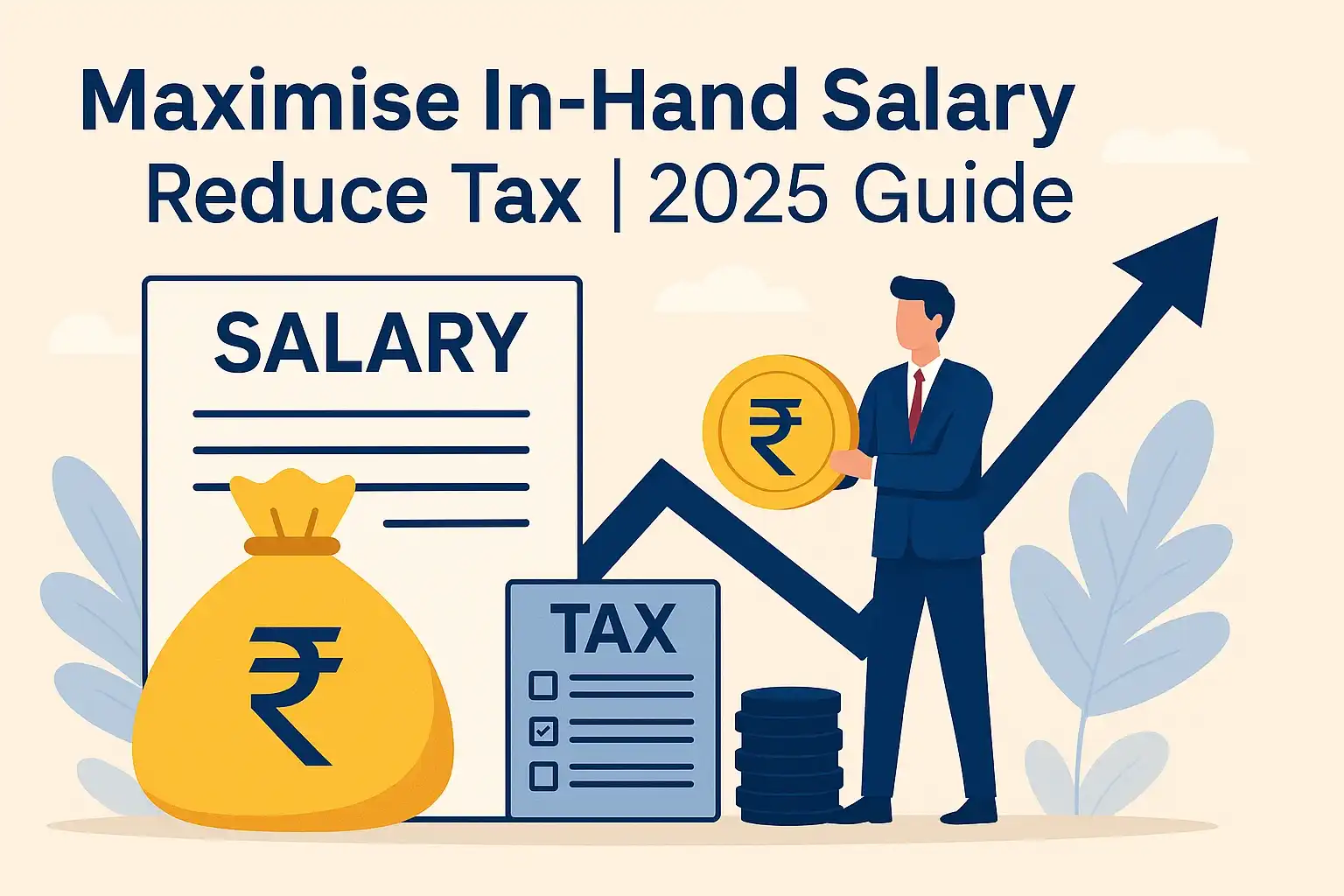
Employee Pay structure is one of a decision maker on your Average In-hand salary Employee gets at the end of each month. The primary beneficiaries of maximising the salary structure are both, the employers and employees hence better tax savings, higher take-home pay and enhanced financial planning. In India, the Income Tax Act provides for multiple exemptions and deductions, which can be availed to reduce your tax liability legitimately. The knack lies in breaking up the salary in a way that ensures the maximum take home pay, while staying within the bounds of law.
Not only is a well-articulated pay structure good for employees, it portrays companies as being employee-friendly. By providing a tax efficient bundle, companies are able to attract better talent and in turn keep their employees. They’re aiming for just the right blend of fixed, allowances, reimbursements, and post-retirement awards that ensures compliance and happy employees.
Know your Salary Components Basics
Salaryhas several different aspects, each with its own tax implications. While Basic Salary, DA and Bonus are fully taxable; many allowances and reimbursements may be either partially exempt or fully tax free. Basic Salary is the basis for several other allowances like HRA, PF contribution and gratuity. It is important to keep the basic salary at an ideal percentage of the CTC as while a higher basic, will increase your taxable income but surely when it is too low, it can attract compliance risks or may lead to lesser retirement benefits.
Components such as HRA, LTA, Special Allowance and Conveyance Allowance can assist an employee in effective tax planning when structured properly. Reimbursements of other kinds such as telephone bills, fuel and city travel/national newspapers are also great tools for tax optimisation since these also form part of the exemption when supported by actual bills. Other benefits Some of the other perks and employer contribution going to PF or NPS are long-term benefits that give you financial security plus comes with a tax advantage.
Maximise Basic Salary for Top Up of Tax and Benefits
The Basic Salary should be 30%-40% of the CTC for most roles. A high basic salary leads to higher taxable income, and hence lower in-hand retention. On the flip side, an abysfully low basic have implications on PF contribution, gratuity and eligibility for specific financial tools such as home loans. Getting the mix right provides predictable benefits and manageable tax liabilities.
PF contribution is linked with Basic Salary and companies can structure it smartly. Compulsory PF deduction is 12% of basic pay. It would also offer flexibility to employees in the sense that those looking for high in-hand income can go with PF on statutory limits, while people who require a big retirement corpus could opt for higher PF contributions voluntarily. The employers can also chip in the employee’s NPS Tier-I account, which gives an extra tax deduction under Section 80CCD(2).
Maximising Tax Benefits with HRA
House Rent Allowance (HRA) is one of the most popular method employees utilise to save tax. The HRA exemption is based on various components like employee’s basic salary, received HRA, rent paid and if the employee resides in a metro or non-metro city. Those staying on rented premises need to provide rent agreements and the name and so on of the landlord for claiming deduction.
Designing the CTC with right percentage of HRA is key. Generally, HRA is forty to fifty percent of the basic. For those working in metro cities such as Delhi or Mumbai, chances of higher tax exemption on HRA can be extended. If an employee has a home in another city but lives on rent for professional reasons, he can claim HRA exemption and avail benefits of home loan as well.
Optimize Allowances to Get More In-Hand Salary for Yourself
Add all allowances on salary to minimize ttkaxable income. LTA is available as an exemption twice in block of four years for domestic travel. Tax-free telephone or Internet repayment when based on bills. A uniform or dress allowance may also be arranged for positions requiring a specific code of dress. Food reimbursement through food cards, fuel reimbursement on official travel and driver’s allowance for a few employees may ensure substantial tax saving.
The Special Allowaance is usually entirely taxable but it acts as an adjustable figure to calibrate the CTC. Employers can opt to structure a portion of the Special Allowance as tax-saving allowances in order to enhance take-home pay without having to rise employees’ total cost to company.
Maximizing Your Tax Breaks Via Employer Contributions
Employer retirement contributions offer two benefits – long-term financial security and immediate tax advantages. Also, contribution towards Employees’ Provident Fund, National Pension Scheme or Superannuation Fund is very tax efficient. For instance, the employer’s contribution to NPS for their employee up to ten percent of salary is entirely tax-deductible in respect of the employee under Section 80CCD(2) and beyond the limit laid down under Section 80C.
You also get a tax benefit with gratuity, however it is payable only after five years of service. The structuring of salary to remain eligible for gratuity provides a good tax-free lump sum at the time of job change or retirement.
Reimbursing the Company for Legal Aspects of Tax Planning
Reimbursements are very efficient ways to improve in-hand salary as they are free of tax for the actual use if it is official. Employers can provide reimbursements for fuel, travel, books and newspapers, mobile phone bills, internet usage and professional development costs. Some companies utilize a flexible benefits plan, through which employees pick their own allowances or reimbursements, pay bills monthly or quarterly and then are reimbursed tax free.
This also gives employees more freedom to decide on how their pay is structured – it’s personal, and tax efficient!
Conclusive: The best way forward for structuring salary
Maximising in-hand salary and minimising tax is not about reducing total salary costs but designing the structure cleverly. Each employee’s financial situation, location, job role and lifestyle won’t be the same; a single salary offering may not suffice. Employers need to develop flexible, regulatory and tax compliant salary structures with the right mix of basic pay, allowances and reimbursements and long-term benefits.
A structured salary leads to savings, financial security and general satisfaction among employees. For businesses, this means less employee churn, better employer branding and more streamlined compliance. With the help of a Chartered Accountant or HR remuneration specialist, any company can build up a salary structure that will make their employees really happy to be there, with tax exposure kept to a minimum.