
Many people and businesses are unsure of what actually a tax audit is and how to go about it, which can make the sense of facing a tax audit seem truly overwhelming. The Income Tax Act of India requires an audit for a business crossing turnover limits specified or professionals reaching prescribed receipts. A tax audit is not to punish, but rather to maintain the integrity of an individual’s reported income and a fair computation of taxes. At GSCCA, we assist entities to go through this cycle hassle free by providing professional advice, facilitating legal documentation and representing clients before the tax authorities.
Why Tax Audits Happen, and Who Gets Audited
Mandatory tax audits are applicable if a business crosses the statutory slab of turnover or in case of professionals where the total receipts cross the slab. Intimation of opting out from presumptive taxation can take the individual under tax audit in some cases too. Other than the mandatory tax audits, authorities can also go for scrutiny assessments if they detect something suspicious or unmatched like unusual financial transactions and incongruity between reported income and financial behaviour. It’s not a bad idea to take the advice of parents who prepare their kids to live (or exist, really) by explaining how tax audits apply; fear is diminished and preparation heightens when you understand why it applies.
Paperwork You’ll Need for a Tax Audit to Go Smoothly
An accurate record is the foundation of a successful audit. Companies and professional people whose money was at stake should keep meticulous financial records showing true income and expenses. In sheet the CA need books of accounts, bank statements, GST returns purchase and sales invoices, expense bills loan agreement payroll details fixed asset registers during audit but in software all twenty-four sheets can be created at once or as per requirement. Also, one should prepare the TDS compliance documents, depreciation schedules and the stock records for easy access to information.
For charities with several streams of income, it may be necessary to keep financial records on a separate ledger for each. All financial reports and statements should be created on the basis of accounting principles. In case of divergences or missing records during an audit, it may delay the audit procedure and draw questions from authorities. That’s why GSCCA stresses staying on top of record keeping all year, rather than trying to pull everything together at the last minute.
You are here: Home / Judicial Decisions / The Tax Audit Process: A Step-by-Step Overview
The procedure starts when a Chartered Accountant examines books of accounts and vouchers. This also includes reconciliation of income reporting, expense claims and the TDS under Sections 197A (1),201and203AA with financial books and reconciliation between Books of Account and GSTR-3B. The CA also establishes whether the scrutiny of limited holdings was in conformity with statutory limits and disallowances, etc. If the verification is successfully done then, it will furnish a tax audit report in the tax audit forms as required i.e. 3CA, 3CB and Form 3CD.
A really important part of the process is to scrutinize transactional information – loans, payment of related entities, cash disbursements, movement in inventory, depreciation. That these are being properly recorded and respect the Income Tax Act is the responsibility of the CA. Upon completion of the review, the Tax Audit Report is uploaded on the e filing portal and has to be accepted by the Assessee. The audit is not done until it’s accepted. At GSCCA, we guarantee the accuracy of this return as just the smallest mistake can bring an audit from the taxing authorities.
Typical Errors Discovered during the Review of Tax Returns.
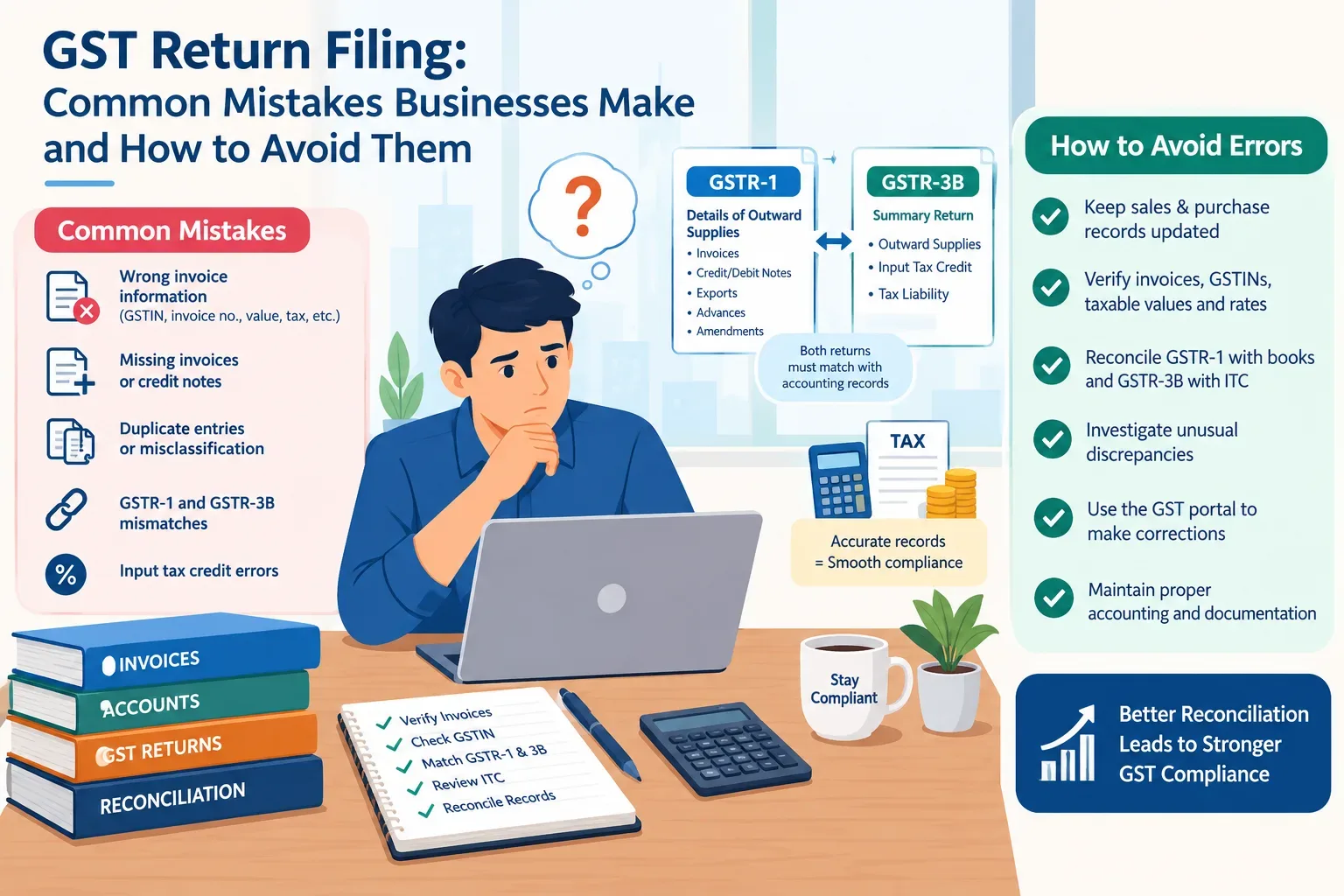
Incomplete records, cash sales not recorded, expenses disallowed or differences between GST and income tax data are the types of problems that many businesses face in driving through a tax audit. Delay in remittance of statutory dues, lapse in deduction and deposit of TDS and wrong claim of depreciation are other common audit findings. If companies don’t have good inventory records or clearly performed a stock reconciliation, auditors become concerned. Another popular problem is trying to take personal expenses as business deduction that can cause murky waters during audit.
GSCCA’s audit plan works to uncover these issues early so they can be corrected prior to filing. This proactive approach minimizes the likelihood of examination notices and potential penalties down-the-road.
Chartered Accountant’s role in case of Tax Audit
The role of a Chartered Accountant is pivotal in the course of tax audit. Their job isn’t just to check the numbers — it’s also to advise businesses on proper accounting procedures and tax laws. Apr 29, 2020 Capabilities of a Certified Audit A CA offers technical knowledge, experience and impartiality to ensure that the audit is representative of the real financial position and meets statutory obligations. They scrutinize all financial papers, trace out errors, recommend advice or corrective measures and give their certifying signature of tax audit report with professional liability.
At GSCCA, our CAs are strategic partners who help businesses maximize their tax position through knowledge of deductions, the strategic structuring of transactions and non-compliance risks. With a CA, representations and submissions to Income Tax Department are taken care of efficiently, which in turn means less stress and time saved for business owners.
How GSCCA Serves You Along the Entire Audit Process
Being in partnership with GSCCA allows you to have an audit partner that takes care of everything from documentation, all the way to filing. We audit accounting records, make sure that all applicable laws are followed, perform auditing and respond to questions. We also help clients improve accounting systems, implement digital tools and keep strong financial records for succeeding audits.
With personalized consultation, focus on details and clear updates GSCCA makes sure that your audit of taxes is an easy going and stress-free ordeal. Companies come to us because of technical expertise and sound business advice.
Summary: Be Ready, Stay Compliant & Keep Tax Audits Painless
A tax audit isn’t something to cause you undue anxiety. If you are prepared and there is a good record of documentation, then it makes the whole thing predictable and manageable with an experienced Chartered Accountant. Knowing what to expect will allow you to face the audit with confidence. GSCCA strives to streamline the tax audit process, making sure accuracy and compliance are built in from the start with professional support at all levels.