Introduction to GST for Startups
GST Goods and Services TaxGoods and Services Tax (GST) is one of the most significant tax systems in India and is a tax-based system that is mandated on businesses which conduct supply of goods and services. Know Is GST Registration Optional Or Mandatory For Startups To Be Legally In Flow With Business Need To Get GST Registered?
GST compliance is a hurdle, and many new entrepreneurs hire a chartered accountant or search for Chartered Accountant near me to know the requirement and ensure that they do not have any compliance issues from day one.
What Is GST Registration?
GST Registration is the way a business get a unique GST Identification Number (GSTIN). This enables the business to charge GST from customers, and take input tax credit in all purchases.
After registration, there are numerous compliances to be followed under GST, which includes, but is not limited to, filing of GST returns and maintenance of records.
However the main question which arises in the mind of every startup is that, Is G S T registration really needed for startups?
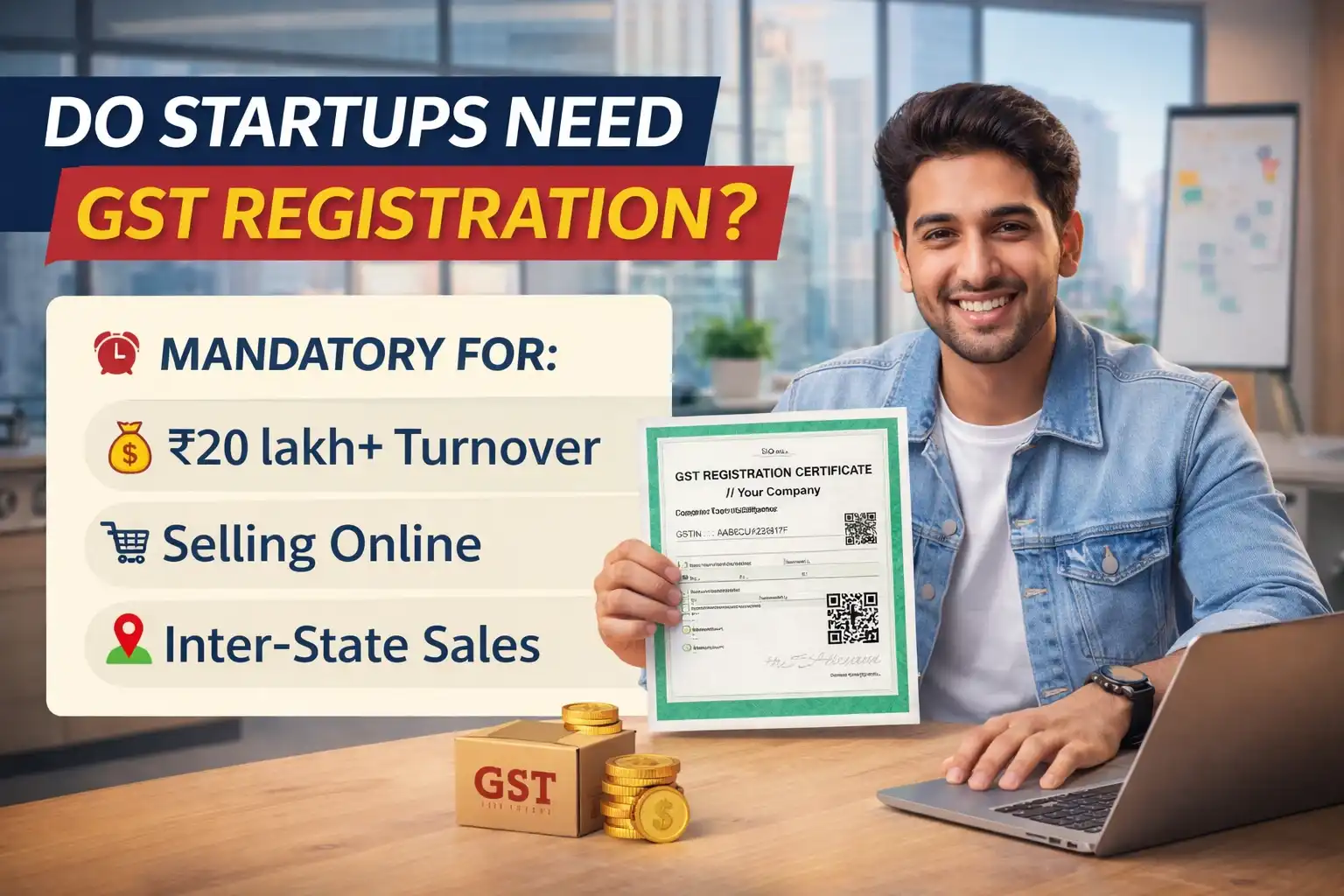
It should be noted that not all startups need to get GST registration, but it is necessary for certain conditions. Startup registration depends on turnover, business type and nature of transactions.
Awareness of these terms assists startups in determining their legal obligations.
Turnover-Based Requirement
If a startups annual turnover is more than the threshold limit prescribed by the government, then it must get register for GST.
That limit varies by state, and if the business is goods or services driven
Supply of goods or services that is simply interstate
For interstate sales a start up has to mandatorily get register for GST, without considering their turnover.
Even small businesses that do interstate business are covered by this rule.
E-commerce and Online Businesses
Businesses providing goods or services via e-commerce platforms have to register for GST through their start-up status.
GST registration is needed as online transactions are governed by particular compliance.
Input Tax Credit Benefits
Many startups still register voluntarily under GST even though registration is not mandatory, as they can claim input tax credit.
It also provides tax benefits by reducing the overall tax liability, thus also enhances cost efficiency.
Different types of GST Registration for Startups
Regular GST Registration
This type registration is typically for businesses that note reach the turnover threshold or other obligatory conditions
Enables 100% compliance and input tax credit eligibility.
Composition Scheme
The composition scheme is available to small startups with a lower turnover. This plan provides simplification in compliance, reduced tax rates but limitation on input tax credit benefits.
Whatever the scheme, the selection depends upon the business model and growth plans.
Advantages of Obtaining GST Registration for Startups
Legal Recognition
By ensuring that the business is legally registered under GST, it helps in creating credibility and recognition of the business among its consumers and partners.
Input Tax Credit
Example: Registered Startups can avail credit on taxes paid on purchases to lower their costs.
Ease of Doing Business
GST means Goods and Services Tax, which is tax that implemented in recent time period by which become more simple and easy to transfer goods across the state.
Expansion Opportunities
It means registered businesses can grow without hindrance of law.
Compliance Requirements After Registration
After registration, Startups are required to file GST returns periodically, issue proper invoices, and maintain their books of accounts in order and up to date.
In addition, well timed filing of Income tax & returns on-line and Income tax & returns india are additionally beneath the life of Compliance for having the monetary transparency.
Challenges Faced by Startups
Complexities such as lack of knowledge of GST rules, compliance, and documentation have always plagued startups.
Insufficient knowledge can lead to penalties and legal ramifications.
Role of Chartered Accountants
Chartered accountants help startups with GST registration and compliance. They assist in documentation, return filing as well as tax planning.
Years of experience guarantee correct compliance & smooth conduct for entrepreneurs seeking the Best chartered accountant near me with professional guidance.
How GSCCA Is Helping Startups Remain Compliant
GSCCA is a GST and companies registration firm that helps startups in the optimal management of their compliance and tax assessments. GSCCA specializes in registration, filing, and financial plans that assist businesses in handling complicated regulations.
GSCCA helps your startups stay compliant and avoid penalties by providing proper documentation and timely filing. This enables entrepreneurs to orient themselves towards business growth while efficiently managing legal obligations.
GST Registration — When should a startup register for GST?
Startups must and should opt for GST registration only when they have decided to scale up their business, sold their goods and services interstate or provided goods or services to a big player who prefers to buy from a registered person.
It can also assist you in establishing a presence and managing finances.
Common Mistakes to Avoid
Some of the common problems are that many startups delay getting GST registration while some would simply not maintain records. Even wrong filing and not knowing anything about rules are also usual.
Consultation with experts will help us to eschew these errors.
Conclusion
GST Registration: One of the most crucial activities to kick-off a startup in India. Although it may not be a requirement for all the businesses, knowing the criteria to be eligible and the benefit of the same will assist the startups in making a better decision.
If advice from a chartered accountant is followed, compliance can be ensured to secure a lower tax rate with necessary firm support from GSCCA, thereby building positive growth in the startup phase. By understanding GST requirements well in advance, businesses are able to smoothly operate with a clear conscience while growing with confidence.