Basics of GST for eCommerce sellers
As more and more businesses go online, eCommerce in India has become a key platform for selling products and services. Regardless of the channels they use to sell, whether marketplaces or independent websites, sellers need to be aware of the tax rules that apply to their business.
One of the most frequently asked questions about Seller in eCommerce is whether GST registration is really compulsory? If you are reaching out to a chartered accountant or conducting a search for a Chartered Accountant near me, be acquainted with GST requirements to ease up the process of hassle-free functioning as well as GST compliance.
What Is GST Registration?
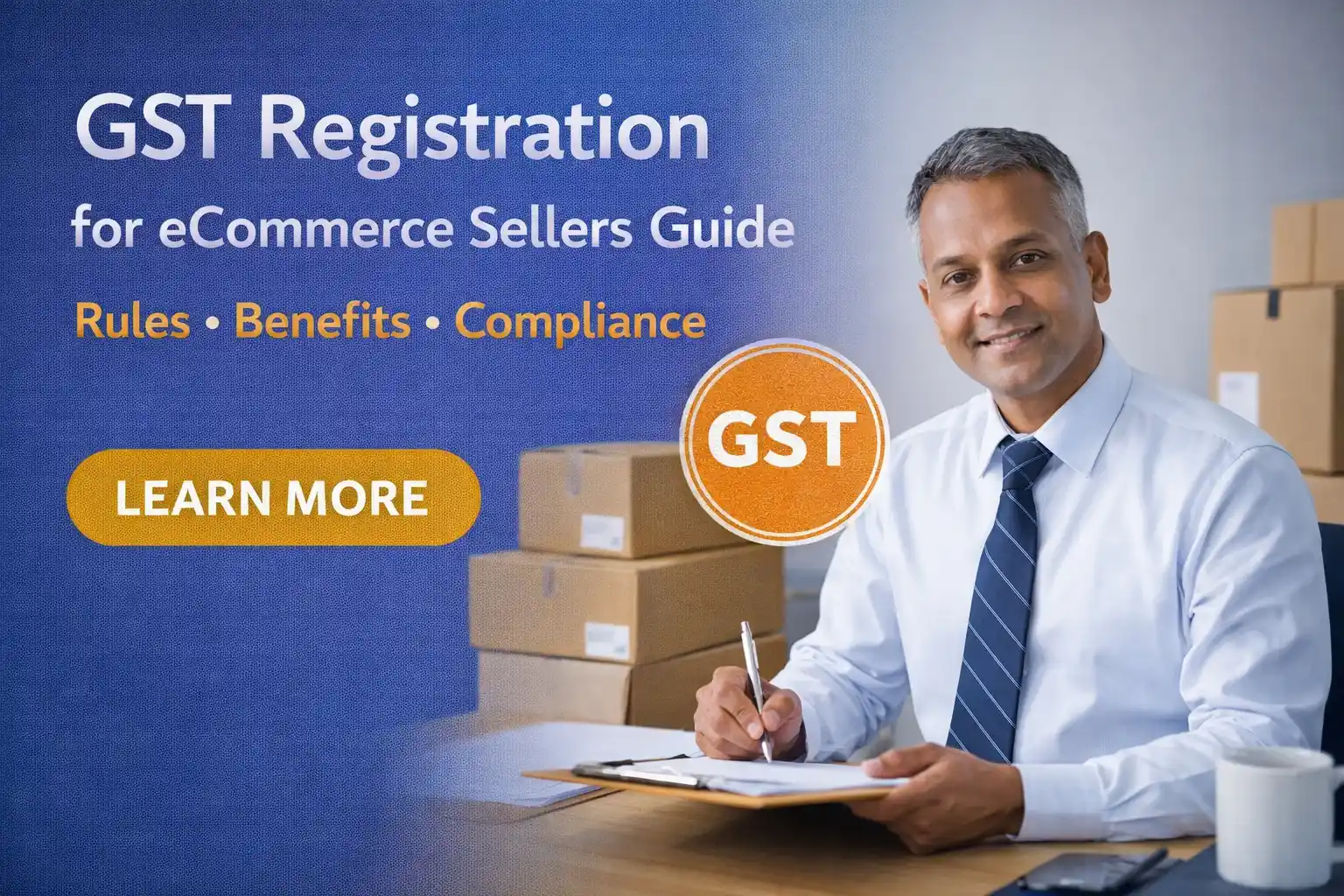
GST is an application of single tax for goods and services, implementable in India. GST registration is a process to get a unique identification number which permits a business entity to collect tax from customers and also claim input tax credit.
Whether it is about earning through Income tax & returns online or compliance through Income tax & returns india, GST registration acts as a key.
Do eCommerce sellers have to register for GST?
Q.4: Is GST registration compulsory for eCommerce Seller? Answer: Yes, for eCommerce Seller, GST registration is required in most of the cases. In India, GST rules stipulate that anyone selling goods via an electronic platform must register for GST, irrespective of their turnover.
This rule holds true more especially for sellers who are doing their trade off eCommerce marketplaces such as Amazon, Flipkart et al.
H2 Why eCommerce seller register for GST
The impact of GST on online transaction is ensured transparency and accurate collection of tax. Since eCommerce platforms are multi-party based, the input tax and output tax flows via GST channels would be easier to track.
It enables input tax credit to businesses, thus minimising their tax liability.
Threshold Limit and Exceptions
Turnover limits for GST registration – for normal businesses Yet, this exemption from the threshold is often of no avail to eCommerce sellers.
Even if you are a small seller, in most cases, you will need to obtain GST registration as long as you are selling via an eCommerce platform.
Tax Collection at Source (TCS)
The TCS is now collected from eCommerce platforms on behalf of sellers. So part of the sale value will be cut out and set aside for the government.
Its a amount which can be claimed by the seller while filing gst returns.
Types of eCommerce Sellers
Sellers on Marketplaces
These are the sellers who sell their products on Amazon or FlipKart type of sites. Sellers who do so have to register themselves for GST.
Independent Online Sellers
Businesses selling through their own website also have to look forward in terms of their operation & turnover and may have to get themselves registered for GST.
Service Providers
In addition, service providers running on services like Uber must also comply with the GST rules.
Documents Required for GST Registration
Sellers are required to provide documenets such PAN card, AAdhar card, Proof for Business Registration, Address Proof and bank account so that GST can be registed.
However, proper documentation allows your registration process to be as smooth as possible.
For more details on GST registration for eCommerce sellers
Legal Compliance
Business Registering under GST makes sure that the business is running in a legal manner and no penalties are levied.
Input Tax Credit
Tax that has been paid on purchases can be credited by sellers, thereby lowering the cost of goods.
Business Expansion
GST registration therefore allows sellers to conduct business without inter-state restrictions.
Improved Credibility
Customers and partners trust registered businesses more.
Penalties for Not Registering
Not getting registered under GST can attract penalties and legal issues. Fines, interest, and operation bans put a few wounds for businesses.
This is why you need to stay compliant, so you can avoid this kind of problem.
Importance of Chartered Accountant in GST compliance
Go to a chartered accountant where they assist eCommerce sellers with their GST registration, return filing, and compliance-related queries.
If you are looking for best chartered accountant near me the professionals will assist in documentation and timely filing.
The work GSCCA should do in GST & Compliance
GSCCA, an GST and company registration firm, helps eCommerce sellers deal with their tax matters. Branding and Advertising A firm aids in GST registration and return filing (GST) to aid compliance with regulations.
GSCCA enables Finance & compliance to stay focused on Growing the business & Health at the same time, by providing expert solution, and ensuring Income tax & returns online with Income tax & returns india compliance.
Common Mistakes to Avoid
Most of the sellers do not get them registrated under gst in time or do not file the returns on time. Another prevalent concern involves improper billing and inadequate record maintenance.
Steering clear of these blunders keeps things business as usual.
Importance of Regular GST Filing
After registration, sellers have to file GST returns periodically. Filing on time is beneficial for compliance and getting exempted from penalties.
Also, it assists in keeping records of financial statements.
Choosing the Right Professional Support
Choosing the correct professionals is important when it comes to managing GST and taxation systems properly. Regulations can be very complex, and experienced practitioners know what sellers need.
Chartered Accountant Near Me: Finally there will be no mess in your tax matters.
Conclusion
GST registration is usually required for eCommerce sellers in India, particularly those operating via online marketplaces. Documenting your sale helps you to comply with the law, allows you to claim input tax credit and assists business expansion.
Sellers can have a better management of their business if they know GST rules as well as gets guidance from professionals such as a chartered accountant to steer clear of any penalties. Organizations such as GSCCA help eCommerce businesses remain compliant so they can effectively scale their business.