Introduction to GST
GST or Goods and Services Tax is a major reform in the system of indirect taxation not only in India but globally as well. Under the old system, businesses had to face a multitude of taxes like VAT, service tax and excise duty, leading to confusion and compliance challenges. GST streamlined this structure by consolidating most indirect taxes under one umbrella, thus improving transparency and efficiency in taxation.
GST is a must-learn topic for beginners seeking knowledge on how to start their own business, work as freelancers, or manage accounts. This not only affects pricing but also governs the advance return filing of businesses as well as compliance with government regulations.
What is GST?
Gst- goods and services tax. It is a destination-based comprehensive tax that is levied on the supply of both goods and services. That is, the tax is imposed at point of consumption rather than point of origin.
In layman terms, every time you buy a product or service GST is part of the price you pay. The seller is responsible for collecting this tax and remitting it to the government. It collects the tax at every stage of the supply chain, but businesses can claim a credit for input taxes they have paid (subject to certain conditions), thereby reducing their overall tax liability.
Why GST Was Introduced
Before the introduction of GST, India’s tax system was antiquated and multi-layered. This often consisted of tax cascading, where there was a charge of tax on tax. To overcome this problem and form a single market in India, GST was implemented.
The focus was on simplification of taxation, reduced compliance burden and higher transparency. It also sought to facilitate doing business in India by creating a uniform tax rate across states and sectors.
Types of GST in India
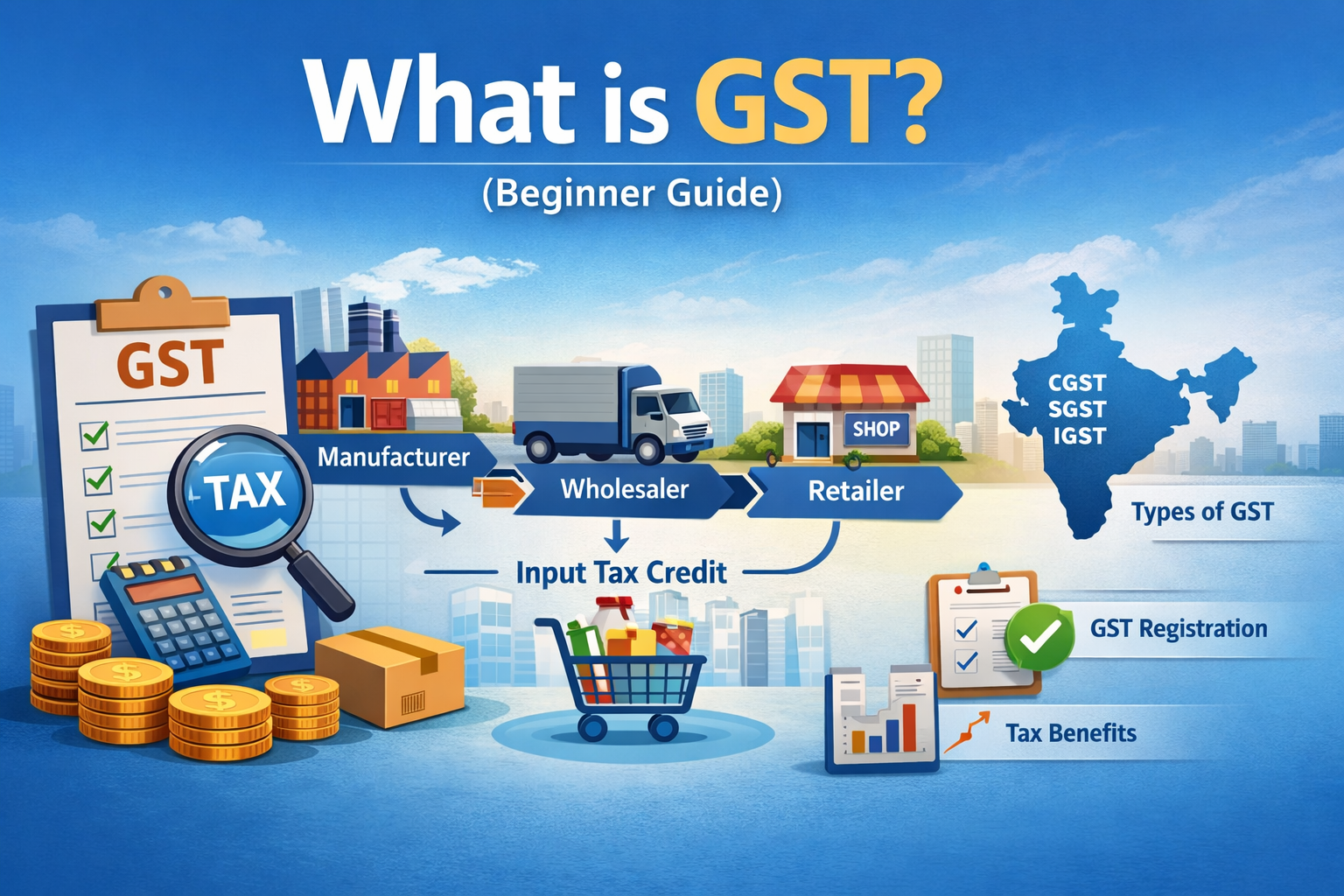
So, India has categorized GST into different parts based on the type of transaction. The Central GST ( CGST ) and the State GST ( SGST ), on the other hand, are levied when biennial goods or a service is sold in a state. If the transaction is between two different states, Integrated GST (IGST) is applied.
This system bifurcates tax revenue, ensuring that both the central and state governments receive an equitable share of taxes while minimizing hassles of taxation.
How GST Works
GST follows a multi-stage framework where tax is levied at every stage of value addition. However, companies get credit for tax already paid on purchases. This is what we call Input Tax Credit (ITC).
GST is paid on raw materials by a manufacturer, then again when a wholesaler buys from the manufacturer, and again when a retailer makes a purchase from the wholesaler. At each stage of production, taxes already paid can be deducted, which means that only the ultimate consumer winds up bearing the entire tax.
Not only does this system eliminate double taxation but it also incentivizes proper invoicing and transparency within business transactions.
GST Registration: Who Needs It?
If the conduct of a business reaches a specific level of turnover, then GST registration is required or if any interstate supply of goods and services are there. It is also needed for E-commerce sellers, freelancers whose earnings cross the limit and service providers in many places.
One of the best things about getting registered under GST is it gives you legal recognition, power of input tax credit and much more credibility as a business. But it also has compliance obligations such as filing periodic returns and tracking records accurately.
Due to the variety of complexities in terms of GST registration and compliance, several businesses opt for professional help.
GST and Company Registration
Business and GST Registration are two important things that go hand in hand for a startup or new businesses. GST registration is one of the most important steps if your business bridges applicable criteria when you register a company.
Registration of the company allows your business to operate legally, and registration for GST will help you collect and pay taxes from your customers lawfully. Collectively, they are the bedrock of an organized and scalable enterprise.
Your businesses need an Assisted Process to get there, and it is where ACA Services, like GSCCA, GST, or Company Registration comes into action. While you might get along without it and do registrations yourself, having professional assistance is better as they can ensure proper way of practicing which will save your precious time and prevent aligning nonconformities in future.
Benefits of GST
Though the introduction of GST came with its own share of challenges, it has certainly come along with various benefits for businesses and consumers. It has made tax structure much simpler, curbed cascading effects and increased transparency in transactions. The uniform tax system makes it easier for businesses to operate across state lines.
For the consumers, GST has resulted in more transparency regarding pricing as taxes are reflected separately on invoices. When the input tax credit mechanism is implemented effectively, it reduces costs for businesses and enhances profitability.
Outsourced also GST driven by a digital way, internal government process like Return filling and tax pays are more systematic and on-line.
Common Challenges in GST
GST, though beneficial can be really complex for a novice. The taxation process involves understanding the tax rates, filing of returns, invoices management and claiming input tax credit which requires knowledge appropriate attention.
Lack of awareness or time are the two most common reasons why many small business owners slip up on compliance. If you make a mistake in filing, you might be subjected to penalties; hence keep recycling the recent information for GST rules and regulations.
It is here that professional firms – and GSCCA in particular – facilitate the process by advising business owners, assisting with compliance requirements, and allowing them to devote their time towards growth instead of getting mired down by paperwork.
Conclusion
GST has radically changed the business operations in India, which is a transparent and unified tax system. For newcomers, GST basics pave the way to a compliant business that thrives.
If you are looking to start a new business or want to run your current one effectively, then fundamentally possessing knowledge about GST along with proper company registration is mandatory. The process does sound complicated at first but this is what we trust.
Keeping track of the GST developments will help businesses to avoid any legal problems and provide them with greater benefits from the various opportunities provided by GST in this ever-advancing economic environment.