Introduction
Income Tax Act 2025 simplified small taxpayers compliance by introducing structured provisions, regulation of income of non-residents, and clarity for specific types of businesses. A detailed understanding of presumptive taxation, non-resident income provisions and other special provisions applicable to assessee can aid accurate tax planning and adherence. A chartered accountant is a person who makes it easier for many people and businesses by dealing with these complicated areas of tax or search for Chartered Accountant near me.
What is Presumptive Taxation?
Presumptive taxation is a tax scheme aimed at small businesses and professionals who operate on a smaller scale. It helps taxpayers to declare income at a fixed percentage of their turnover without maintaining elaborate books of accounts.
It lightens compliance burden and simplifies tax return filings. It is particularly useful for small traders, freelancers, and service providers who may not have the means to keep detailed records of income and expenditure.
Key Features of Presumptive Taxation
Presumptive taxation allows taxpayers to declare income based on predetermined rates of profit under the Income Tax Act 2025. For instance, businesses would declare a determination of their profit at a predetermined rate of turnover, while professionals would do so following an entirely different set guidance.
This scheme is very beneficial for the taxpayers as it does not require them to maintain detailed books, nor get them audited if they are eligible for this scheme. It also simplifies Income tax & returns online filing for small taxpayers.
Eligibility Criteria
Small businesses and professionals who have a turnover that is below a threshold limit are eligible for presumptive tax. You will have to qualify under these criteria in order to enjoy the benefits.
A taxpayer has to keep books of accounts and get them audited, if the income declared is lower than the percentage as mandated.
Advantages of Presumptive Taxation
The biggest advantage is simplicity. This minimizes the amount of paperwork that has to be done, it is also time saving and inexpensive when it comes to the cost of compliance. This also ensures that estimating tax becomes relatively easier, which can help taxpayers plan their finances better.
This scheme is popular among small businesses and professionals looking for a simple tax compliance process.
Taxation of Non-Resident Income
The Income Tax Act 2025 lays down special tax rules for non-residents earning income in India. It includes income from business, investments, royalties and technical services.
Generally his income may be liable to tax in India if it is Indian income and the rest will depend on the treaty between India and respective countries. These rules are very tricky in nature and needs good understanding to avoid double taxation.
Types of Income for Non-Residents
The income of a non-resident can be salary in India, from business, capital gain, interest, and dividends. There are different rates/taxes and requirements depending on category.
Non-residents usually depend on professionals for accurate filing of Income tax & returns india, staring from basic details to getting the documents verified under the act.
Double Taxation Avoidance Agreements (DTAA) The International Tax Department only covers the words ruling process like any other ruling process.
Double Taxation Avoidance Agreement (DTAA) is an important tool for non-residents to avoid double taxation. The agreement permits tax payers to claim tax relief in one country, for the taxes that they paid in another.
It is vital to understand all provisions from DTAA so that one can plan for optimal liability rightly and manage tax arrangements legally to avoid tax evasion.
Special Business Regulations Under the Act
Special provisions applicable to some businesses: infrastructure, shipping and telecom [s123-132] Income Tax Act 2025 Such provisions provide for certain deductions, exemptions, or other forms of filtered tax treatment.
These are the types of rules which would encourage pool growth in important industries whilst keeping taxation transparent.
Compliance Requirements for Special Businesses
Entities that are addressed in the special provisions have compliance obligations. It involves record keeping, fulfilling eligibility criteria as well as submitting correct returns.
Penalties can be imposed or tax benefits lost for noncompliance with these rules. A best chartered accountant near me assists the businesses in managing the needs effectively.
Importance of Proper Documentation
In the context of presumptive taxation or special business, documentation is essential. However, although presumptive taxation has a lower requirement for record-keeping, some basic records of financial transactions should still be maintained.
Thirdly, documentation is particularly important for non-residents / special businesses amidst complex regulations.
How GSCCA Supports Tax Compliance
GSCCA, a GST and company registration firm, assists you and your business with the provisions of tax so as to make its compliance easier for you and your business, both. GSCCA also helps with the more complex areas, such as presumptive taxation and non-resident income, but you can write a pretty informative substance up to that level as a firm.
They have experience in filing Income tax & returns online which make sure that its properly filed and less chance of mistakes being made.
Common Mistakes to Avoid
Here are a few common mistakes taxpayers make — opting for the wrong scheme of taxation, incorrect reporting of income or overlooking DTAA benefits. Such mistakes may result in penalties and tax liability that could easily have been avoided.
That is why you need a chartered accountant to consult as frequent as possible, and spot out these things beforehand, to take care of them as quickly as possible.
Conclusion
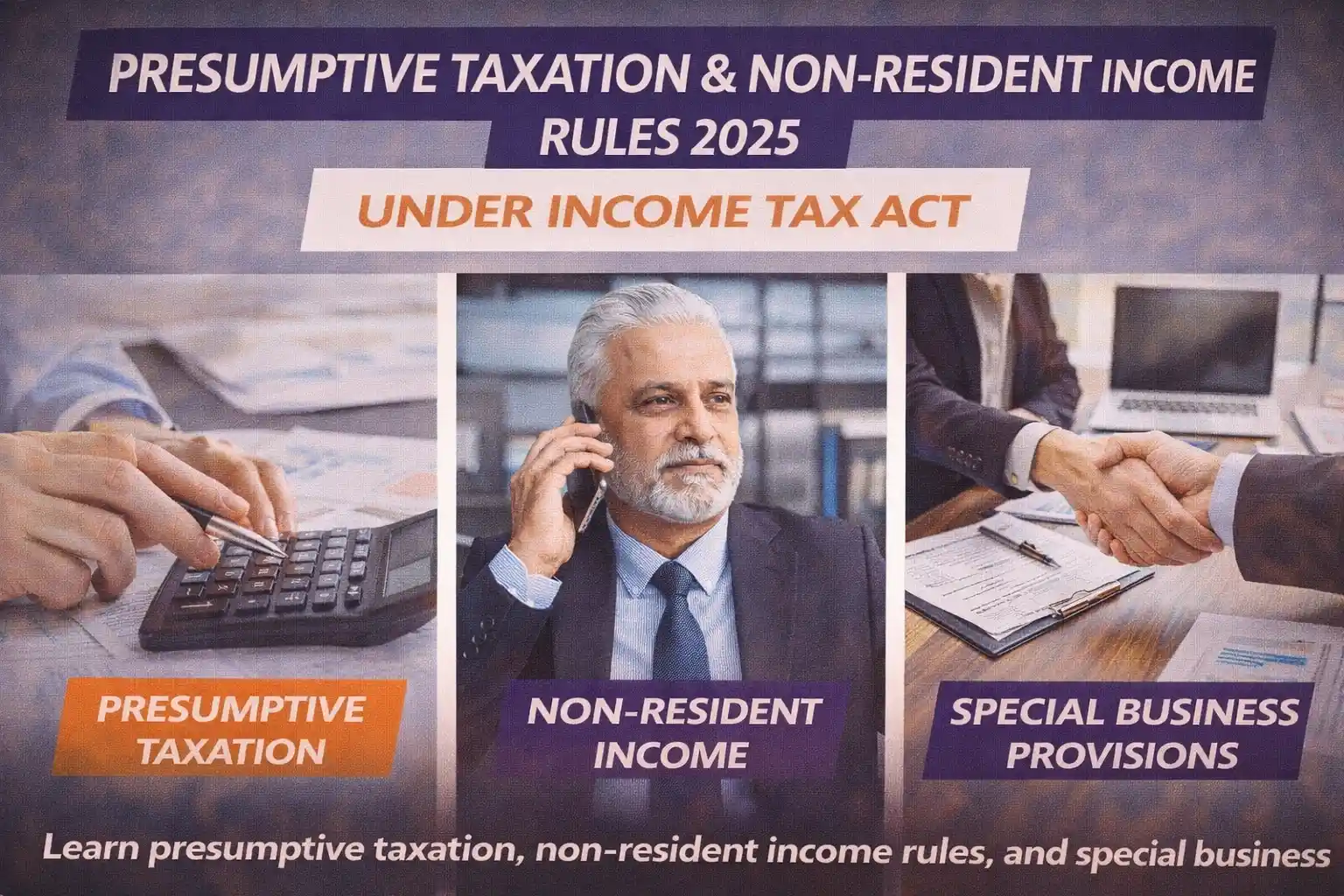
Important modern taxation aspects such as presumptive taxation, non-resident income rules, and special business provisions under the Income Tax Act 2025. They are designed with the goal of streamlining compliance while keeping proper track of varying forms of income.
Taxpayers can fulfill their liability effectively by understanding these provisions properly and keeping proper records. Getting assistance from a nearby Chartered Accountant would make sure compliance is done correctly and will also help with the better long term planning of your finances.