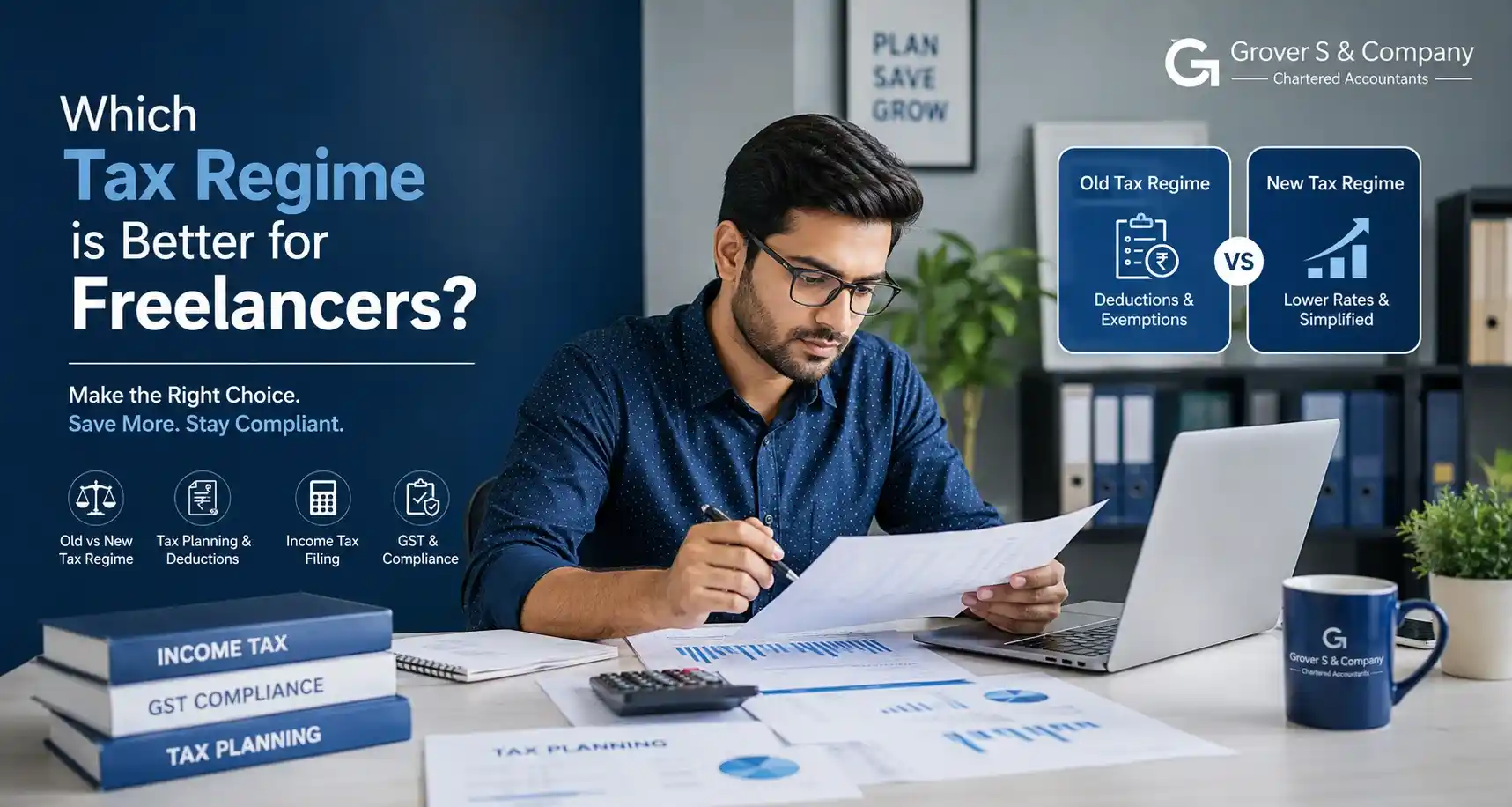
If you are a professional looking for better career prospects, freelancing is no wonder the most sought out option in terms of work lifestyle change as it offers more flexibility to get clients and high income opportunities globally without compromising your current job. Interests. But one query continues to remain unclear during tax season – Which is the best tax regime for freelancers with Grover S & company ?
Tax liability Choosing between an old and a new tax regime is going to have a very significant impact on you. Which option you choose will depend on your income level, permissible deductions, business expenses and whether you meet the criteria under section 44ADA for freelancers. Apprehending these would allow individuals to legally save taxes whilst always staying on right side of Indian tax laws.
An Insight: Freelancer Income Tax in India
Freelancers are treated as self-employed persons under the Income Tax Act of 1961. Income in the form of business consulting, background writing and formulating Information Technology based products, digital media marketing services, graphic designing or a similar employment are normally charged to charge fabric category header “Profits and Gains from Business or Profession”.
Freelancers, as opposed to salaried jobs, cannot rely on their employer for tax planning and must prepare advance taxes, maintain records and comply with legal compliance. GST registration and filings too will become mandatory based on annual revenue or as per nature of business.
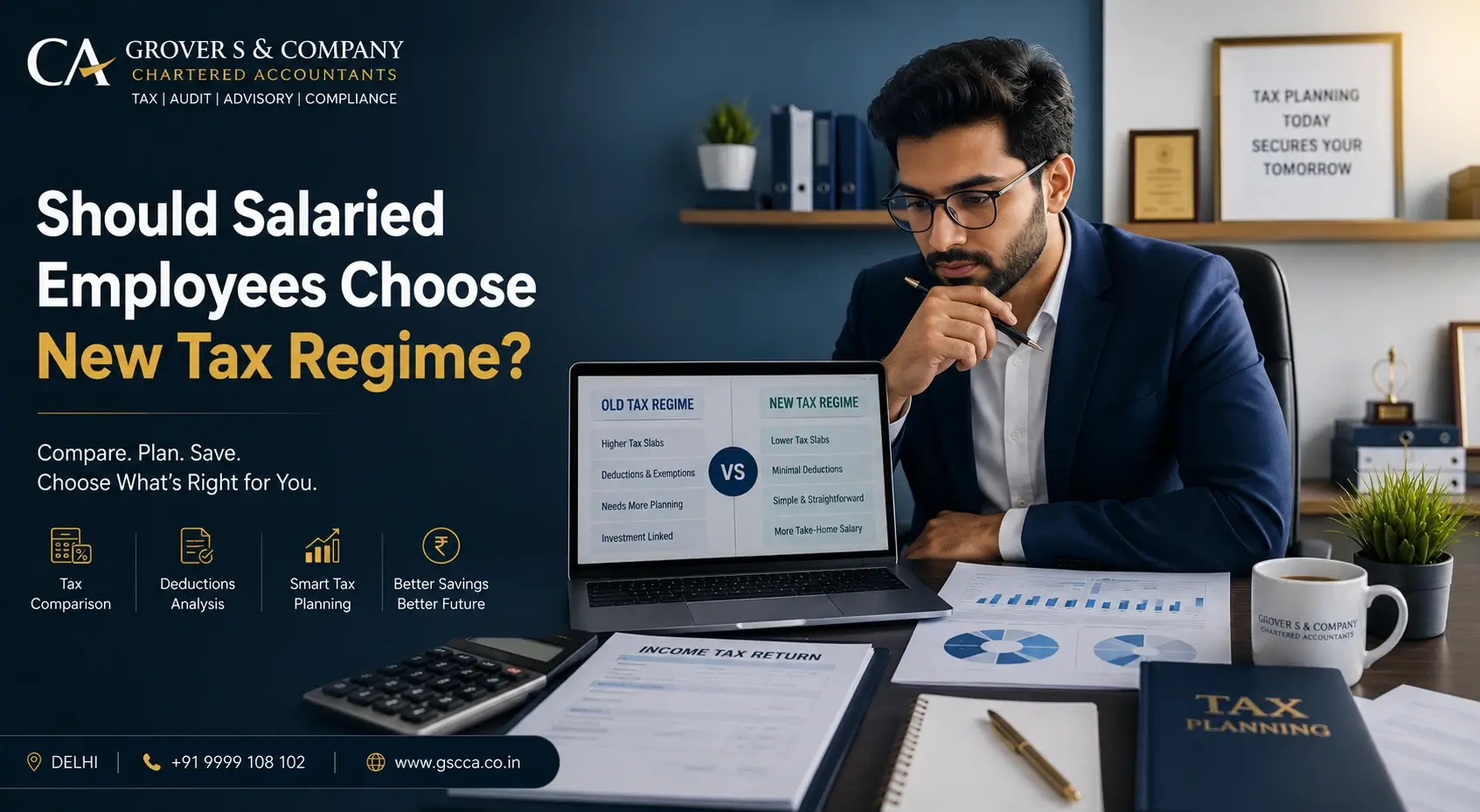
Freelancing Old Vs New Tax Regime
GOVERNMENT IS PROVIDING TWO TAX REGIMES Freelancers can select the one that gives them the maximum tax advantage based on their financial situation.
Old Tax Regime
Under the old regime, taxpayers can claim several deductibles and exemptions. This regime is also beneficial for freelancers who invest in tax-saving instruments or have high business-related expenses.
Under the old regime, a few of these deductions can be claimed like investments eligible under Section 80C, health insurance under Section 80D and home loan benefits (Interest & Principal) etc where applicable. This option is more suitable for active tax-saver and planner individuals.
New Tax Regime
New Tax regime- low tax rates with capping on most deductions and exemptions. This is to ease tax computations and eliminate paperwork.
The new regime will give you lower overall tax under certain conditions with low-investment freelancers having few or no deductions and a simple income structure. The approach is particularly appealing to young professionals, who tend to favour simplicity over more complex tax planning.
Section 44ADA for freelancer
Freelancer taxes best provision – Section 44ADA for freelancers
This presumptively taxation scheme allows eligible professionals to declare fifty percent of their gross receipts as taxable income, while the remaining fifty percent is deemed received as care costs So, gone are the days where one has to maintain records of expenses with excessive detail.
Let’s take the example of a freelancer, earning ₹20 lakh per annum as their specialty service income and who falls under the criteria as mentioned in section 44ADA, then only ₹10 lakhs of this might be calculated for constituting taxable income.
It can substantially make freelance income tax filing easier while cutting down compliance overhead.
Which Tax Regime Will Be Favourable Under Section 44ADA?
The answer is individual specific.
A detailed comparison of the two regimes often proves to be beneficial for freelancers who use Section 44ADA. If the tax savings are high in the old regime from the deductions in the old regime now you can claim under 44ADA, therefore it is financially beneficial to go for the Royal Meal (old regime).
Conversely, freelancers with fewer deductions and simple bills may be more enthusiastic about the new tax regime given its lower slab rates and relatively simpler compliance.
An appropriate comparison for each financial year must take place before filing returns.
Freelancer Tax Planning Strategies
Freelancer tax planning should begin well before the filing deadline.
Having a record of invoices, client payments, bank transactions and business expenses can paint a clear financial picture. Similarly, professionals dealing with international clients may also need to examine foreign remittances and related compliance needs.
With regards to GST compliance freelancers should review if gst registration is mandatory based on turnover and nature of services used. Ensuring proper freelancer GST and tax compliance can help avoid any penalties, hence improving the credibility of your business.
Payment of Advance Tax is also an important aspect. Not depositing advance tax on time may lead to interest liabilities under income tax provisions.
Tax deductions and tax-saving opportunities
For freelancers, tax deductions are still a significant reason when choosing a tax regime.
Tax cuts under the old regime are usually attained by those professionals investing in tax savings, health insurance, retirement contributions or claiming deductions.
On the other hand, taxpayers having limited number of deductible expenditures may find it more useful because of the simplified structure provided by new regime.
The primary goal is not only about saving taxes for the year, it is in making a long-term tax plan that works with your income trends and outlook regarding money.
Conclusion
Most freelancers have to deal with multiple types of tax regimes. Freelancers who wrangle every possible deduction, investment, and tax loophole will usually come out on top under the old regime. The new system is often advantageous for those individuals who prefer simplicity in their taxes and lower marginal rates, without a significant reliance on deductions.
Delhi and India: Tax Comparison based on income, Section 44ADA eligibility & goal setting is the key point for freelancers to make an informed choice. Reassurance through professional assistance can ensure compliance, whilst also highlighting the route for succession to your freelance business that is as tax-efficient as possible.