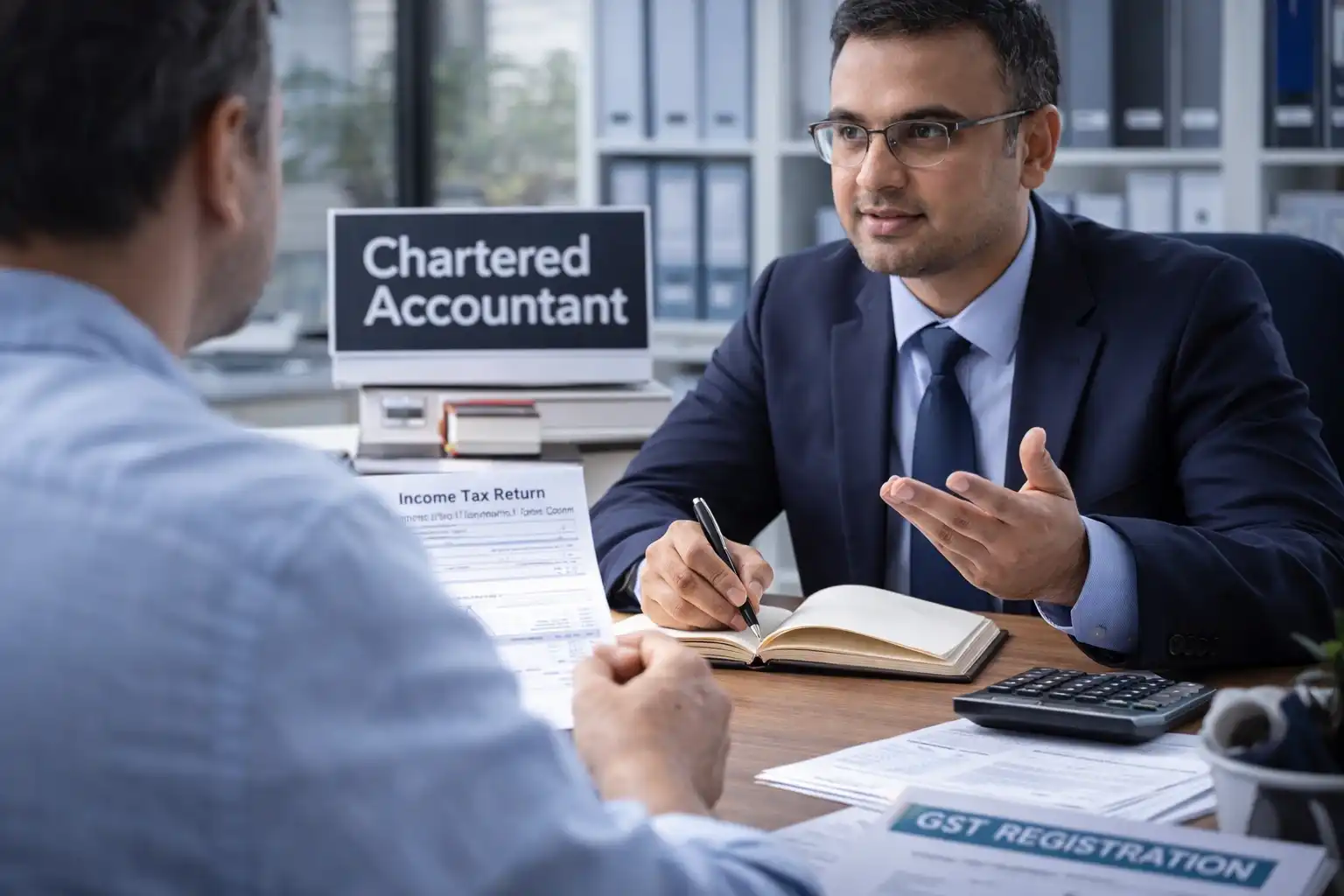
Digital Bookkeeping vs Traditional Accounting: What Works Best for Modern SMEs?

Digital Bookkeeping vs Traditional Accounting for SMEs

Digital Bookkeeping Or Traditional Accounting: What Suits Modern SMEs More?

Small and medium business is growing by leaps & bounds in India. Gone are the days when all one had to do was keep record of purchase and sale for accounting, with more and more adherence requirements, digital payments systems, online taxation system etc basic accountancy is no longer enough. SMEs today have to make a choice between traditional accounting and adopting digital bookkeeping for efficiency and growth.

Not only is GSCCA an entrepreneurial company with multi-sector business expertise, we also appreciate how the correct accounting system can have a direct impact on profitability, compliance and decision making. This blog looks at the major differences between digital bookkeeping and traditional accounting to support SME’s in its selection process.

Conventional Accounting and its usage in Small Businesselpers

Conventional accounting: This is manual bookkeeping, and it’s – frustratingly – the way most people still do things. Most small businesses continue to maintain handwritten ledgers, cash book and invoice filing is still done manually in many places.”

For business owners who’ve been using index methods for years, this method provides familiarity and control. To very small businesses with low volume of transactions, manual accounting may seem sensible and possible. But it relies a lot on human precision and constant monitoring.

But with increase in business volume, it is difficult to continue posting records manually as it becomes very hard to maintain them.

Digital Bookkeeping Explained for SMEs

Digital bookkeeping is the electronic management of financial data using accounting softwares and cloud based platforms. Registrations are digital, calculations executed automatically, and reporting immediate.

With the digital record-keeping, SMEs will be able to record transactions (i.e. income and expenses), pay bills, create and send invoices; generate reports and monitor GST turnover and bank transactions at any given time of operations. “Software such as Tally, Zoho Books and cloud accounting solutions are gaining mass adoption amongst businesses and professionals”

GSCCAadvises SMEs to go digital with bookkeeping Globally, Software with robust Audit Features.

ACCURACY OF FINANCIAL RECORDS AND REPORTS.

When recording, there is also an increased popularity of human error when using manual accounting. Even minor errors can result in incorrect financial reports or tax returns, leading to compliance problems.

Computerized accounting provides greater precision, by automating the process of calculations and validations. Tax rules are correctly handled by accounting software, and all transactions have audit trails. And that means trustworthy numbers and less reliance on manual verification.

They also enable SMEs to be more transparent and trustworthy regarding their bank, investor and taxation affairs.

Time Savings and Business Efficiency

Conventional accounting demands a lot of time for entries recording, account reconciling, and generating reports. Financial updates sometimes come late to business owners, making it harder for them to act immediately.

Automated day-to-day accounting will save time with digital bookkeeping. Statements such as profit and loss, balance sheet, or cash flow information can be accessed at any time. This helps SME owners to concentrate on growth, sales and operations planning.

GSCCA considers time element as the greatest, among several benefits of digital accounting for the growing businesses.

Impact on Small and Medium size Businesses (SMEs)

At the onset, traditional accounting appears cheaper as it does not have software costs. Yet manual solutions can demand more people, corrections and follow-ups to pump up indirect costs.

While digital bookkeeping requires an initial outlay for software, over the long run it’s cheaper as it will reduce errors, save time and increase efficiency. As SMEs expand, digital systems scale readily with less associated overhead.

Digital bookkeeping is a greener choice for companies with imminent growth.

Digital Compliance and the Future of Tax Management

The taxation system in India has been digitalising gradually with GST returns, e-invoicing, TDS filings and online income tax compliance. Traditional accounting procedures cannot cope with this demand, it is too difficult and too dangerous.

Digital bookkeeping Software automatically updates with regulatory reforms and facilitates compliance. EasemyGST Reconcillation Fill and Lodgement of Retruns and Statutory Reports Accurately and On Time.

@ GSCCA supports small businesses to stay legal and penalty free by having compliant accounting systems.

Data Safety and Record Preservation

Paper documents are a staple in accounting but they can be destroyed, stolen or misplaced. It�s very hard to be, in these situations, able to get the financial stuff back.�

Bookkeeping software provides stronger data security with backups, password protection and cloud storage. Data can also be recovered quickly, even in the event of a disaster.

But for SMEs handling this kind of sensitive financial data nothing beats the reassurance from digital data security.”

Financial Insights for Smarter Decisions

Conventional accounting is primarily about record keeping and provides little analytic perspective. Reports can be very slow to produce and therefore not particularly useful for decision making.

You can see what’s going on as it happens. SME owners can track their income, costs, cash flow and receivables with a single click. Such insights are also valuable for budgeting, forecasting and strategic planning.

GSCCA is committed to the idea that knowledge drives success.

The Right Accounting System for SME’s

Very small businesses with only a few transactions may still be happy with traditional accounting. But for the vast majority of SMEs, digital bookkeeping, makes them more in control, more compliant and better able to grow their business.

Companies that implement digital accounting solutions will be more competitive and well-prepared for future changes to regulations and technology.

How SMEs Benefit from GSCCA

GSCCA delivers expert advice on accounting, tax and compliance requirements for SME businesses. Through a blend of accounting knowledge and technology solutions, GSCCA enables small businesses to manage their finances with ease and confidence.

Every business goes through new system implementation or an upgrade to systems set up for operational efficiency, whether coming from manual accounting or the paper work process.

Conclusion

Accounting in the cloud or on the computer deskDigital bookkeeping and manual accounting both have their place, but what small business accountants room is there for today’s digital solutions. With precise, effective and compliant support, and direct insights for businesses – digital bookkeeping enables the growing business to thrive.

With professional assistance provided by GSCCA, SMEs can choose the best accounting system and establish the financial grounding for tomorrow.

How Automation and AI Are Changing CA Services in India

AI & Automation in CA Services GSCCA

The Way Automation and AI Are Transforming Indian CA Services

Indian Chartered Accountancy is such a profession which upholds accuracy, ethics, and confidence. But what has changed is the manner in which CA services are delivered today compared to how it operated five or ten years ago. Accounting Automation and Artificial Intelligence are discreetly revolutionizing the accounting industry. Rather than replacing CAs, however, these technologies are allowing them to work smarter, faster and more strategically. At GSCCA, we view AI and automation as augmenting rather than undercutting professional judgment.

Beyond Repetitive Manual Labor

Previously, most of a CA’s day was filled with processing transactions, keying in data, verifying vouchers, reconciling bank statements and building reports. These were such tedious and repetitive works. It’s a service that automation has greatly lessened the load of. Today’s accounting software is capable of importing bank data automatically, reading invoices and posting entries with very little human input. This move frees up the time of GSCCA professionals to get on with their real work – learning more about clients’ businesses.

AI Is Making Better Precision, Not Just Faster.bunifu

In accounting, speed is not the only thing. Everything depends on accuracy here, particularly when filing taxes, undergoing audits and reporting financial results. Those AI-powered systems are meant to identify patterns, irregularities and red flags for unusual transactions that could escape the notice of human bankers. They learn from past information and get better as time goes on. “AI is helping us keep cleaner books, see potential problems early on, and ultimately reduce the risk of errors or notices or penalties,” Canberra said of GSCCA.

Making GST and Tax Compliances Hassle-Free for the Businesses

Tax filing can be complex and challenging for many businesses in India. GST returns, reconciliations, Income tax filings and industry specific regulatory changes further complicate the matter while July 30 creeps in. This stuff has become infinitely more doable thanks to automation and AI. Smart systems can now more efficiently tackle everything from tax computations, invoice matching and return preparation. GSCCA leverages technology to make compliance work efficient and painless for clients while exercising professional judgment where necessary.

Audits Are Becoming More Insightful

Sampling has been the norm in aud iting due to time and data constraints. AI-based tools now enable auditors to search complete datasets instead of selecting a mere sample. This provides more pointed understanding of financial patterns and risk. Services by which computers are made to perform these functions tend to result in the expedited discovery of most aberrations, and increases the chances that audits will actually mean something when they’re finished. Our audit at GSCCA is enhanced through the use of technology, but professional scepticism and experience are key to its success.

The Role of CAs is Transiting to Advisory

The work of Chartered Accountants is slowly shifting as automation takes care of the day-to-day accounting tasks. Today, clients want more than adherence. In addition to those outside advisers, they need input on managing cash flow, tax planning, business structure and growth decisions. GSCCA’s analytical approach provides clients with comprehensive information to make informed decisions about their investment and financial future.

Better Transparency and Client Experience

Business Owners of Today want clarity and immediate access to their financials. And it’s thanks to cloud-based systems along with automation and AI. Customers can see reports, monitor compliance and financial position as they need — in real time rather than waiting for the company to update them every week or month. Such transparency facilitates trust and communication. Technology is what enables GSCCA to stay in touch with our clients and move quicker for them.

Bringing Professional CA Services Online to SMEs

It’s difficult for SMB’s to keep up with accounting and being compliant is usually resource intensive. CA services, professional service offerings have become more cost-effective and vast owing to automation. With automation, CAs can service more clients effectively without sacrificing quality. By incorporating both technology and significant accounting expertise, GSCCA tackles the pain of the SME customer in trying to adopt today’s cloud-based, technologically-enhanced accounting services that streamline their operations while demanding compliance and financial discipline.

Security of Data in the Digital World

In an increasingly digital world, it is natural to have concerns about the security of data. AI-based accounting solutions have access to advanced security add-ons like encryption, permissions and backups. These systems are frequently more secure than on-premises accounting on your desktop. Data security: GSCCA values the importance of data confidentiality and has chosen to partner with our reputable provider who adhere to stringent safeguards.

The impact of Automation On the CA Skillset

The CA profession in India is changing. CAs of today must be able to speak not just accounting and taxation but also technology and data analytics. Continuous learning is a necessity in the age of automation and AI. Our staff is continually updated and upgraded to keep up with today’s tools and regulations, so that we’re able to provide our clients with professional support no matter how far or deep one has journeyed into this ever-changing world of technology.

The GSCCA Approach to Technology with a Human Touch

We at GSCCA consider that technology works best when it is the result of a combination of technology and human expertise. Automation and A.I. help us work faster and more accurately, but there is no substitute for experience, judgment and client comprehension. What we do is a balancing act between technology and the human touch, to make sure you get correct, compliant and thoughtful outcomes.

Conclusion

#Automation_and_AI are changing the way CA services in India work making them more hassle-free, error free and advisory-led. This is not about replacing Chartered Accountants but empowering them to add more value. Businesses now require partners who know the ropes in terms of compliance and strategy. Using GSCCA, customers gain access to today’s type of CAs that focuses on technology, expertise and a human touch while paving the way for businesses in India.

Why Every Business in India Should Move to Cloud Accounting

Cloud Accounting for Indian Businesses GSCCA

Why it is Imperative for Every Business in India to Transition to Cloud Accounting

The Indian businesses of today exist in a world that is dynamic and heavily regulated at the sme time. In the era of digital taxation, changing compliance rules and growing competition, financial planning is more critical than ever before. Manual or desktop accounting systems are slowly becoming obsolete. Cloud accounting is becoming increasingly popular with businesses all over India due to its flexibility, precision, and accessibility. GSCCA is here to aid businesses in their switch to cloud accounting so they can remain compliant, efficient and forward-thinking.

What Makes Cloud Accounting Different

Cloud accounting is a contemporary system to traditional on-premises accounting: instead of being installed as packaged software, cloud-based accounting applications are hosted on the web and stored/stored in data centres. Financial information is saved on the cloud and updated instantly. This enables entrepreneurs and accountants to log in and access accounts anywhere with an internet connection. Cloud accounting is different to a traditional solution, in that it does not rely on software and hardware that’s installed on your physical machine. It means that cloud accounting technology is far more reliable as the services have been designed with the needs of modern business at its heart this time!

Business Owner’s Guide to Real Financial Control

Delayed financial data is one of the biggest problems Indian enterprises are grappling with. Decisions are made with outdated information resulting in cash flow directors and lost opportunities. Real-time access Cloud accounting allows you to view the cash coming into your business, along with an up-to-date snapshot of your bank balances and any money that is owed to you at any time. As a result, business owners can know their financial position at any time and take wise decisions. GSCCA enables its clients to better manage their finances, and operate more efficiently using real-time data.

Regulated Economy – Making Compliance Simple

India has very complicated Compliance system like gst, income tax, tds and statutory filings. Cloud-based accounting solutions are built to meet these needs, automating calculations and producing reliable reports. GST Invoices, Return data and reconciliations can perform better within the system. Frequent software updates keep you attuned to the most recent regulatory changes. GSCCA makes sure your cloud based accounting systems are set up to automatically comply with all these obligations without pressure.

Improved Accuracy Through Automation

Everyone makes mistakes, and the odds only ever go up as your number of transactions do if you’re doing manual accounting. Cloud accounting minimizes reliance on manual entry of data by automating functions like bank reconciliation, invoicing and expense tracking. Consistency in financial records is also enhanced with automation. Here at GSCCA, we know how to take the cloud accounting that will save you time and prevent mistakes so you can be confident in your numbers.

Data Security and Business Continuity

The security of financial information ranks high on the minds of many business owners with privacy concerns about cloud technology. In fact, cloud accounting software is more secure than desktop versions; they are encrypted, controlled and backed-up automatically. Unlike the old way, when hardware malfunctions or you lose your data, now suddenly you have failed systems: with cloud accounting there is no such thing as service failures due to lost data. Your information is safe GSCCA only works with reputable cloud providers, who adhere to strong security protocols ensuring high security for all client data.

Cost Efficiency for Growing Businesses

For startups and SMEs in India, it’s crucial to minimize costs. Not having to invest in expensive servers, software and maintenance makes Cloud Accounting pay for itself. Subscription pricing means that companies can pay as they go. As the operations become larger, the system can grow without huge investments. GSCCA has been instrumental in assisting businesses in finding affordable cloud accounting options, that are conducive to growth and without superfluous bureaucracy.

Seamlessly Collaborate with Accountants and Teams

Legacy accounting solutions often lack real-time data and offset delays in sharing information with accountants or entities within the organization. Cloud accounting makes team work easy through multi-user access which lets various users work on same files at a time. Entrepreneurs, accountants, consultants review financial details in real time- no sharing files. GSCCA utilises cloud accounting to offer fast service, timely information and clear communication with business….

Supporting Remote and Multi-Location Operations

The Indian business environment today is evolving toward the more decentralized or fragmented model. Cloud accounting enables businesses to manage their finances centrally no matter where they are based. As business owners, you can track the activity on a branch-wise basis, establishing consolidated accounts or even cash flow at one glance. GSCCA guides businesses in establishing cloud accounting systems that make it easily possible to work remotely and control close from anywhere!

Long-Term Business Growth and Scalability

The mature company: as companies grow, their financial systems need to be able to handle increased complexity. The cloud-based accounting solutions grows with your business excel in reporting and analytics, integrations and more. Better forecasting, budgeting and strategic planning is also possible with it. GSCCA enables organizations to find & maintain a solid financial foundation through the implementation of cloud accounting.

How Does GSCCA Assist Companies Transitioning To Cloud Accounting

Moving to cloud accounting is not a easy task, so be sure that you have planned properly for this move. GSCCA provides range of cloud accounting services from system choice, data imports, setup, compliance checks and ongoing support. We work seamlessly to help you transition from pen and paper (or a spreadsheet) into the world of online accounting.

Conclusion

“Cloud accounting” is now much more than a generational technology upgrade; it’s strategic imperative for businesses in India. It increases accuracy, delivers compliance control, improves security and gives you real-time control of your finances. Cloud accounting enables organisations to respond faster to regulatory changes and market demands. With the support and expertise of GSCCA, businesses will make a secure transition to cloud accounting and a successful financial future.