(By Grover S and Company—Top CA Firm in Delhi-NCR)
Opening a new business in India is thrilling, but you also need to ensure that you have navigated all compliance obligations. Failure to comply with these laws can result in penalties, legal problems, or loss of business. For a startup, it needs to be in compliance from the date of incorporation. Be it the process to get registered with ROC, abdication of GST laws, calculating TDS accurately, or suggesting and implementing ways to show book entries correctly—we provide all in smoothly for your successful business journey ahead.
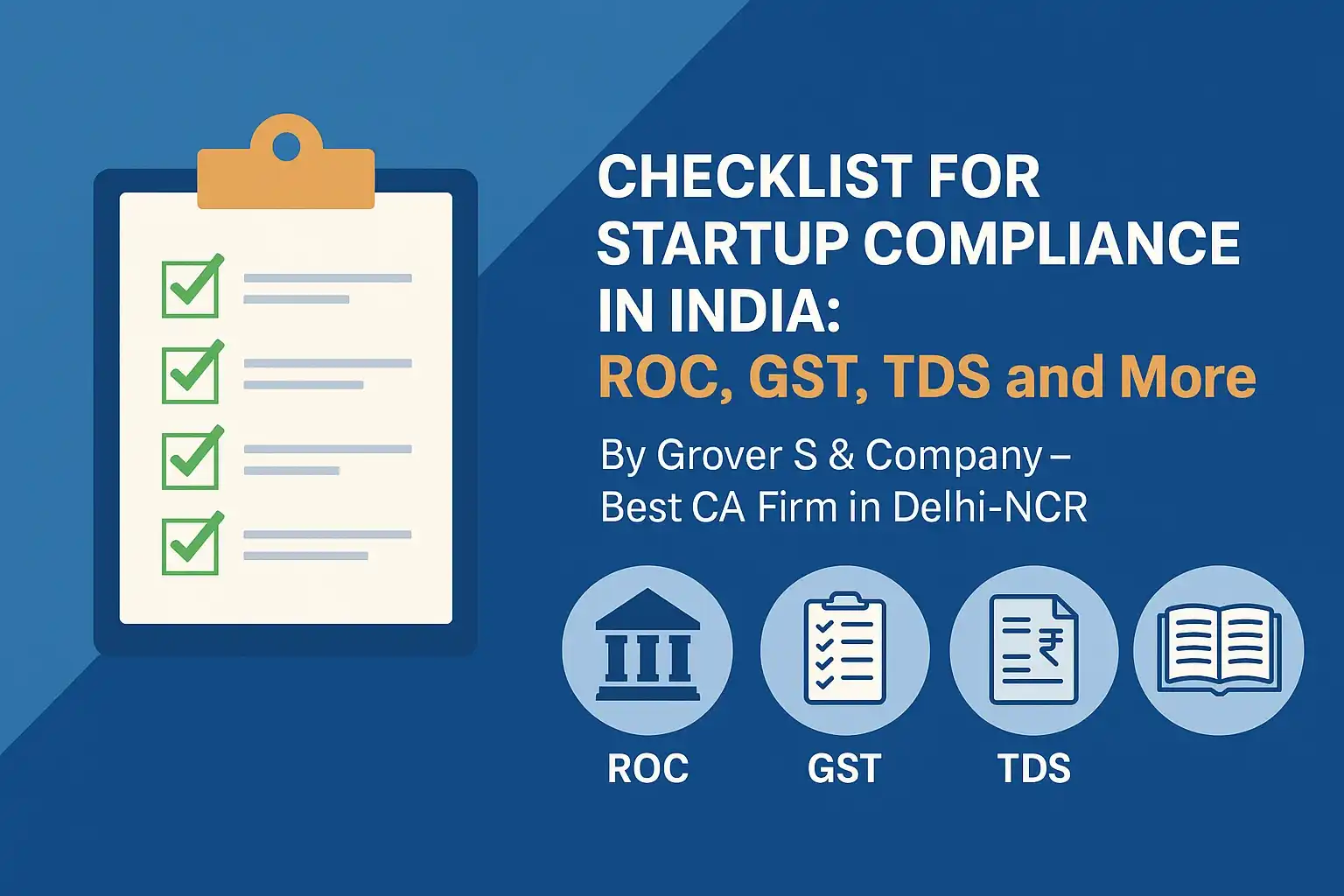
Grover S & Company, a highly reputed CA firm in North Delhi and known for being the best CA firm in Delhi-NCR, brings to you an extensive startup compliance checklist for India. This manual is all about the important statutory, financial, and tax responsibilities that startups should know in 2025.
Incorporation and ROC Compliance
Every start-up takes its first step, and that is formal incorporation. Based on the kind of business, businessmen may also be able to opt for a private limited company, a limited liability partnership (LLP), or a partnership firm. For incorporation, specific forms are to be filed with the Registrar of Companies as per the Companies Act, 2013.
After being absorbed, startups are subject to other ROC requirements. This encompasses the upkeep of statutory registers, arranging periodic board meetings, filing the annual returns, and financial closure. Non-observance can even result in penalties and have implications for the company’s legal status. Grover S & Company helps startups with all ROC formalities to ensure compliance as per the law in force.
GST Registration and Compliance
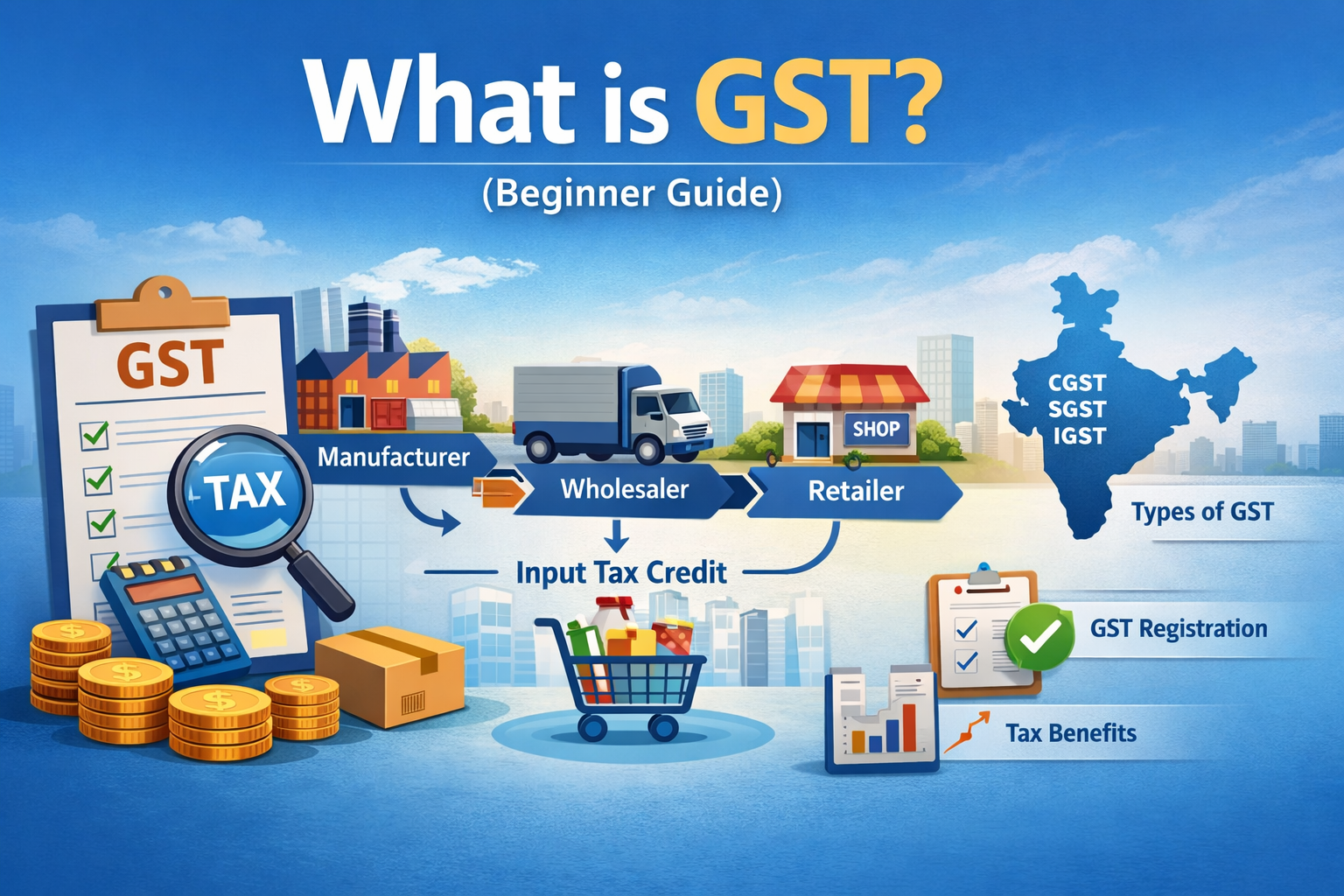
Most startups are required to get registered under the Goods and Services Tax in case turnover exceeds the specified threshold or they are engaged in interstate supply of goods and services. With GST registration, startups can collect taxes on sales and can also avail of input tax credit and remain adherent to the laws governing indirect taxes.
Once they register, start-ups are required to file regular GST returns, have correct invoices, and keep copies of all financial transactions. Failure to file or filing incorrectly (or late) can lead to penalties and even interest. At Grover S & Company we handhold new businesses to get the GST registration, compliance, and return filing done with the speed of light to avoid legal issues and focus on business.
TDS Compliance for Startups
An important part of regulatory compliance for startups is Tax Deducted at Source (TDS). Payments to vendors, contractors, and employees may also be subject to TDS under the Income Tax Act. Right deduction, depositing it on time, and filing TDS returns correctly are important tasks that you shouldn’t miss, as otherwise the I-T Department may send out notices to you.
Startups also need to provide TDS certificates to the recipients and ensure that all deductions are paid on time correctly. Indian companies, like Grover S & Company, provide end-to-end assistance to help you know your responsibility regarding TDS deductions, deduct the correct amount, file returns, and issue certificates in time for full compliance.
Maintenance of Books of Accounts
Why is it important for a startup to keep perfect books of accounts? It’s not just for tax compliance that proper accounting is essential; it also plays a crucial role during strategic decision-making, investor reporting, and audit readiness.
The books of accounts should record all financial dealings, such as income, expenses, capital injections, loans, and asset purchases. Ongoing reconciliation and compliance with statutory requirements minimizes discrepancies and potential legal liabilities. Grover S & Company helps startups set up their accounting systems, keep their books of accounts, and assist in being audit-ready as factually as possible.
Annual Filings and Deadlines
Startups need to follow annual compliances under various acts. A company needs to file annual returns with the ROC and financial statements; GST-registered start-ups need to file annual GST returns, and TDS returns need to be submitted every three months. Further, conformity to the Income Tax Act and specific industry practices may be required.
Not getting things done on time can mean fines, loss of funding, and operational challenges. Grover S & Company creates a compliance calendar for startups by monitoring all essential deadlines and ensuring that the filings and submissions are made well in time, thereby saving unwanted penalties.
Labour Law Compliance
Startups with employees also need to adhere to labor laws such as PF, ESI, professional tax, and minimum wages. If the number of employees is over a certain threshold, then PF and ESI registration become mandatory.
Startups also have to adhere to right-to-leave policies, statutory benefits, and employment bonds. Failure to comply could result in audits, fines, and employee squabbles. Grover S & Company – Labour Law Grover S & Company offers advice for labor law compliance, helping out startups stay compliant in terms of their employee practices and ensuring that they don’t run into disputes.
Intellectual Property and Other Legal Considerations
Clearing and protecting IP is critical for startups. Any of the innovation, products, and brand protection must be registered in trademarks, patents, copyrights, and designs. Also, start-ups also have to adhere to licensing agreements, copyrights, and other IP-related contracts.
Industry-based certification, for instance, environment clearances, FSSAI registration, Import-Export Code (IEC), or other professional licenses, can be referred to as well according to the nature of the business. Grover S & Company assists startups in filing for IP protection and ensures that they comply with all applicable statutory requirements. This allows them to mitigate their legal risk while protecting commercial interests.
why compliance is of significant substance for investors and growing organizations. What Compliance Means for Investors & Growth in Business
Compliance is not only a legal obligation; it plays an important part in gaining the trust of investors and the maintenance of business credibility. ROC, GST, TDS, and other statutory compliance are in the right place for startups; there are more chances of funding, tie-ups, and scaling the business.
Non-adherence can also set off alarm bells for investors and could limit growth prospects. Grover S & Company assists startups in building (and preserving) a clean compliance record, facilitating smooth relations with financial institutions, government bodies, and business partners alike.
What Grover S & Company Does for Startups
Grover S & Company—the best CA firm in Delhi-NCR—offers a full range of other compliances for startups. From incorporation and ROC filing to GST registration, TDS compliance, bookkeeping, labor law, and intellectual property, we have all aspects of the startup founder’s business covered.
We create a comprehensive compliance checklist; we have filing deadlines and report overviews readily available to clients before acting on any of their tax obligations; we compile meticulous returns; and we have persons strategic guidance to ensure that the lights stay on. By joining forces with Grover S & Company, startups can concentrate on building and scaling their product while being completely compliant from a legal requirements standpoint.
Conclusion: Doing a Startup, Right Way or Wrong Way.
To start-ups, this compliance is the basis of credibility, legal safety, and sustainable growth. ROC filings, registrations like GST, TDS deposits, labor law compliance, and industry-specific permissions are some of such inevitable regions where non-compliance may attract penalties or obstruction in operations.
Adhering to a compliance-based schedule and consulting with an experienced CA firm like Grover S & Company ensures that startups keep their self-clean while doing legal business, avoid penalties, and operate seamlessly. The right compliance now creates the foundation for future success and business growth.