Introduction
E-invoicing is a mandatory element of India’s GST model to ensure transparency, accuracy and smooth flow of business transactions. While some businesses are still getting to grips with this new set of obligations, e-invoicing is expanding in the scope and standards that it wants business to adhere to. More so for small and medium businesses, knowledge of the rules the limits of applicability and technical specifications becomes very important in order to stay away from penalties as well as ensure smooth functioning/ compliance in GST. In the ever-changing world of tax compliance, businesses need to be informed on updates while keeping systems in place that enable accurate e-invoicing generation. GSCCA & Associates makes it easy for companies to comply with these mandates—in both setup and maintenance.
What Is E-Invoicing Under GST?
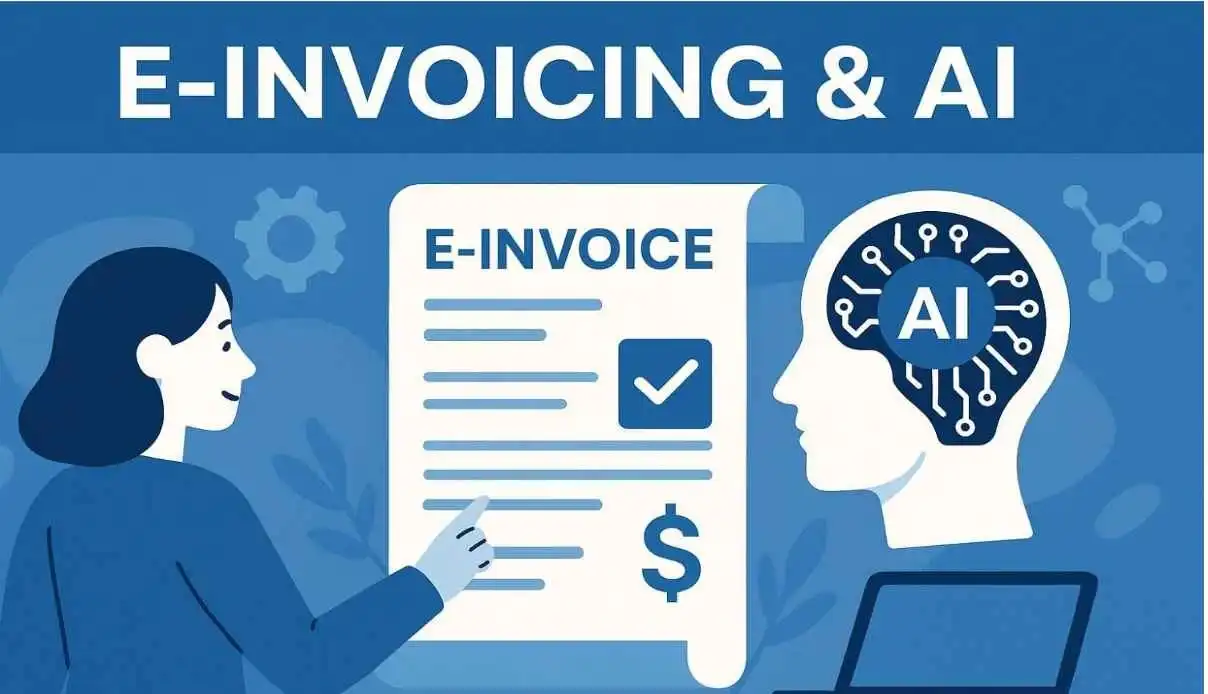
About E-Invoicing is the standard method of uploading B2B invoices on Invoice Registration Portal and receive an IRP validated unique Invoice Reference Number (IRN) against each invoice. This then makes sure that all invoices have a consistent format and automatically reports into the GST system. With E-invoicing, businesses do not have to create invoices on the portal. Instead, invoices are developed within the company’s current accounting or billing system and they upload them in the necessary format. The IRP signs the invoice digitally, once they are approved and returns it to you with a QR code as well as an IRN. It is designed to stop fraud, cut error and have GST filing more accurate.
Applicability of E-Invoicing in India
E-invoice is applicable to business based on the overall turnover of all GSTINs on one PAN. The government has introduced it on a staggered basis in order that compliance becomes manageable for the various kinds of businesses. Presently e-invoicing is applicable on a turnover threshold notifed by the GST Council. But many firms have the wrong impression of how that turnover limit is calculated. It applies across any year from 2017-18, not only the current financial year. If a business crosses the threshold even once in any of the past years, it would be permanent e-invoicing eligible unless future notifications change this. The Emily’s List case is also a good example of just how hard it sometimes is for businesses to understand that applicability, given that, if they do not comply with this requirement, it can result in the rejection of an invoice or an interruption in operations.
Here are the transactions/sectors to be covered under E-Invoicing:
E-invoicing is mandatory for these businesses on B2B supplies, exports & reverse charge supply and supply to SEZ units. It’s equally the case for B2B notes (both credit and debit). E-invoicing is not applicable to B2C invoices, non-resident suppliers, banks and other financial institutions, insurance companies and providers of transportation service of passengers by road or by railways and cinematograph services. While B2C invoices are exempted, eligible businesses must still ensure their invoicing setup is capable of distinguishing between the types of invoices being issued and produce e-invoices where mandated to do so. Understanding the difference allows businesses to avoid reporting mistakes.
Turnover Limits and Recent Changes
The government has been lowering the turnover threshold for e-invoicing to cover more businesses under the system. The approach is to add new categories each phase to be in compliance with, and provide time for implementation. SMEs and mid-market firms will need to be alert for notifications as the moment such a cap is amended, they can find themselves subject to instant obligation to create e-invoices. The fluctuation of turnover thresholds makes it necessary for companies to monitor their financial statements on a regular basis. A Chartered Accountant is very much required to ensure the eligibility and to smoothen out transition for the businesses.
Benefits of Implementing E-Invoicing Correctly
E-invoicing is not just about compliance, but it is also a technological advancement for businesses. By normalising the form of invoice data, accuracy and manual errors are reduced, reconciliation is significantly simplified, reporting happens in real-time. It also prevents fake invoicing and promotes smooth input tax credit claims. When the e-invoicing of a business is precise, there is less ambiguity in matching GSTR-1 with GSTR-3B and this enhances GST compliance. For those firms handling many invoices each month, automated e-invoicing can dramatically cut down on the time it takes to process invoices and improve accuracy. It eventually builds a trustworthy and transparent financial system for the company.
Implementation Checklist for Businesses
There are a few internal steps for you to implement e-invoicing. To begin with, businesses need to make sure that the accounting or ERP solution they are using has e-invoice generation capabilities and can connect to the IRP. They also need to consider which fields in their invoices will map to GST and test sample invoices for accuracy prior to going live. There will be requirement to change the invoice formats to add mandatory fields like GSTIN, HSN codes, tax values and item-level details. Firms will also have to educate their staff on how to generate, upload and authenticate e-invoices right. Once the e-invoice is generated, it has to be validated and then the QR code and IRN that are returned must be stored for any future audit. Correct storage of digital invoices is essential for compliance requirements and record retention.
Typical Barriers Encountered by SMEs in the Adoption of E-Invoice
For many SMEs, it is the technical things that are difficult about e-invoices themselves, if there aren’t sophisticated accounting programs in use. It’s difficult to know how compliant you are with manual billing systems. A lot of them are trying to understand when one should use and not make mistakes in invoice format. Some companies have issues integrating the system or getting IRP response quick enough due to heavy traffic. Inaccurate or incomplete data entry is triggered on rejected invoices resulting in delivery and cash delay. Firms will need to adjust their systems and processes in order to transition into the e-invoicing ecosystem seamlessly.
How CA’s can Assist Businesses to a Smooth Transition of E-Invoicing
A Chartered Accountant can be an excellent guide for businesses with respect to e-invoicing compliance. A CA checks eligibility, assesses financial records and prevents businesses from being misguided by the wrong rules. They help with software acquisition, installation deployment and staff training. If there is a CA in place, it looks for problems at the outset and develop measures to produce accurate invoices.
Responsibility of GSCCA & Associates in the Implementation of E-Invoicing
GSCCA & associate is a one-stop shop for e-invoicing compliance for SME and mid-teer companies. Their team assists with eligibility checks, software integration, onboarding, testing and continuous monitoring. “They see to it that every e-invoice complies with GST and is accurately reported,” he said. From ongoing support and precision monitoring, GSCCA enables companies to mitigate compliance risks and simplify tax processes.
Conclusion
E-invoicing is revolutionizing this process in India’s GST regime, introducing accuracy, transparency and efficacy to financial statements. Turnover thresholds, relevance and implementation steps are key for SMEs to remain compliant.