Founder and Promoter: An Insight
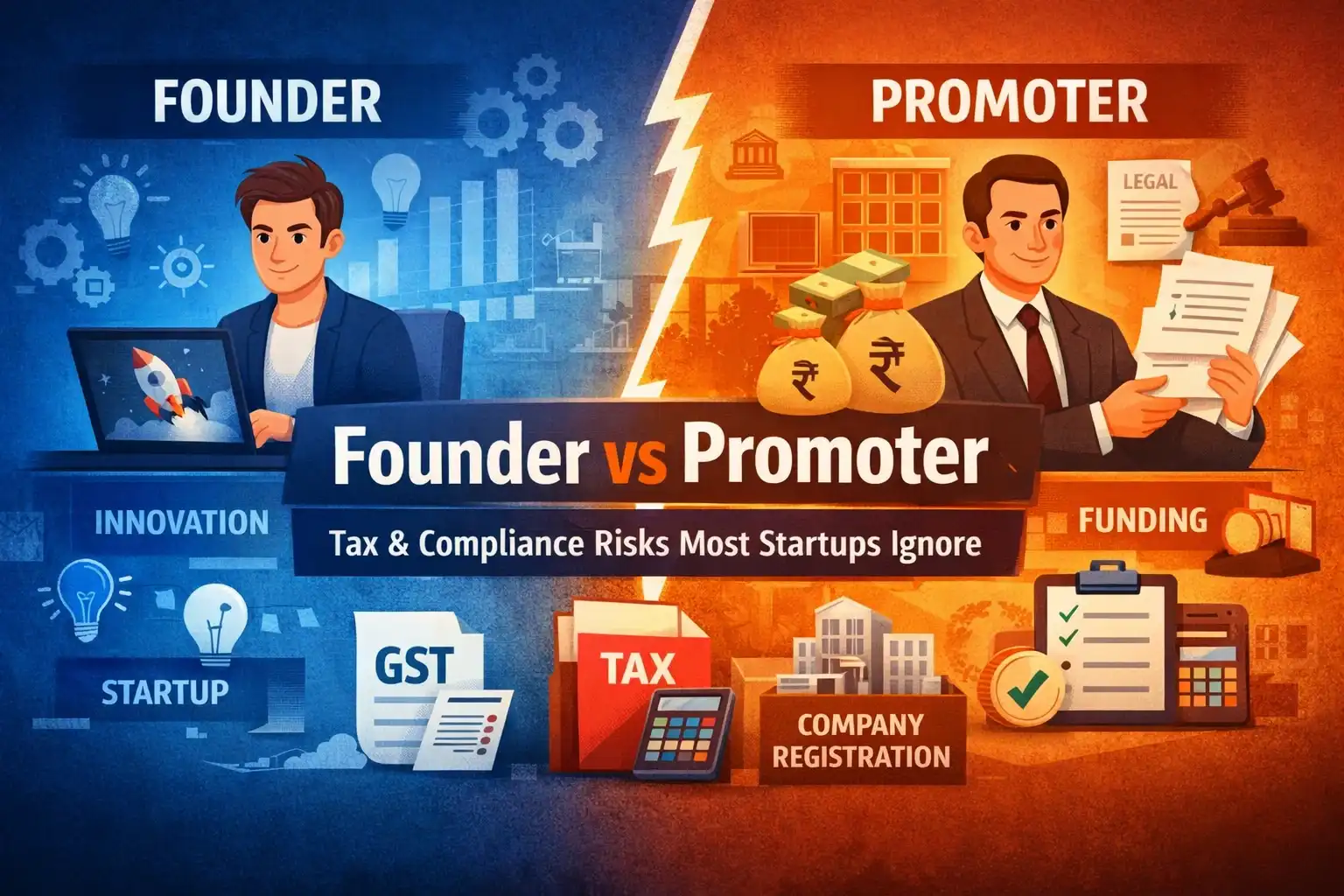
In Indian startup parlance, “founder” and “promoter” are often also interchangeable. Yet, legally and for tax purposes both roles are very different. What is important to understand about this difference and why it matters Getting this wrong can lead startups to regulatory, tax, and long-term compliance issues.
Founder Founder is an entrepreneur person who founded the company. 10) What is the concept of “Promoter” in Indian company law? In a lot of startups, there’s some overlap here because the founder and promoter is often one and the same, but note it’s not necessarily true.
This confusion at the time of due-diligence or fundraising is quite visible when startups start looking for best CA Firm india delhi CA Firm near me Accounting services.
Compliance Responsibilities Under Company Law
Promoters have certain legal obligations under the Companies Act. It is the duty of promoters and other contributors to disclose interests, observe accuracy in all documentations and comply with statutory regulations during company incorporation and company registration.
In cases where promoter details are not correctly disclosed or structured, a new perspective of regulatory oversight may unfold. Failure to comply with early-stage company registration can result on penalties, funding delays, and issues with share transfers later down the road.
Professional advice from a CA firm in India is required to help startups in getting the roles of promoters structured correctly at the outset.
Tax Implications to Founders/Promoters
The most under-considered risk, so to speak is that of taxation on shareholding and capital infusion. If shares are issued at a premium, one needs to make sure that the provisions of Section 56(2)(viib) of the Income Tax Act is complied with. Incorrect valuation paperwork can lead tax notices.
Promoter loans or advances to / from company should also be thoroughly documented. If there is no transparent entry for a transaction, it can be treated as deemed income or concealed support.
:The book keeping services are essential for good recordinH of promoter contri’butions, equit}’ allocation and reimbursable expenses.
GST and Operational Compliance Risks
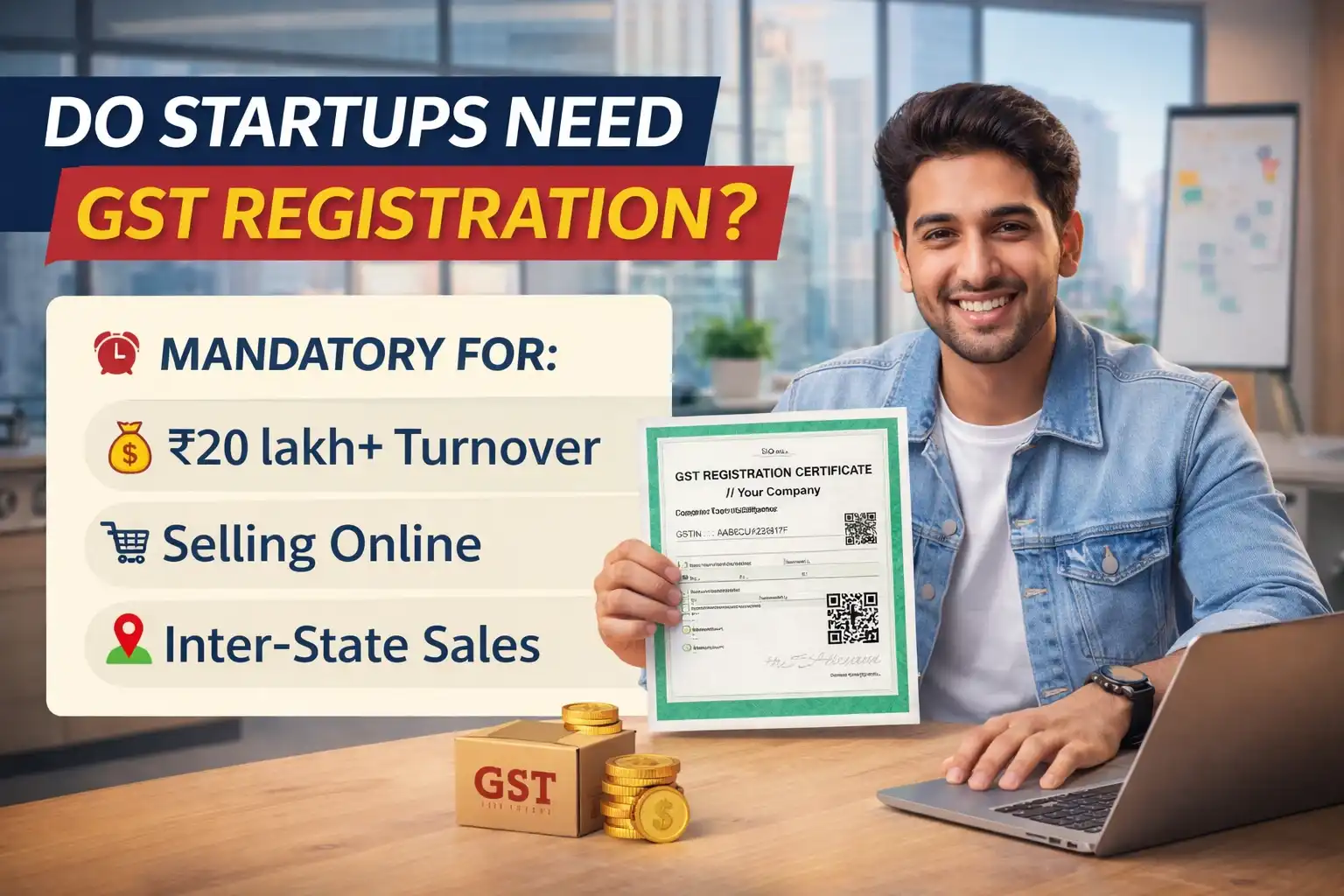
In many cases, the startups are too preoccupied with product development and fundraising that they tend to ignore responsibility such as GST registration and returning regular filings. Secondly, once the thresholds are breached, promoters will be legally liable for GST compliance of their company.
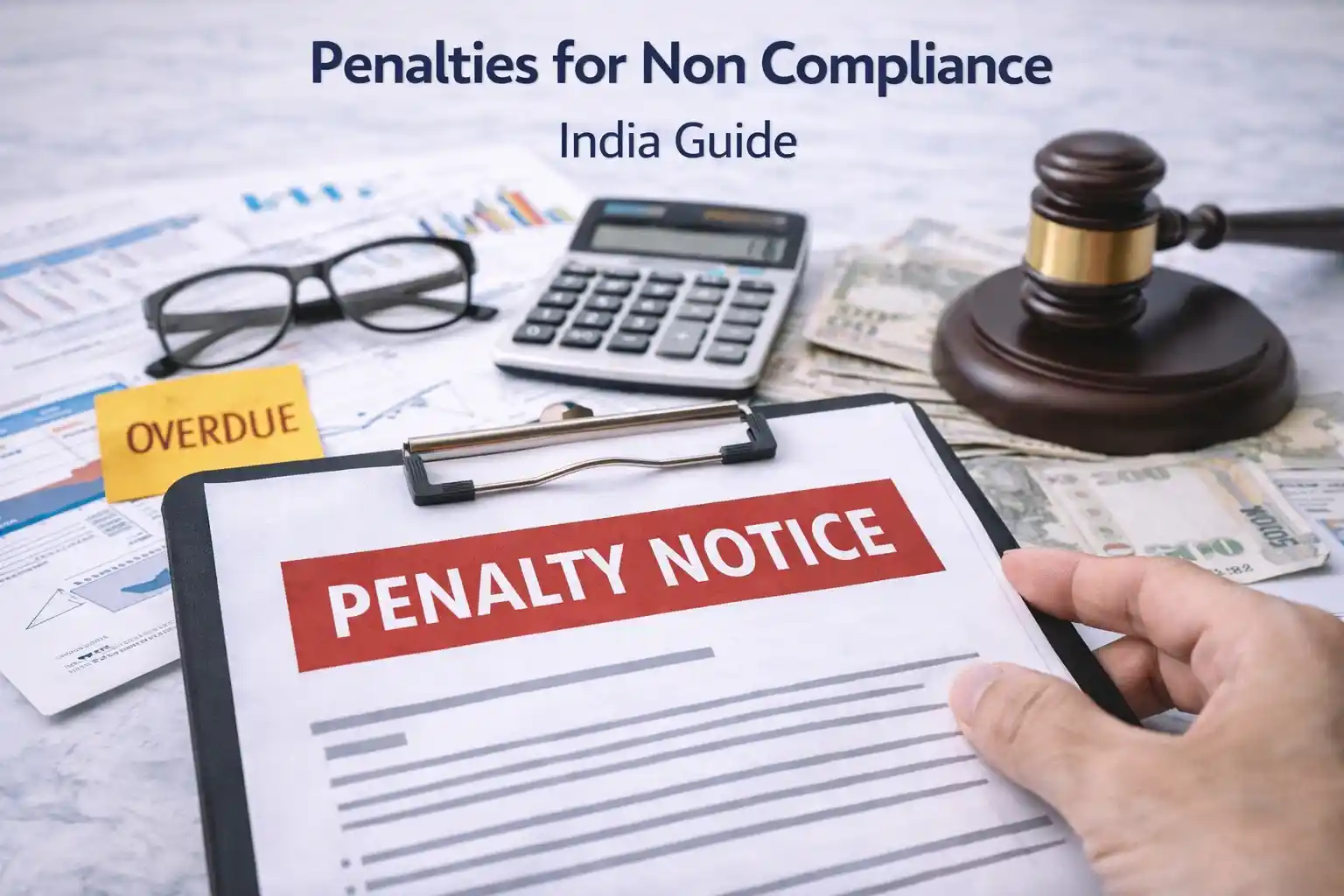
There are penalties for not getting GST registration done on time. Departmental notices can also be generated on account of inconsistencies between GST returns filed and the income tax records.
Continued extension of the GST return filing could affect the company’s credibility at the time of investor due diligence. Among others, it is organisations like GSCCA which mitigate these operational risks through orderly compliance oversight.
Related Party Transactions and Disclosure
Good deals promoters Promoters often do business with their startups – rent them an of office, offer consultancy or import goods. These types of deals should be fairly disclosed on financial statements and by board approval.
A lack of a transparent information exchange leads to criticism of financial mismanagement in the course of an audit, when partial or unsatisfactory disclosure. Transparent bookkeeping renders the such transactions in adherence with legal regulations.
GSCCA has helped early-stage companies in Delhi and other parts of India to structure related-party disclosures as per the regulatory requirements.
Equity Dilution and Shareholding Structure
When startups raise funds from investors, promoter shareholding patterns come under close observation. In the event that records of equity issuing are incomplete or not properly recorded it may impact valuation discussions.
Investment deals can get complicated if founder shares are misclassified, there’s no shareholder agreement in place or ROC filing is delayed. Common startup incorporation mistakes come back to bite during their Series A and Series B rounds.
Best CA Firm india delhi CA Firm near me Accounting services at the time of initial structuring can help you avoid such long term issues.
Personal vs Corporate Tax Separation
A lot of small business owners blur the lines between personal and corporate funds. Business and personal contributions paid from and to the opposite account result in accounting errors.
Such schemes can do an end run around financial reports and muddy the waters on tax filings. Should an issue be unclear during the course of examination, it may lead to more questions.
Tight spanking with accounting services How can a hard-nosed attention to booking keep personal and business matters asunder, thus lowering taxes?
Documentation and Due Diligence Preparedness
Both investors and regulators are demanding end-to-end documentation. This comprises board resolutions, share allocation slips, GST registration certificate, tax returns and compliance documents.
If a document is missing, valuation conversations might be held up. Savvy startups know that until the due diligence process starts, keeping their compliance ducks in a row is an afterthought.
GSCCA, a CA firm from Delhi and an Indian based CA firm, focusses on well-documented Startups to create trust and transparency to the investors.
Preventive Compliance Strategy
Instead of responding to orders or running out of funding, startups need to develop a compliance posture in advance. Routine updating of accounts, timely filing of GST returns and prompt company registration updates are the building blocks of operating discipline.
With the help of a professional, founder vs. promoter roles are defined and documented. The exposure of legal and tax risks can be much reduced if daily operations are designed in such a way as to automatically comply with regulation.
Multiple checks coming from experts on accounting can only enhance financial credibility and regulatory compliance.
Conclusion
The distinction between founder and promoter may be fine, but it has significant tax and compliance consequences. Mis-classification, lack of proper documentation and GST non-compliance can lead to long-term liabilities on startups, feel experts.
Robust company formation, organized accounting services, timely GST registration and filing of GST return and more importantly full disclosure by promoter.
With the help of Best CA Firm india delhi|CA Firm near me Accounting services, start-ups are able to monitor their compliance risks pro-actively and can concentrate on developing their company.
GSCCA is committed to continuing to help entrepreneurs establish strong regulatory infrastructure so that a compliant culture can be seen as if it were an arm of the organization.