Appreciating the Increasing Complexity of GST Compliance
Introduction of GST has led to the consolidation of India’s indirect tax regime but at the same time this new regime is compliance-heavy. At the same time, GST has simplified taxation, but also impose draconian compliance with real-time invoice matching and electronic checks. Consequently, India has seen a spike in GST litigation mainly because of the compliance lacunas and reporting discrepancies.
When they get departmental notices, companies usually look for the location of Best CA Firm india delhiBest CA Firm near me Accounting services. In numerous instances, though, such notices are not the result of fraud but are rather caused by addressable compliance errors.
A very basic knowledge of these common mistakes will drastically reduce your potential for litigation and fines.
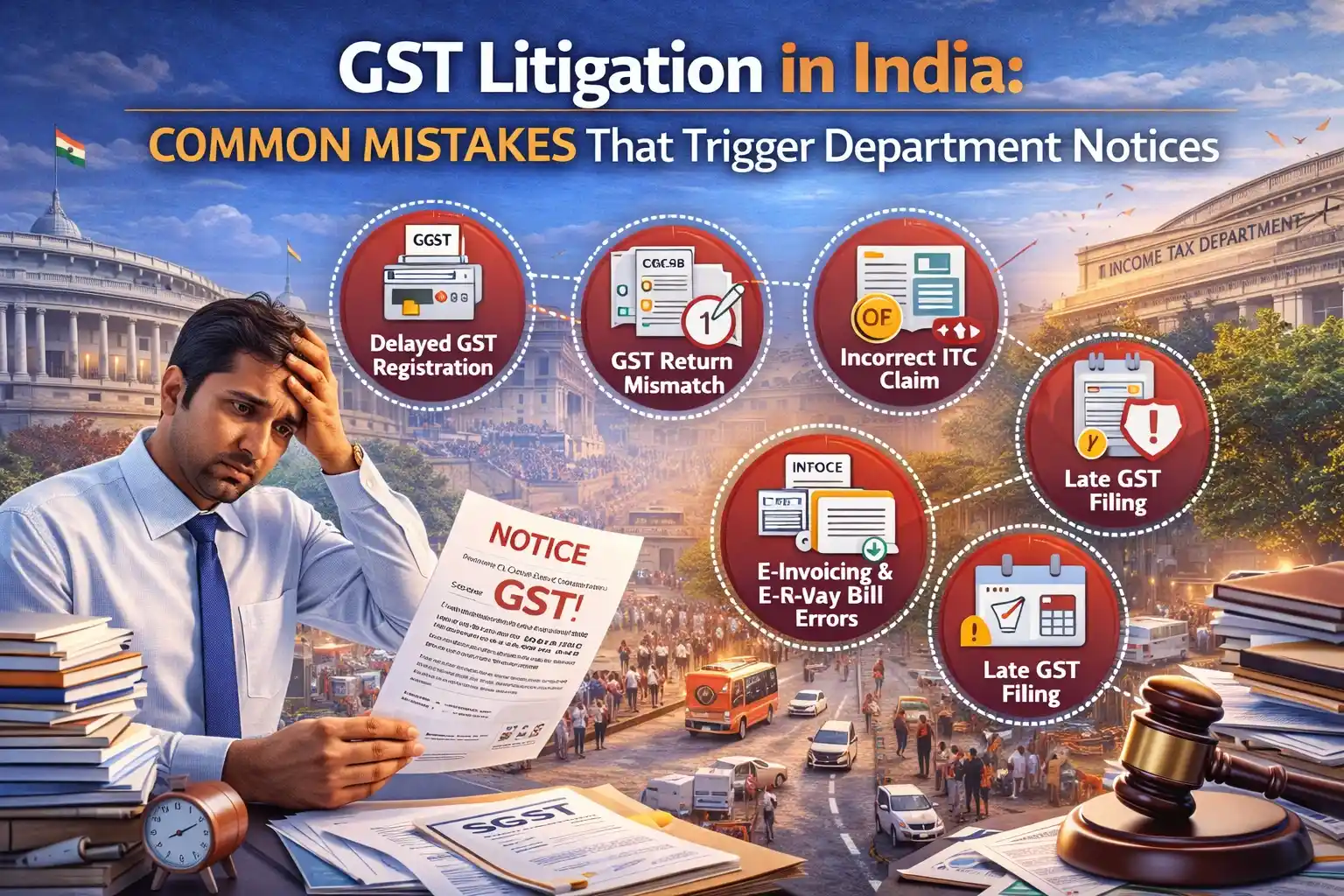
Incorrect or Delayed GST Registration
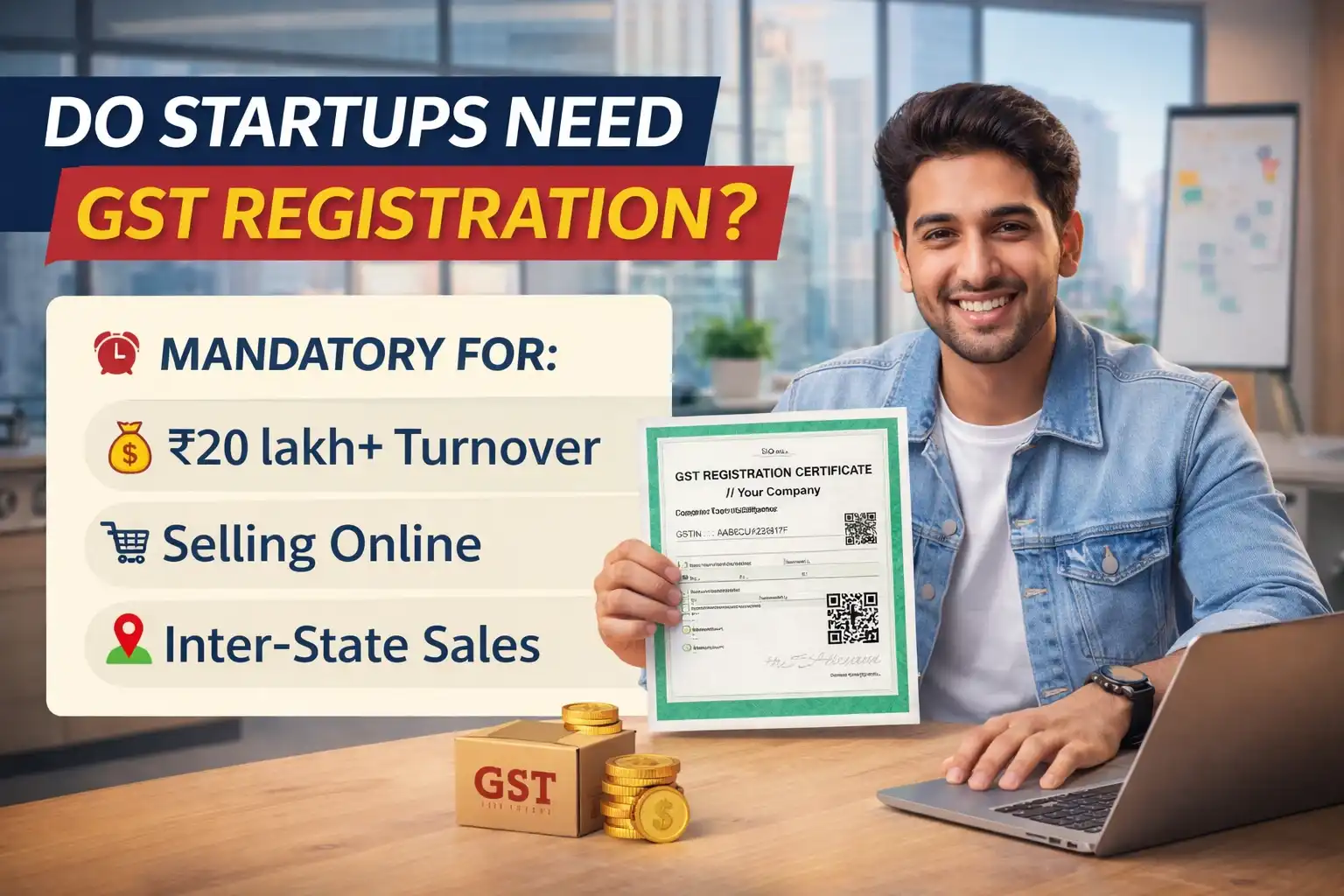
One of the first compliance mistakes that an organization can make is not applying for GST registration in time. All businesses with a turnover above the prescribed limit have to register for GST. If you are into interstate sales, then you should anyway apply for GST regardless of your turnover.
It may be too late sometimes and there can be penalties on account of retro tax liability for not registering with GST. Moreover, it may also draw attention from department officials to operate without a registration, especially during times of audits or data validation.
Professional advice at the incorporation of a company and registration stage will enable businesses to determine whether GST is applicable right from the start.
Mismatch Between GSTR-1 and GSTR-3B
Mismatch in return filings – Mismatch of GST notices is the most common type. Both GSTR-1 (outward supplies) and GSTR-3B (summary returns) have to be filed correctly by the businesses. When the information reported in those returns doesn’t jibe, computer programs raise red flags.
Clerical errors, wrong invoice entries or last-minute return adjustments are examples of such mismatches. Such discrepancies are generally what lead to computer generated communications from the GST department.
Both these cases could be avoided if we file the GST on time, and with proper reconciliation.
Incorrect Input Tax Credit Claims
Input Tax Credit (ITC) is one of the most reviewed segment in GST law. Availing ITC without getting supplier’s compliance is the most common fallacy. Where the detail of invoices is not uploaded by supplier or payment of GST is not made, ITC cannot be claimed by buyer.
Also, applied invalid ITC on blocked credits like personal use or non-business usage may attract a charge.
Reliable bookkeeping services and an organized validation of invoices are key factors to avoid false assertions on the credit side.
Ineligible E-Invoicing and E-Way BillsUREMENTS Products, Services & Companies Measures not Complied with.
Businesses with turnover beyond threshold limits as specified under regulations because of which e-invoice is being issued are required to comply with e-invoicing. In case a valid e-invoice is not created, then tax invoice can not be considered as valid a notice and penalties relating to same are also leviable.
Likewise, when an e-way bill is missing or incorrect during movement of goods, action can be taken under enforcement.
Manufacturing, Trading & Logistics: For businesses involved in manufacturing and/or trading who are also engaged in logistics, it is critical that the operational teams can clearly articulate your compliance processes.
Late Filing of GST Returns
Repeated delay in filing of GST returns is another key reason for departmental notices. And its not limited to your IRS Tax liability, even if you pay taxes owed failure to file or late filing could get you interest and penalties with compliance checkpoints.
Despite back and forth these delay if frequent can result into suspension/cancellation of GST registration itself making business difficult.
This risk is considerably mitigated by organized financial management and disciplined filing processes.
Mistakes during company formation and registration
Common GST problems arise at the time of incorporation or company registration. Selecting wrong business type, retaining wrong HSN codes and due to omission of entries in the prepared documents may eventually cause non-compliance.
Young startups often ignore compliance structuring during the incorporation, and receive show cause notices department wise.
Tax structures for Corporates and Real Estate based Businesses During business establishment, it is important advice from seasoned professionals so the tax structures would be compatible with the operational set-up.
Failure to Reconcile Annual Returns
The reconciliation between books of account and GST returns filed during the year is to be done at the time of filing Annual Return. Differences in audited financials and GST returns are commonly noticed by the department.
Incorrect reconciliation of turnover, tax liability or ITC claims can result in show cause notices and audit.
Reconciliation of the same is systematically done prior to the yearly filing a professional accountant services do.
Ignoring Departmental Notices
Ignoring or delaying reply to GST notices One of the common mistakes made by businesses is either ignoring the notice or replying too late for it to be of any effect. A lot of these notices are computer generated and need to be addressed in certain times or won’t go away. Failure to do so can lead low level disputes to becoming litigation.
Most disputes are resolved soon after responding with proper documentation, without the need for legal recourse.
Preventive Compliance: The Smart Approach
It is always cheaper to be preventive than to play defense. Companies that institute checks and balances with periodic reconciliations and oversight by specialists can decrease risks.
GSCCA is Delhi based CA firm who deals with startups and SMEs by providing organised services of GST registration, GST Return filing, company incorporation support and end to end accounting. Business should aim to proactively complying and accurately documenting so that departments do not end up in unnecessary disputes.
Companies are better off with compliance structures than they are just responding to notices.
Why Professional Guidance Matters
GST statute is not a static law but undergoes several amendments. Compliance expectations are in an ever churn due to notifications/circulars/judicial interpretations.
Looking for Best CA Firm india delhi CA Firm near me Service of Accounting very often speak the needs of a business in terms of effective skills. Technical issues can be avoided by sourcing the best in professional to take care of GST registration, return filling, and reconciliations.
Money discipline and sanskars as well as awareness of dharma in management are the prerequisites of a successful business.
Conclusion
In India, disputes under the GST don’t generally emanate from financial structuring to save taxes but due to procedural shortfalls, mismatch in reporting and insufficiency of documents. Wrong GST registration, ITC mistakes, mismatch of returns and delay in filing are some of the common reasons for department notices.
By keeping good records, filing returns in time and following structured compliance while forming or registering a company, businesses can mitigate risk of litigation to a great extent.
All organisations can grow rather than face legal battles with sound accounting systems and professional advisory support. In a tax regime based on compliance, prevention is still the best defense.