
Introduction
The option to select between old and new tax regime has become one of the most crucial financial decisions that a taxpayer makes in a financial year, particularly in India. Given these differences in the details and how they vary along income structure, deductions, and other long-term financial decisions, one is not necessarily the better option for everyone, but depends on a large number of relevant factors. It is important to understand how these regimes work to choose wisely and remain compliant with income tax regulations.
However, for most people, input from a chartered accountant or a CA firm in Delhi can ease this choice and ensure minimum tax liability.
Understanding the Old Tax Regime
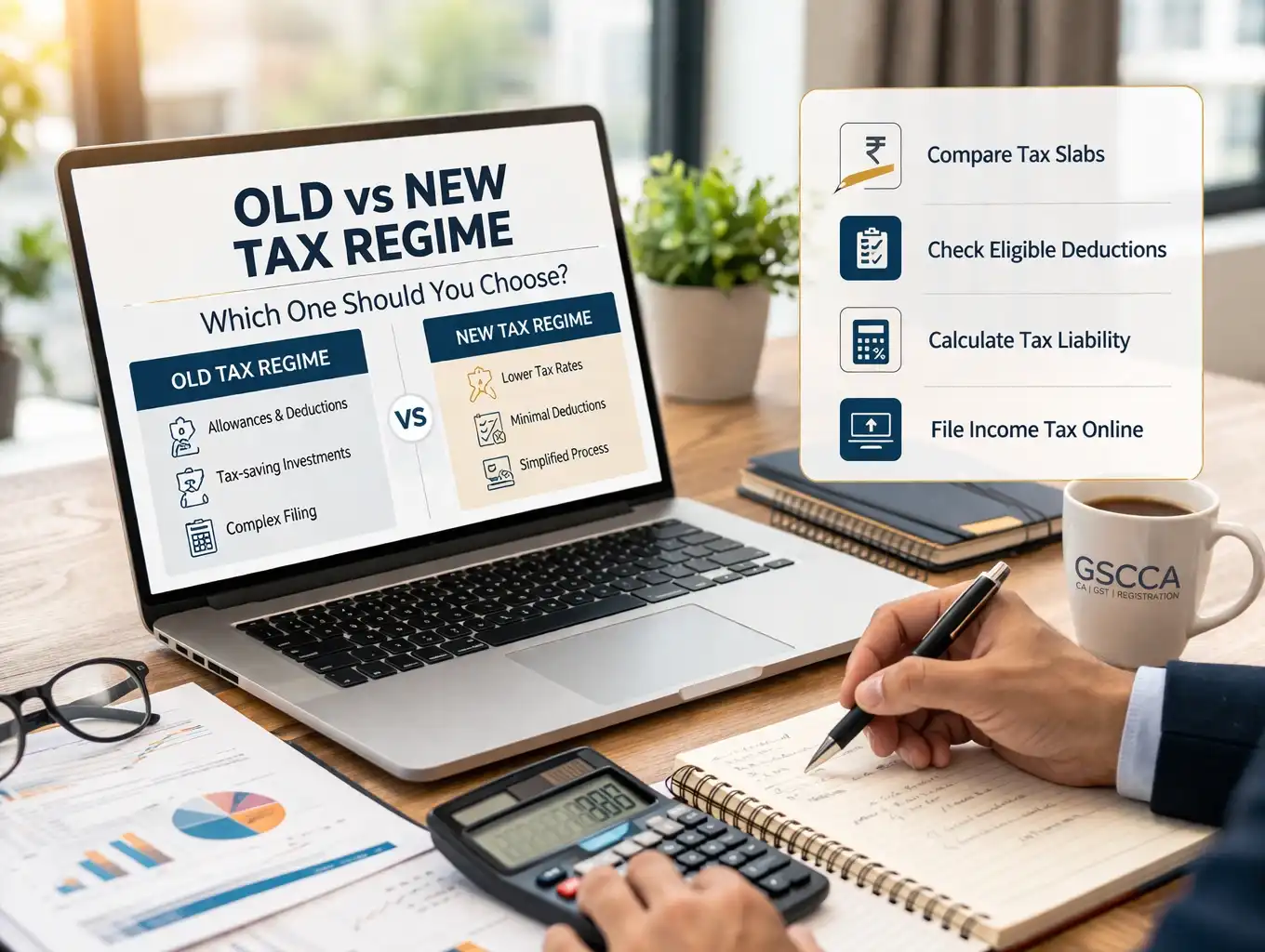
Multiple deductions and exemptions are a feature of the old tax regime. You can claim benefits and reduce your taxable income for sections such as 80C, 80D, HRA, LTA, home loan interest, etc.
People who have large investments, insurance plans, or expenditures eligible for a deduction tend to favor this regime. This option is often useful for people that are actively planning their finances as it rewards disciplined saving habits.
Understanding the New Tax Regime
While the new tax system brings in lower tax rates, it also does away with nearly all deductions and exemptions. It has been introduced to simplify the tax filing process and to avoid complexities of multiple claims.
With this regime, taxpayers do not need to maintain extensive information on investments and expenses for tax purposes. It is ideal for those who like a simple taxation process with minimal supported documentation.
Features Comparison Of Old Regime And New Regime
The most significant difference is in deductions and tax rates. In the old regime you have higher tax rates but you can claim several deductions against your income where as in newer old regime you have lower rates but the exemptions are very limited.
Personalisation and Sentiment The preferred option depends on whether the total of deductions under old regime exceeds the advantages of lower tax slabs under new regime. Like with everything else taxation-related, each taxpayer is different and calculations should be made accordingly.
Factors to Consider Before Choosing
Income level is one of the most important factors in determining which tax regime is appropriate. The old regime will benefit those with higher incomes and several deductions. Conversely, if you have very few deductions, the new regime might be the more beneficial option for you.
The other thing to take into account is the investment habits. Well, taxpayers who regularly invest in certain tax-saving instruments may prefer to continue under the old regime compared to the new one, whereas those who do not focus on tax-saving investments may opt for the new regime.
The stage plays a very crucial role in the business and hence we need to very thoroughly assess these and a professional guidance from a Chartered Accountant near me or the Best chartered accountant near me can help assess these factors accurately and help in avoiding costly mistakes.
The role of deduction in our decision-making
The older tax regime is all about deductions. Common deductions may include contributions towards provident funds, insurance premiums, medical expenses and education loans.
The advantage of the old regime may still give better savings if the total of these deductions makes taxable income much less. On the other hand, if there are few deductions, the reduced tax rates under the new regime may lead to lower total tax liability.
Ease of Filing and Compliance
With the new tax regime, claiming a tax rebate has become a lot simpler as filing is made easiest by eliminating claims for multiple proofs and documents. However, this might be useful for salaried employees and freelancers who wish to go for an easier approach.
But they must file accurately still. By help of Services relating to Income tax & returns online & Income tax & returns india ensure returns are filed correctly & within deadlines which in turn reduces the risk of penalties.
Old Regime — When To Use It?
The old tax regime broadly favours when deduction and exemption are fairly high. This option is an effective one available for home loan holders, those who invest in life insurance, or those with high expenses for tax-saving purposes.
Typically, taxpayers who follow disciplined financial behavior and wish to take every opportunity to use deductions to accumulate wealth over the long run will choose it.
When to Opt for New Regime?
The new tax regime is best suited for individuals with lesser deductions or if they wish to use the simplified tax regime[3]. It makes compliance easier and brings certainty in terms of tax calculations.
This regime is often more convenient, advantageous for young professionals, freelancers, and people without many financial obligations.
Importance of Professional Guidance
Because tax decisions may affect one’s financial health for a long time. Choosing the right regime after thorough accurate computations and your eventual goals with respect to income as well the business entity is crucial and variation from the correct regime can have serious repercussions hence it is advisable that you consult your professional chartered accountant.
GSCCA, a reputed CA firm in Delhi helps clients with tax structures, evaluation of deductions and filing of timely returns. They make tax compliance easier for taxpayers whilst maximising tax results.
Conclusion
One has to balance income, deductions and expenditure habits to choose between old and new tax regime. The best solution is a moving target, as it is different for everyone.
After considering their own financial welfare, and consulting with professionals, taxpayers can decide what best suits their objectives. Whether you choose to avail deductions under the old regime or stay with the new regime for the ease and simplicity it offers, right planning will lead to effective tax management and a comfortable tax compliance strategy for financial years ahead.