
For Freelancers and Consultants: TDS And Advance Tax in India
Freelancing and consulting has seen a boom in India, with professionals wanting the flexibility, freedom to choose their projects and operating as an independent entity. On the other hand, this freedom also means that you are now responsible to take care of your own taxes. While the classification also applies to boss-owned wage earners, who don’t have say over their working conditions professonals and who are having the tax on them taken out of their paychecks by a company owner, unlike full-time workers freelancers and consultants calculate and track taxes themselves. Some of the key tax responsibilities which self-employed people need to be aware of are Tax Deducted at Source (TDS) and Advance Tax. The only way to know how these operate is in order not to fall afoul of them and maintain a smooth flow of your financial dealings throughout the fiscal year.
TDS for Freelancers and Consultants Explained
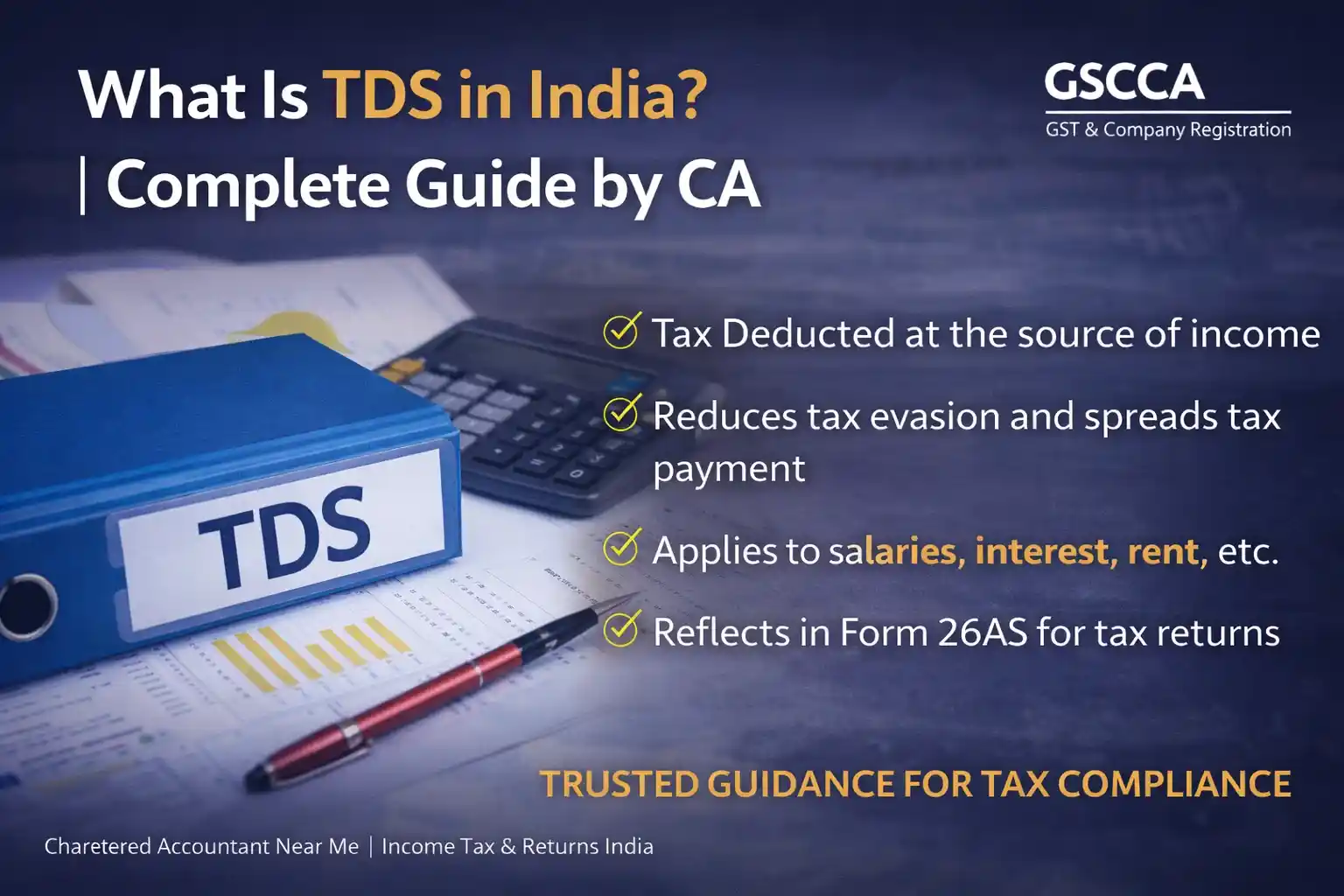
TDS is one of the methods of collection of taxes, by which certain percentage of an amount is deducted by a person at the time of making /crediting certain specific nature of payment to the other person and deducted amount is remitted to the Government account. In case of a freelancer or consultant, TDS will be applicable the moment he/she gets a payment from clients under professional/technical services. As per the Income Tax Act, any person or entity making a payment exceeding ₹30,000 in a year for professional work is required to deduct TDS at rate of 10%. This is a compulsion and is paid by the client directly to the government under PAN of freelancer. The deduction does not mean the freelancer’s entire tax bill is paid; it can only be used as a part-payment for their overall tax liability.
Most freelancers think that if TDS has been deducted, they don’t need to pay tax. This isn’t the case always as tax liability is based on annual gross income and applicable deductions under section 80C, 80D and so forth and on the slab rate of income. Accordingly, even if the freelancer’s tax liability exceeds that of a basic exemption and some TDS has been deducted, it is possible he still owes an amount over and above his previous deductions. Conversely, if the TDS deducted is more than the liability, the freelancer will claim a refund in ITR.
How Freelancers Can Keep An Eye on Their TDS
Freelancers should always ask their clients to do TDS properly and deposit it under the right PAN. The TDS deducted can be checked anytime on the government’s TRACES portal or in Form 26AS. It is basically a statement whereby your tax deducted by clients, advance tax paid and self-assessment tax are reflected in one place. Monitoring Form 26AS periodically allows freelancers to ensure that the client has deposited TDS in time and correct quantum. Any discrepancy can lead to problems at the time of filing ITR, so it is important to cross-check on time.
Being well structured in invoices and contracts, will also help you to have smooth TDS compliance. Every bill raised to a client ought to contain freelancer’s PAN, description of service and the section under which TDS is applicable. The TDS amount as evidenced in Form 26AS gets adjusted automatically against the total tax liability at the time of filing annual income tax return by the freelancer, thereby ensuring that everything is transparent and hassle-free.
What Is Advance Tax, and Why You Should Be Aware of It
Freelancers and consultants have certain heavy tax responsibilities such as Advance Tax. Because there is no employer to withhold taxes on a monthly basis, self-employed individuals must save for and pay such taxes as they manifest in their month-to-month income. First, to tell you what is Advance Tax in simple terms, it is a system where taxpayers can pay the total tax liability in advance instead of lump sum payment at the end of financial year. If your tax obligation for the year is more than ₹10, 000 you must pay advance tax.
Advance Tax is payable in four instalments: June, September, December and March. Such payments are calculated from estimated annual income after deducting certain expenses as provided for in the Income Tax Act. The self-employed can subtract business expenses like their internet bills, software subscriptions and travel costs, as well as rent on the office they work in, to get their taxable income. If the amount of such installment paid by due is less than 90% interest under sections 234B and 234C would become payable and aggregate tax liability could go very high. So, it is important to compute accurately the income and make timely payment of Advance Tax.
How to Calculate Income and Pay Advance Tax
Freelancers often feel sheepish estimating income because we don’t earn the same amount each month, or take home as predictable an income. The key is to calculate anticipated annual revenues, taking into account the current projects, open retainer agreements, along with historical earnings. Deduce all eligible expenses and tax-saving investments from this estimate. Once you have arrived at the desired taxable income, compute tax as per the slab rates applicable and reduce TDS deducted by clients. The remaining amount must be paid as Advance Tax.
Advance Tax can be paid online very conveniently at the Income Tax e-filing website, with the help of net banking or UPI. After making the payment, a challan receipt is prepared and should be retained for record and subsequently verified in Form 26AS. When income changes and fluctuates over the year, freelancers can update their income figure in the next instalment period and pay that much tax. This way you avoid overpaying or underpaying in taxes.
Adjusting TDS vs Advance Tax for Hassle-Free ITR IQueryable
“For freelancers, handling both TDS and Advance Tax is like a juggling act. TDS help in reducing part of the tax burden, while Advance Tax makes sure the remaining tax does not become a lump sum at end. Filing the Income Tax Return becomes a cakewalk when both are handled efficiently. When filing ITR, all the TDS deducted and Advance Tax paid comes automatically; where in case taxpayer’s total tax payment is more than what he was liable for, the freelancer gets a refund. If there is a gap, self assessment tax should be paid before filing the return.
Keeping records of income and expense, periodically checking Form 26AS and keeping track of the preparations with that invoice etc., does a lot to ease the entire tax filing process. With careful planning, even freelancers and consultants can be compliant and penalty-free with peace of mind to build their business. It is not only about tax, but financial discipline and long term stability. Explanation of TDS and Advance Tax: What it is?