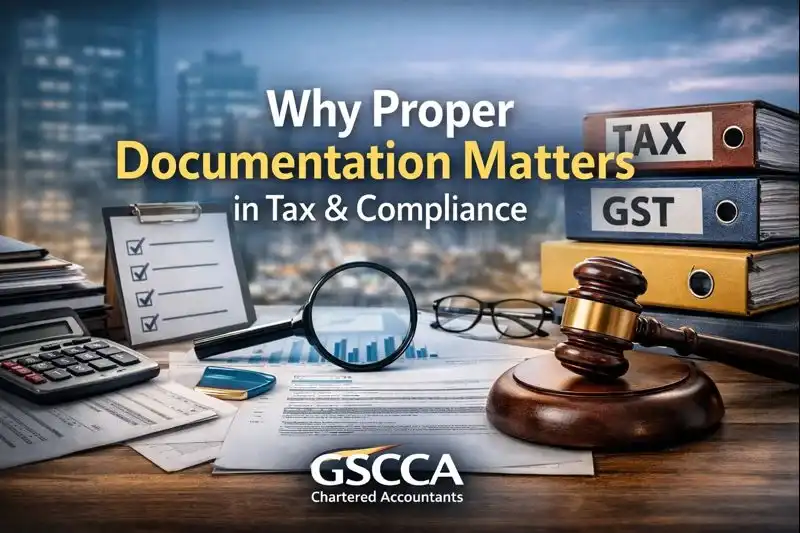
Why Good Documentation is Important in Tax and Compliance
In today’s times burdened with heavy business regulations, documentation is neither a mere administrative formality, nor a procedural obligation but the cornerstone of sound tax planning and compliance. Small and large companies need to keep exact records for financial transparency, legal protection and generally easier communication with the tax offices. At GSCCA we see this regularly – poor documentation being one of the main reasons a business receives penalties, notices and compliance issues.
Grasping the significance of keeping comprehensive records is necessary for companies to keep in compliance; reduce risks; and establish lasting credibility.
Knowing How to Document in Tax and Compliance
Records in taxes and compliance The term “documentation” particularly refers to the process of taking care of, saving, as well as packaging financial transactions along with other known obligations through contracts along with invoices on payroll also bank claims. They are the documents that evidence revenue or expense, deduction and payment of tax by a business.
Tax laws in Indian such as the Income Tax Act, GST laws and other legal frameworks require businesses to maintain records for a definite duration. Failure to comply may have penal consequences, lead to disallowed expenses and even legal action.
Ensuring Accuracy in Tax Filing
One of the most important reasons that good documentation is important has to do with filing your taxes correctly. Tax report is also prepared from Books of Accounts like sales invoices, purchase bills, expense vouchers and Bank records. Each missing or incorrect document can introduce errors to your tax calculation.
Proper recordings help to properly calculate the income and claim deductible under the law. That lessens the chances of underreporting (or overreporting) income, which might catch the attention of the tax man. At GSCCA we understand the importance of having organized records for accurate tax preparation and advantageous tax planning.
Avoiding Penalties and Legal Consequences
Incorrect or incomplete documentation is a frequent cause of tax notices and penalties. At the time of assessment/audit/investigation they invariably ask for documentary proof to support entries made in our returns. If a company can not produce substantiation it may be denied the deductions and charged extra tax, interest or penalties.
In the worst case, failure to adhere may result in law suits or business interruptions. Good documentation protects businesses from undue legal and financial risk.
Facilitating Smooth Audits and Assessments
The internal, statutory or tax audit for that matter, becomes lot better when papers are maintained properly. Good records enable auditors to verify transactions promptly with no second guessing or do-overs.
For companies, that equates to less time answering audit notices and more time dedicated to the business. Professionally, structured documentation is a sign of good governance and financial stewardship, which improves the profile for audit.
Facilitating GST Compliance And ITC Input Tax Credit In CMP The Composition Anyone opting for composition gets enrolled on our portal, where all his details like the names of goods sold and services provided by him can be saved.
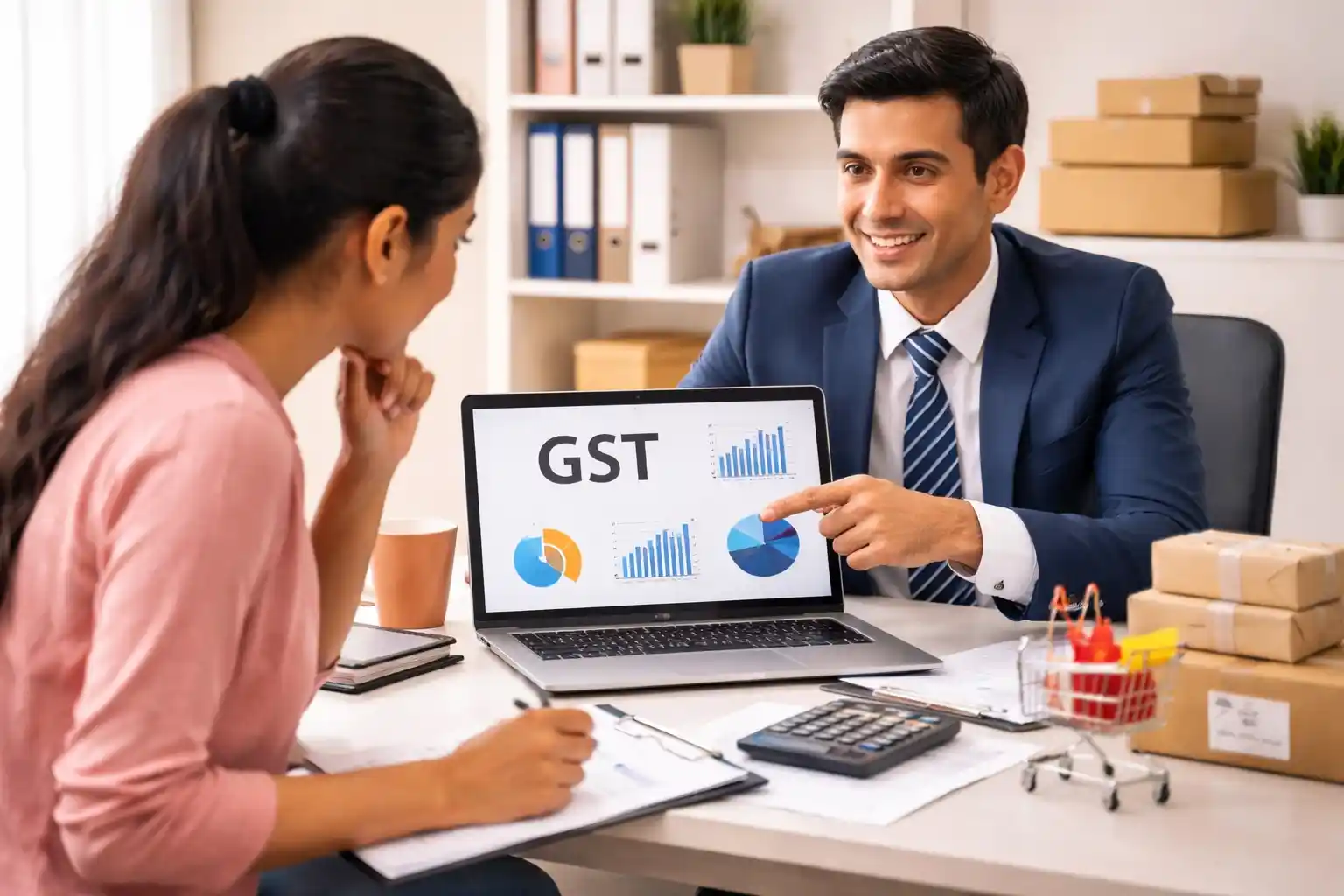
Documentation has been one of the important factors under GST in terms of compliance and availing input tax credit. In order to claim and keep credits for GST paid, tax invoices, debit notes, credit notes and reconciliation statements must be valid.
If there is any discrepancy in the returns, or if some invoices are missing or the amounts mentioned on some aren’t correct, you’ll lose out of input tax credit and will be forced to pay more tax. Effective documentation leads to hassle free GST return filing, correct reconciliations and compliance with the changing GST laws.
Strengthening Financial Transparency and Decision-Making
Completed documents lead to financial transparency. Reliable books of account reflect the actual state of affairs of a business in terms of its positions, profitability and cash-flows. This kind of visibility helps with decision-making, budgeting and strategic planning.
Documentation best practice also supports new businesses seeking loans, investors or responding to due diligence requests. Investors and banks demand substantive proof before funding a restaurant.
Trust-Building with Authorities and Key Stakeholders
Revenues Reduce Your Tax Risk Good documentation related to revenue instills confidence among tax authorities, regulators and others. Companies with clean records are not as likely to be the subject of aggressive scrutiny or drawn-out investigations.
Outside, transparent documentation help build trust with partners, clients, and vendors. It reflects your business is professional and worth taking seriously.
Record Retention and Compliance Readiness
Tax and other regulatory requirements determine the length of time records must be held – generally, for a number of years – depending on the type of document. Records that are kept for the longer of the volumes threshold and annual turnover, allow yourself some “wiggle room” for inquires, re-assessments or litigation.
The deadline isn’t the point, it’s being able to answer any query about your readiness to comply. Good record-keeping helps businesses stay ready.
How GSCCA Supports Companies to Become Compliant
We know how difficult it is to manage the documentation, especially if you are an SME at GSCCA mass. We help our clients establish strong documentation systems, make and keep statutory records and fully abide by the law on time.
From accounting and invoicing to payroll and salary calculations, we help small businesses stay organized, compliant, and at ease. Our methodology is based on precision, transparency and continuous planning for compliance.
Conclusion
Documentation is the cornerstone of tax compliance and financial transparency. It not just helps to prevent mistakes in the tax return filings and compliance issues, but also saves businesses from fines, audits and legal hurdles. In the increasingly scrutinized and digitally governed world in which we live, keeping accurate records is no longer a matter of choice – it’s a matter of survival.
Businesses need not struggle to create licence documentation using GSCCA professional services and can be assured they remain compliant, and grow with confidence.