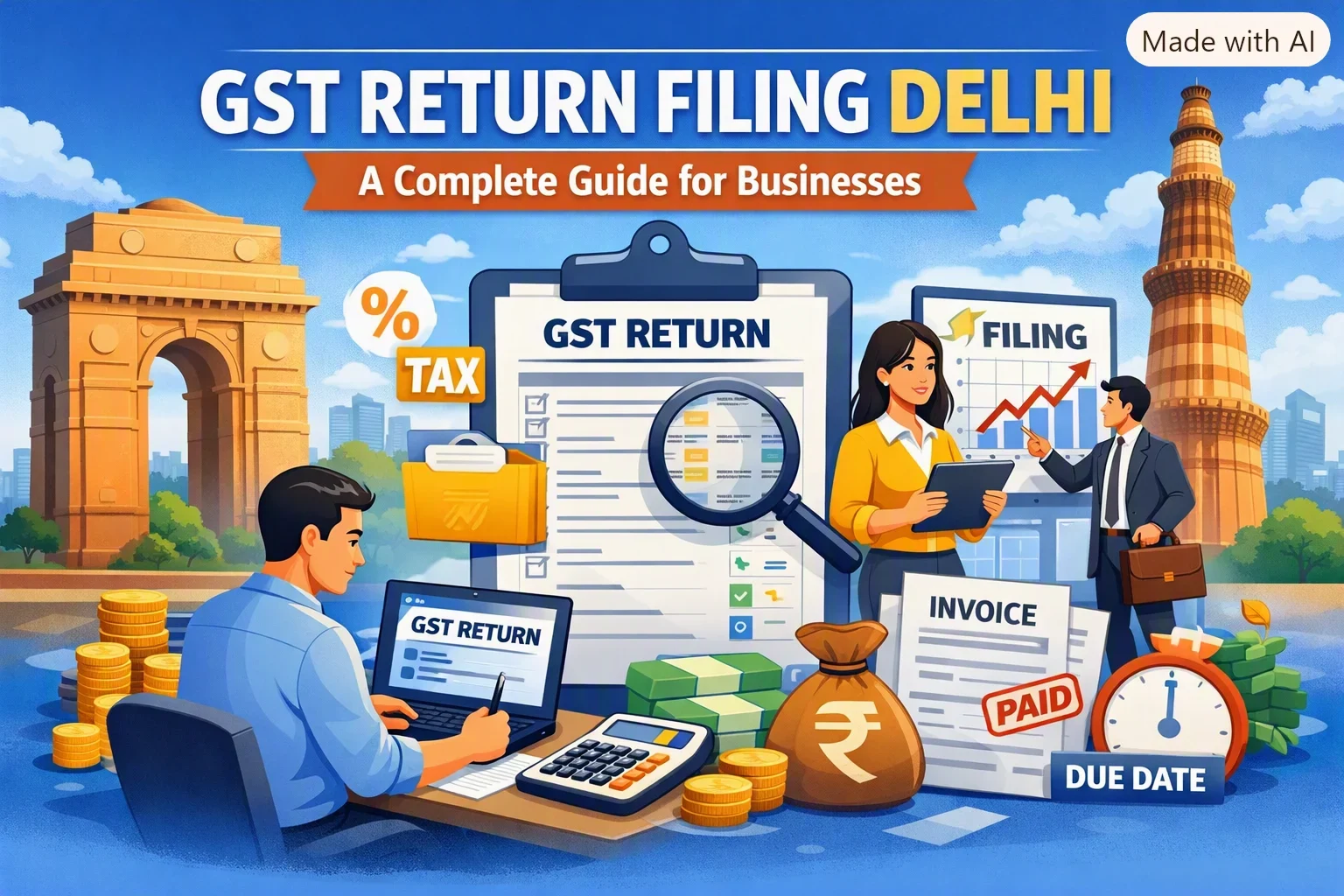
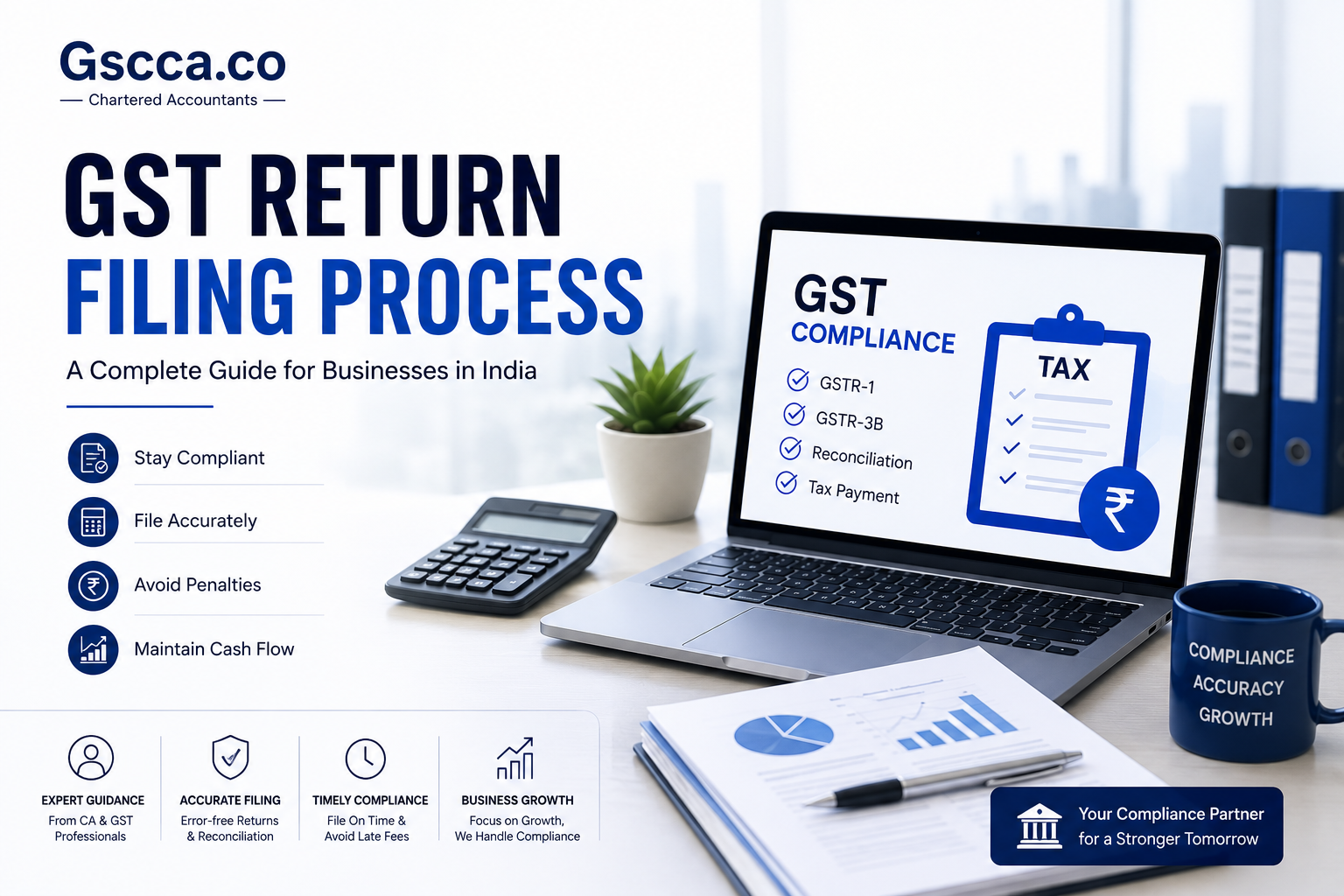
GST compliance is now an integral part of doing business for all Indian businesses However, even now a lot of firms nonetheless struggle with late filings, calculating the inaccurate tax and matching invoices. This is simply because knowing how to file GST returns is paramount to not just compliance but also towards keeping cash flow in check and ensuring that no penalties are incurred.
In case of industries dealing with number of transactions, vendors and tax invoices on monthly basis, hiring an experienced CA firm in Delhi or GST consultant In Delhi usually brings down the reporting frequency and minimize filing errors.
GST return filing is not just entering numbers to a portal. This includes reconciliation, tax validation, and invoice matching with accurate reporting and accuracy across business records.
Have a Basic Understanding of GST Returns and Its Relevance
GST return is also an official document that needs to be submitted before the government segregating details of sales, purchases, input tax credit and tax liabilities.
The return that you file is based on your business structure and registration category. Regular taxpayers generally file GSTR-1 for outward supplies and GSTR-3B for tax summary reporting. Businesses under composition scheme follow different formats for filing.
In cases where the volumes are huge in numbers, GST return filing services also include a requisite accounting review, invoice verification and compliance checking before pushing the records out for submission.
Input tax credit claims too are impacted by accurate filing. Wrong information can lead to blocked credits or notifications by tax authorities.
Preparing Financial Records Before Filing
GST Return Filing guide- The first step is organizing financial and transactional records properly.
Businesses will have to perform reconciliation of sales invoices, purchase records, debit notes, credit notes and e-invoice data before GST liability can be calculated. Filing delays often arise when the accounting records are incompatible with vendor invoices and/or GST portal records.
Professional accounting services Delhi based firms are used by the companies that will help you to keep your compliance in order as bookkeeping and reconciliation process is done continuously rather than at deadline of filing.
Now, GSTIN details, invoice numbering & Tax Classification must be confirmed with businesses before moving on to returns.
Uploading Sales Details in GSTR-1
GSTR-1 Consists of details about the outward supplies expecting in that particular tax period.
The return is used by businesses to report B2B invoices, exports, debit notes, credit notes and taxable sales. Accuracy is key as the customer claim input tax credit based on suppliers filing.
The new system checks that the field on which an invoice is based must match a listed clause in Sections 11 or 12. And then incorrect reporting leads to notices or reconciliation disputes down the line.
When it comes to invoicing transactions across states a company will need to thoroughly review the invoices where tax rates should apply or not.
GSTR-3B filing and payment of tax liability
Returns GSTR-3B — summary of outword supply details, tax liability, input tax credit and payment of such taxes are being filed by businesses.
At this stage, businesses must carefully compute the eligible tax credits. Input tax credit claims must match vendor filings and purchase records.
Tax Consultant Delhi who focus on unstitching mismatches often work alongside companies that are dealing with complex vendor networks in their respective industries prior to filing. Fraudulent credits could lead to heavy penalties and scrutiny from the department.
Once the liability is calculated, tax payments are carried out from the GST portal. Businesses need to maintain enough balance in the electronic cash ledger before filing.
NEED FOR RECONCILIATION IN GST COMPLIANCE
Reconciliation is one area that rarely gets the attention it deserves for effective GST compliance.
Regular cross comparison of purchase registers with GSTR-2B data to check whether the supplier has uploaded invoices properly. Disparities between book income and amounts reported on the portal could have important consequences for tax credits.
Since manual review becomes impractical for businesses with higher volumes, reconciliation-related GST return filing services form part of professional offerings.
This also becomes a good point for identifying duplicate invoices or notices of missing records, and many hidden mistakes concerning correct GST classification before the finalization of returns.
Connecting GST Filing With Broad Tax Compliance
It is directly associated with accounting, filing TDS returns online, preparation for an audit, and income tax compliance.
Businesses that keep their GST records up to date tend to encounter fewer problems during statutory audits and income tax assessments. That is number of industries opt for integrated support from firms providing audit services Delhi along with tax planning services and accounting together.
Startup CA service is generally structured to bundle for GST registration Delhi, company registration Delhi and ongoing compliance management under one array (if it is a startup or newly registered entity).
Each type of tax filing has its own issues and requirements, adding complexity to the coordination of compliance systems that manage reporting inconsistencies.
Mistakes Businesses Commit when filing the GST
One of the most frequent problems is waiting until the submission deadline to match invoices. Resulting in hasty submissions and unnecessary mismatches.
It is another blunder to take input tax credit without investigation. Businesses also fall back on internal purchase records without confirming supplier uploads.
The risk of compliance is also due to incorrect HSN codes, the double entry of invoices and mispaired reconciliation with vendors. Industries that handle significant transaction volumes should be conducting monthly internal reviews rather than quarterly corrections.
A lot of businesses also often overlook the failure to seek professional review, particularly in relation some interstate supplies or one too many GST registrations.
Practical Insights for Businesses
Automation has vastly improved GST compliance, even though human review is an important component.
Regular bookkeeping, periodic reviews of vendor compliance and careful monitoring of notices from the GST portal. Good accounting systems minimise the risk of tax disputes and make it easier to operate with transparency.
Firms like Gscca.co
The managing partners are supported by a team of professionals that often assist businesses with seamless compliance management, including the filing of all GST returns in conjunction with reviews of accounting records, tax planning and coordination for audits that occur.
Conclusion
When it comes to filing GST returns in India, tax reporting is just a piece of the puzzle. It demands accurate accounting, invoice reconciliation, tax calculation and on-time compliance management.
Well-organized records, careful review of filings reduces the possibility of penalties or disputes, protects input tax credits from being disallowed and enhances financial reporting accuracy. For such complex transactions in an industry, an experienced CA firm in Delhi or GST consultant Delhi provides assistance at every stage to ensure compliance and render operational efficiency.