
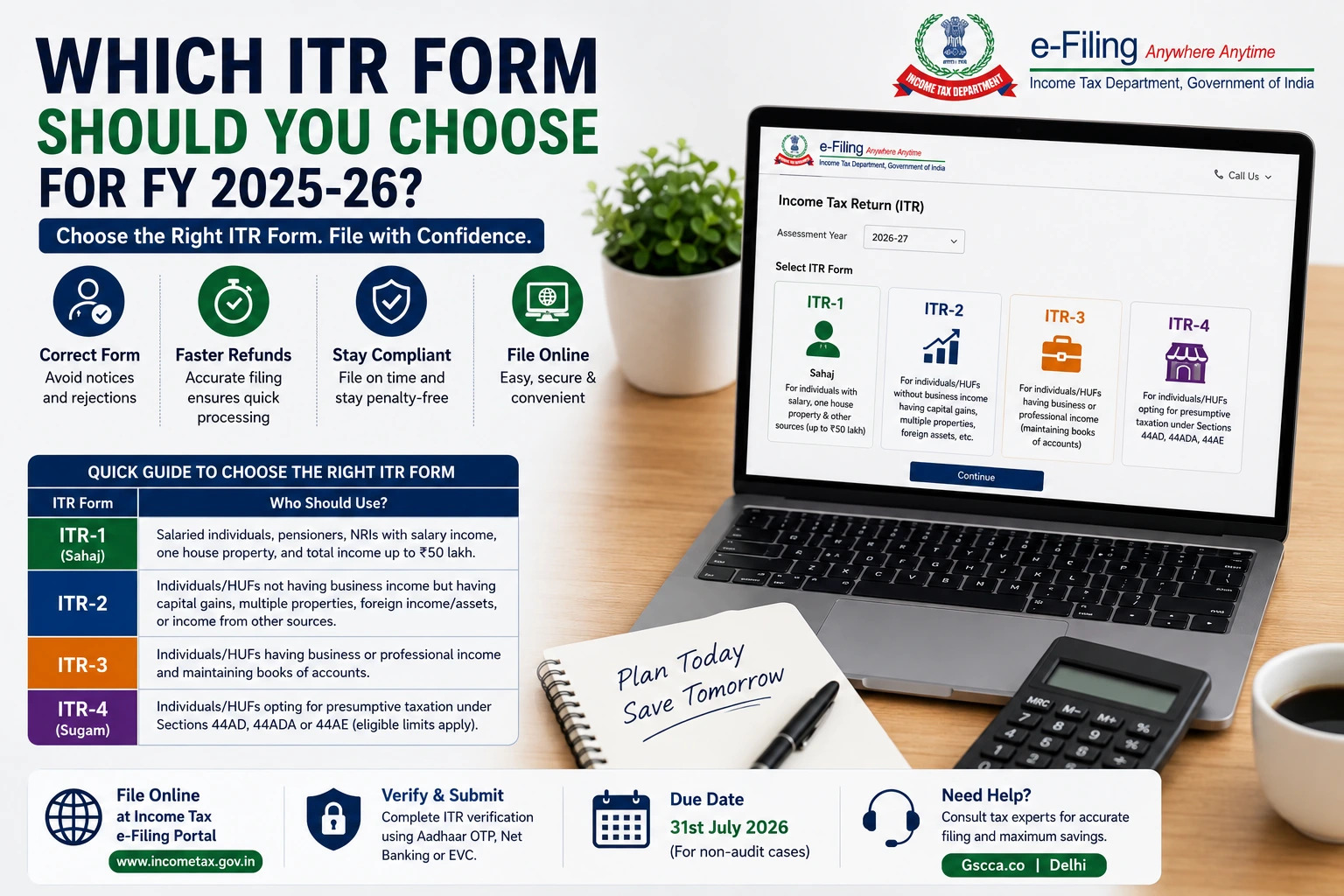
One of the most crucial aspects of income tax return filing India is choosing an appropriate form. This choice may result in invalid return notices, protracted refunds or even more compliance problems down the road. With AY 2026-27 ITR filing underway, a number of salaried employees and freelancers as well as students and those having small business assessors are trying to figure out what skinny for the income applicable in their case under form.
Are you lost about which ITR form should you select for FY 2025-26, then here is how to use the differences among them in easy language along with common pitfalls while filing. E filing income tax India has been worked by the government to spare time and bother as it sorts out through the forms accessible in basic, effective way if one knows about which type theyffec easy file return roper form is required ahead of time for taxpayers according assigned methodology once an exceptional plan.
Importance of selection ITR Form
You are trained on four types of ITR form for every tax payer and income structure. Returns are classified by the Income Tax Department as being based on salary income, business income capital gains foreign assets and limit of turn over.
Filing an incorrect form can render your return defective under Section 139(9). Correction submissions must be filed by the deadline or your filing may, therefore, lose its validity.
The ITR filing process India has become smoother with the inclination towards digitalization in recent time, yet taxpayers need to check their eligibility thoroughly before submission.
ITR Form: Which to Choose for FY-2025-26?
Salaried Simple Income — ITR-1
ITR-1, Sahaj: For salaried individuals with income from salary or pension; one house property property and other sources having lower exemptions like saving account interest
If total income of the taxpayer is within limit Besides such taxpayers do not have capital gains or foreign assets Neither any business contentions then ITR-1 can generally be used Also fit into this category are most first-time taxpayers and students with taxed internships or part time income.
ITR-1 is typically the easiest option for taxpayers filing through income tax e filing portal since most of the information shows in this form already pre-fills as per Form 16 and AIS records.
ITR-2 for Capital Gains and Many Income Prerequisites
Use ITR-2 if you are an individual or a Hindu Undivided Family who does not have any business income, but your financial structure is more complicated.
This type is usually filled by the taxpayers with income from capital gain, two house properties, foreign income or investments in stocks and mutual funds. ITR-2 form is required for salaried employees actively trading or involved in ESOP transactions.
This does not apply to everyone, and in fact many carry-forward of losses also file ITR online 2026 which is simpler forms despite having stock market gains.
ITR-3 for Freelancers and Professionals
In general, freelancers, consultants, doctors, digital marketers and all other self-employed professionals file ITR-3 when they have books of accounts to maintain or report professional business income.
This returns form is much more detailed because it includes P&L accounts, balance sheet details including depreciation and tax computation for business activities.
Freelancers who get paid through UPI, bank transfer or foreign clients generally file incorrectly because they do not disclose their income finds a correct way to fill it while filing.
ITR-4 for Presumptive Taxation
Presumptive taxation under Sections 44AD, 44ADA or 44AE: In case the small business owners and freelancers choose presumptive taxation under these sections; then they can also use ITR-4 if certain eligibility conditions apply.
This tax return form provides a simplified taxation option where taxpayers report their earnings at the prescribed percentage of gross receipts with no detailed accounting records.
This option is favoured by most SMEs since it will lessen the complexity of compliance while filing ITR online in 2026.
The Process of e-Filing Income Tax Return after Selecting the Right Form
Once the right type is recognized, taxpayers can continue with procedures on how to file income tax return online through the portal.
This include logging in to income tax e filing portal and then the assessment year; the ITR form applicable has to be selected (as per verification under pre filled details), applying of deductions and finally submitting return after calculating Tax computation.
The filing process is completed with electronic verification via Aadhaar OTP or net banking. Online KYC, therefore, the timely verification associated with ITR is essential for anybody whose return has not yet been verified before time as unverified returns are invalid.
Here are some practical tips for taxpayers in Delhi
One of the complex situations for taxpayers in Delhi is when salary income along with project based freelancing or rental incomes, equity & stock investments are combined. Relying ONLY on Form 16 in such cases may lead to inaccurate filing.
One more software program is to go with ITR-1 in spite of the fact that you have gained capital gains from trade apps or crypto-associated activity. Even a minor investment transaction may change your relevant forms category.
Firms like Gscca.co
regularly help taxpayers with return review and form selection work, especially when income sources begin to become more than just a standard salary.
Top mistakes you should avoid while selecting an ITR form
The simplest form done by many taxpayers is always the accurate one. This leads to mismatches arising while filing during department verification later on.
Another common blunder is failing to account for interest income on savings accounts or fixed deposits. Digital payments received by freelancers from clients outside of traditional payroll systems are also sometimes underreported.
The taxpayers should also compare old and new tax regimes carefully before final submission, as the selected regime can greatly affect deductions & status of computation/ tax liability.
Conclusion
Choosing the right ITR form for FY 2025-26 is quite critical to help you file your taxes without glitches. The form that applies will wholly depend on your type of income, the turnover from investments and any earnings in business or through a profession.
The clear advantage of the income tax e filing portal is it makes completing your returns simple but before hitting submit, you need to ensure that you meet eligibility. If you are a salaried employee, freelancer or business owners with mixed sources of income then it is advisable to check your books very thoroughly in order to escape defective return and delays refund.