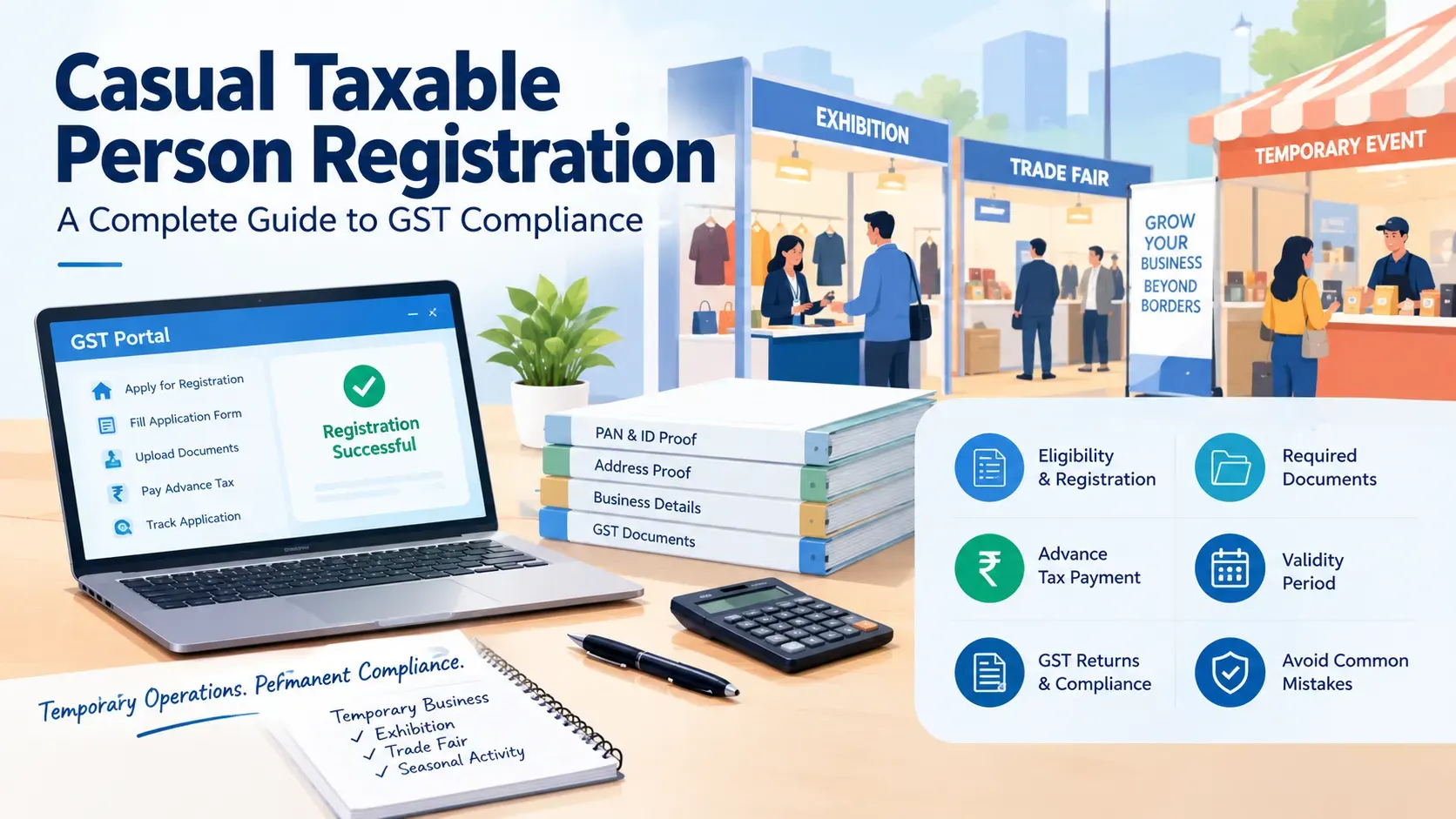
In case your Business has a temporary presence in a State/Union Territory (UT) other than your home State/UT and you will be supplying Goods/Services, you are required to register as a Casual Taxable Person. Examples are business participating in Exhibitions/Trade Fairs, Temporary Events, Seasonal Commercial Activity etc.
Learning about the business registration process, required documentation, estimated tax payments and filing requirements will better prepare businesses to conduct temporary operations in a manner that minimizes compliance issues.
Who Needs Casual Taxable Person Registration?
Casual taxable person registration would be applicable to business entities and individuals conducting short-term commercial activity outside of the state in which they normally do business. Some examples are: traders exhibiting their goods, manufacturers exhibiting their goods at trade shows, service providers attending short term business events, and merchants selling goods seasonally.
In addition to this, the requirement to register depends on the type of goods/services supplied, the rules for GST and if there are any applicable exemptions. Therefore, it is important that each business review its own situation prior to making an application.
Required documents for casual taxable person registration are
In general, the applicant is required to provide PAN card, identity and address proof, current mobile number and email address and the location of the temporary place of business. Additional documentation could include proof of business location, photographs, authorization forms if applicable, and details of the anticipated taxable goods and services.
The specific types of documents that must be submitted to complete the application process will depend upon the applicant’s type of business entity and the individual circumstances surrounding the application.
Procedure for Registration of a Casual Taxable Person
Applicants can start the application from the official GST portal. Applicants should pick the right type of registration, enter their business and personal details, and let the system know which state they plan to make temporary taxable supplies in.
The applicant shall also give an estimate of his/her tax liability for the estimated period of registration and pay the required advance tax on the basis of such estimate. Once the applicant has submitted all of the necessary documentation, he/she may check the status of his/her application on the GST website.
Businesses need to make sure that the application information and any supporting documentation is correct so they can minimize the potential for delays.
Validity and Advance Tax Payment
The Casual Taxable Person Registration can be used for the time period stated in the registration form, or 90 days after the date the registration became active. If you need more time, you can apply for an additional 90 days, but it must meet certain requirements.
In most instances, a business will be required to make an advance payment of their estimated GST liability for the duration of the registration. The paid amount will be used to reduce the actual tax liability based on the applicable GST regulations.
Businesses should be able to make a more accurate estimate of how much they will need to deposit based on planning for their expected sales, the tax rate that applies, and how long they plan to operate as a business on a temporary basis.
GST Returns and Compliance Responsibilities
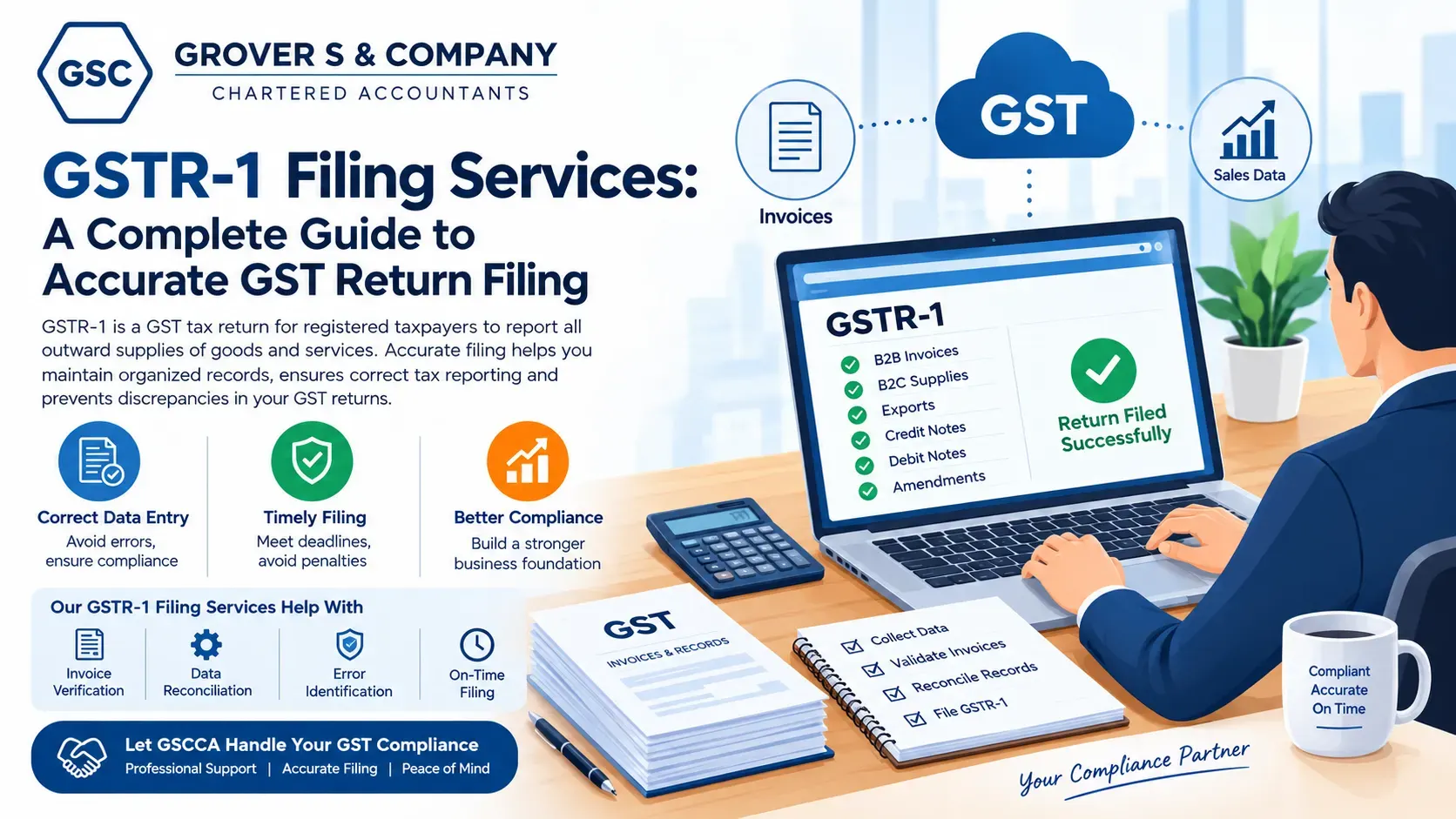
Casual taxable persons need to comply with all of the relevant invoicing, record keeping, tax paying, and return filing rules associated with GST compliance; getting registered is merely a first step in this process.
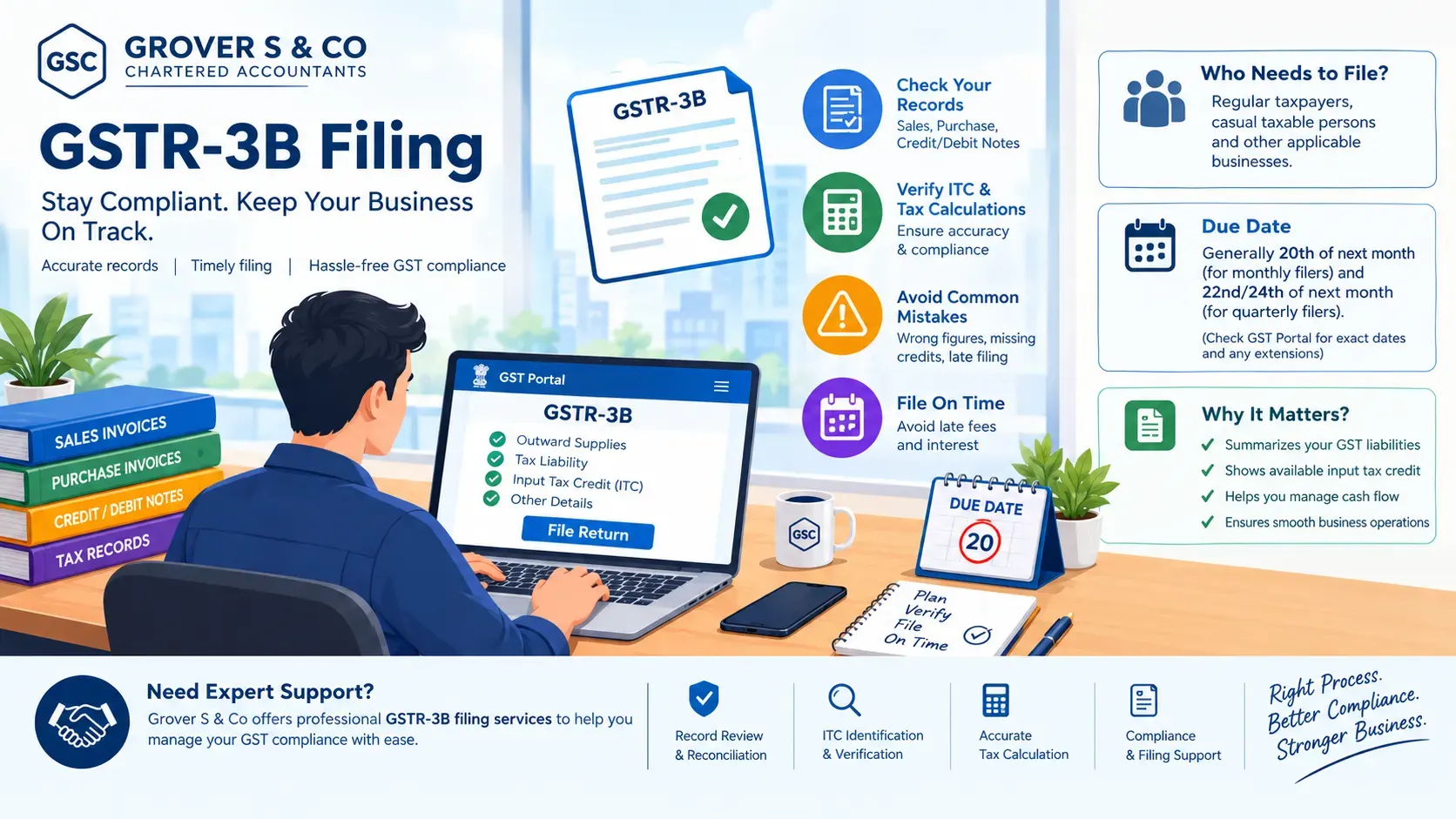
GSTR-1 – For reporting outward supplies GSTR-3B – For reporting tax liability and input tax credit (ITC) eligibility The above returns may have to be filed in the case of a casual taxable person based on the applicable regulations. For each registration period, the specific deadline for submission of these returns, as well as any applicable special provisions, must be reviewed.
Accurate invoicing and transaction recording will make the tax filing process easier and avoid unnecessary discrepancies.
Common Mistakes to Avoid
Businesses must not apply too late; they should not underestimate their potential tax liability; they must enter the correct information about their business; and they must not forget about their returns filing requirements. Businesses must also check how long their registration is valid for, and apply for a time extension before the deadline if necessary.
A well-prepared start to a temporary business operation will minimize potential compliance problems, as well as facilitate easier processing of transactions.
Get Professional Assistance for Casual Taxable Person Registration
A business that plans to operate temporarily (Casual Taxable Person) must fulfill various regulatory obligations. These are also to know eligibility for registration, advance payment of taxes, validity of registration and regular filing of Goods and Services Tax (GST) returns. By being aware of all of these requirements prior to operating as a Casual Taxable Person, a business can better prepare itself.
Grover S & Co assists business owners with their GST registration, documentation, returns and other regulatory compliance requirements.They will know how to apply for temporary business activities and gather the required documentation by providing professional help for applicants.
If you plan to take your business to a trade show, exhibition or temporary retail event in another state, check what types of GST registrations are required before making any taxable sales.