Individuals, professionals and business organizations have a significant financial obligation to file their income tax returns in India. It is essential to submit an accurate income tax return so that you may report all of your income; receive benefits from any available deductions; and remain compliant with the appropriate tax laws. Regardless if you are a salaried employee; freelance worker; consulting professional; or business owner; knowing how the income tax filing process works will allow you to do things more easily; prevent yourself from making typical errors; and complete your tax related obligations in a timely manner.
Tax payers need to be aware of the implications of the new Income-tax Act, 2025 which was implemented effective April 1, 2026 for FY 2026-27. Preparation for tax return filing in advance makes the entire process simpler and more structured.
Important Income Tax Filing Deadlines for FY 2026–27
It is critical to know when to file an income tax return so you do not have to pay penalties for being late or face other penalties. The filing dates are determined based upon what type of taxpayer you are and if your company has to be audited.
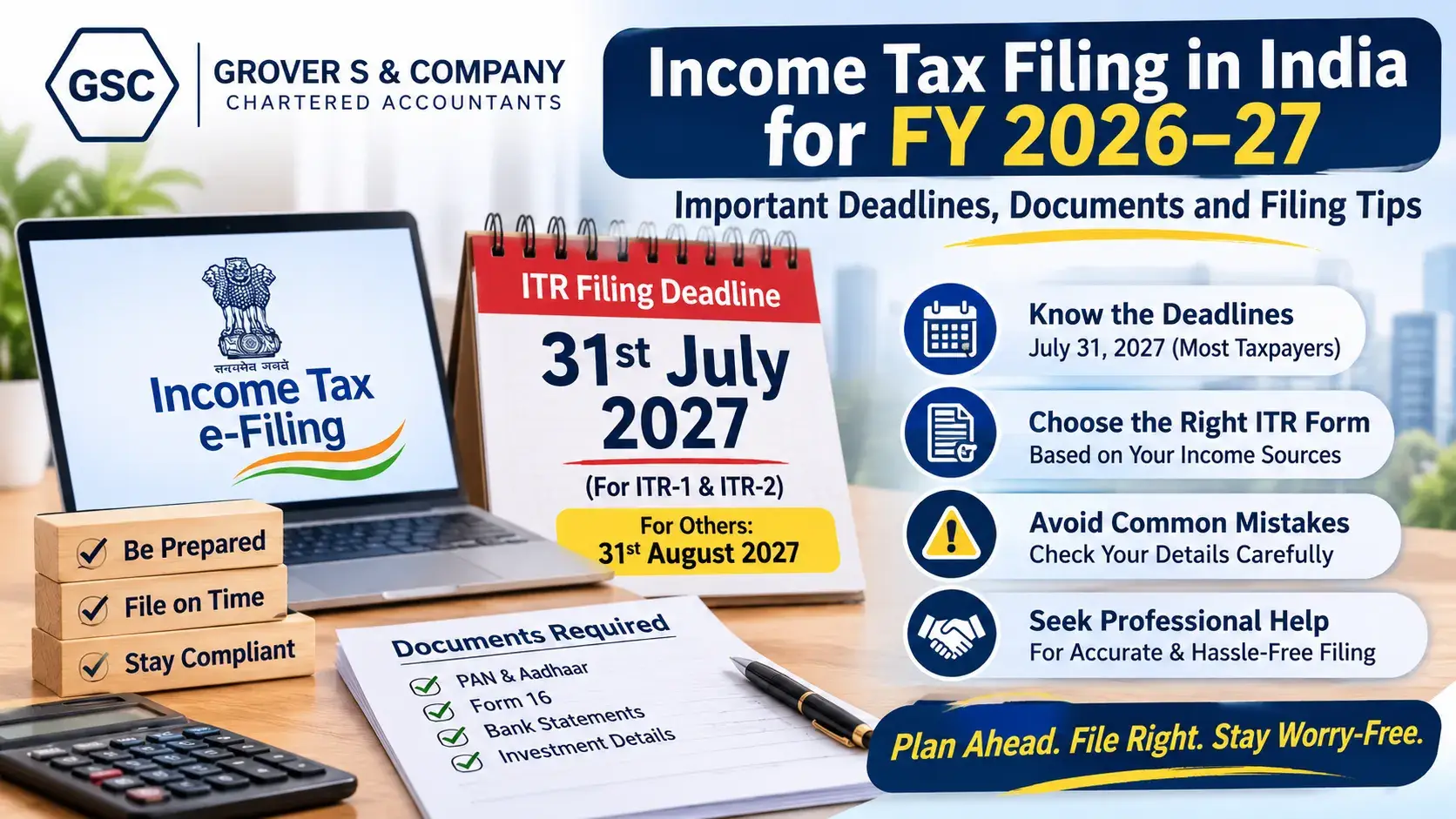
The last day for filing Income Tax Return (ITR) for those with salaries, and other eligible taxpayers, who file either ITR-1 or ITR-2, is July 31st, 2027. Businesses that are not required to be audited, as well as some trust types, can extend their due dates until August 31st, 2027.
Taxpayers under tax audit or additional compliance requirements need to comply with the legal time limits and notices issued by the Income Tax Department.
Filing your income tax return (ITR) prior to the filing deadline gives you enough time to go over your money related facts, fix errors, and verify the completed form.
Who Should File an Income Tax Return in India?
Income tax returns are filed by those individuals and/or businesses with income and/or financial status that meets the criteria for having to file.
A salaried employee, a professional who works as a consultant or is self-employed, a freelance worker, a consultant, an individual owner of a business (proprietor), a partner in a partnership firm and/or a company may be required to submit an income tax return based upon how much they earn and what other requirements exist under the law.
The process of filing an ITR is often required even after the tax was paid via TDS. In addition, filing your ITR provides you with a way to get money back from the government (tax refund), report other income sources and keep accurate financial records.
Documents Required for Income Tax Filing in India
The income tax return process will be quicker and more accurate if you have your required documents available at the time of filing. Your required documents may include: Form 16, salary slips, bank statements, PAN details and Aadhaar details.
In addition to being required to provide interest certificates, capital gains statements, rental income information and evidence of investments if they have earned income from elsewhere; individuals who run businesses or work as professionals are required to keep accurate and complete books of account, record expenses, prepare financial statements and obtain tax audit reports when applicable.
In addition, taxpayers may wish to review their Form 26AS, the Annual Information Statement (AIS), and the Taxpayer Information Summary (TIS) prior to filing, in order to confirm that the information reported regarding their income and allowable tax deductions is accurate.
How to Choose the Right ITR Form?
The selection of the right Income Tax Return (ITR) form is a crucial aspect of filing your income taxes. There are different ITR forms based upon your residence status, sources of income, total income and whether you have any business/professional activity.
An example of this would be that an individual who is salaried and meets the criteria for using ITR-1 can do so. On the other hand, if an individual has made capital gains or has multiple types of income, then they may have to use ITR-2. If a taxpayer makes a profit from a business activity or a profession, they will need to use either ITR-3 or ITR-4 based upon whether they meet the eligibility requirements.
An error in choosing the correct ITR form may lead to either a defective return or extra compliance actions. Therefore, it is important to review the relevant filing rules prior to submitting.
Common Income Tax Filing Mistakes to Avoid
Errors in reporting income, claiming tax deductions and choosing the correct ITR form are common for many taxpayers. In addition, there may be inconsistencies between what is shown on Form 16, the Annual Information Statement (AIS), Form 26AS and the information provided in your tax return. These types of errors will likely result in additional work for you to resolve.
Other frequent mistakes include omitted interest earned on investments, wrong bank information, claiming unauthorized deductions, and failing to verify the ITR once it has been submitted.
These types of issues can be minimized by carefully reviewing financial data, and filing your return within the required timeframe.
Why Professional Assistance Matters for Income Tax Return Filing
Taxpayers with multiple income sources, or those who participate in business transactions may find the income tax regulations, documentation requirements and filing procedures difficult to comprehend.
Professional help with reviewing your finances, determining which tax provisions apply to you, selecting the correct ITR form for your situation, and making sure that the final return is prepared correctly will be beneficial.
Professional income tax consultancy and return preparation services are provided by Grover S & Company. We help our individual and corporate clients manage their tax compliance obligations.We also prepare income tax returns. We put a lot of emphasis on accuracy of information for our clients. We make sure they have the necessary records to report and we make sure that we file those returns in a timely manner.
Conclusion
Income Tax Filing in India for FY 2026-27 will require proper planning, accurate reporting of your finances, and being aware of the due dates. By understanding the new tax system, keeping all relevant documents, and choosing the right ITR form you should be able to file your income tax return much easier.
Timely access to professional advice will help you avoid making errors when completing either your personal tax return or managing the compliance requirements for your business. It can also give you more peace of mind about meeting all of your tax obligations.