Introduction
Filing an Income Tax Return (ITR) without doubt is a financial duty; however, filing does not just end with submission. When E-verifying the ITR, is there any further procedure to complete? Its one of the most frequent inquiries from taxpayers Well, the answer is largely not too bad, but keeping a few important things in mind will help ensure it all gets done correctly.
The last step of IDT is an e-verification, which has been made simpler as the digital tax system in India is now more organised. And while the key to knowing what you face next could help you remain in the loop—and possibly help avoid some confusion.
What is E-Verification of ITR?
E-Verification :- Verification of Income Tax Return filed by you is genuine and belongs to a real taxpayer. A return is considered not completed if it goes unverified.
The Aadhaar OTP, net banking or account verification can be done in this step. Your return is treated as ‘filed’ only after the process of e-verification has been successful.
Is Any Further Action Required?
In most cases, you just e-verify the ITR and relax from thereon as no action is required on part of the taxpayer. Your income tax return gets processed automatically by Income Tax Department.
However, that does not mean you throw the whole process out the window. This is important that one should track their return status so as to ensure everything goes all well.
So this question ensues that so I should not do anything aside from e-verification of ITR and understanding marks the problem that helps you to take proactive measures wilfully not leaving out on important ones.
Check ITR Status Regularly
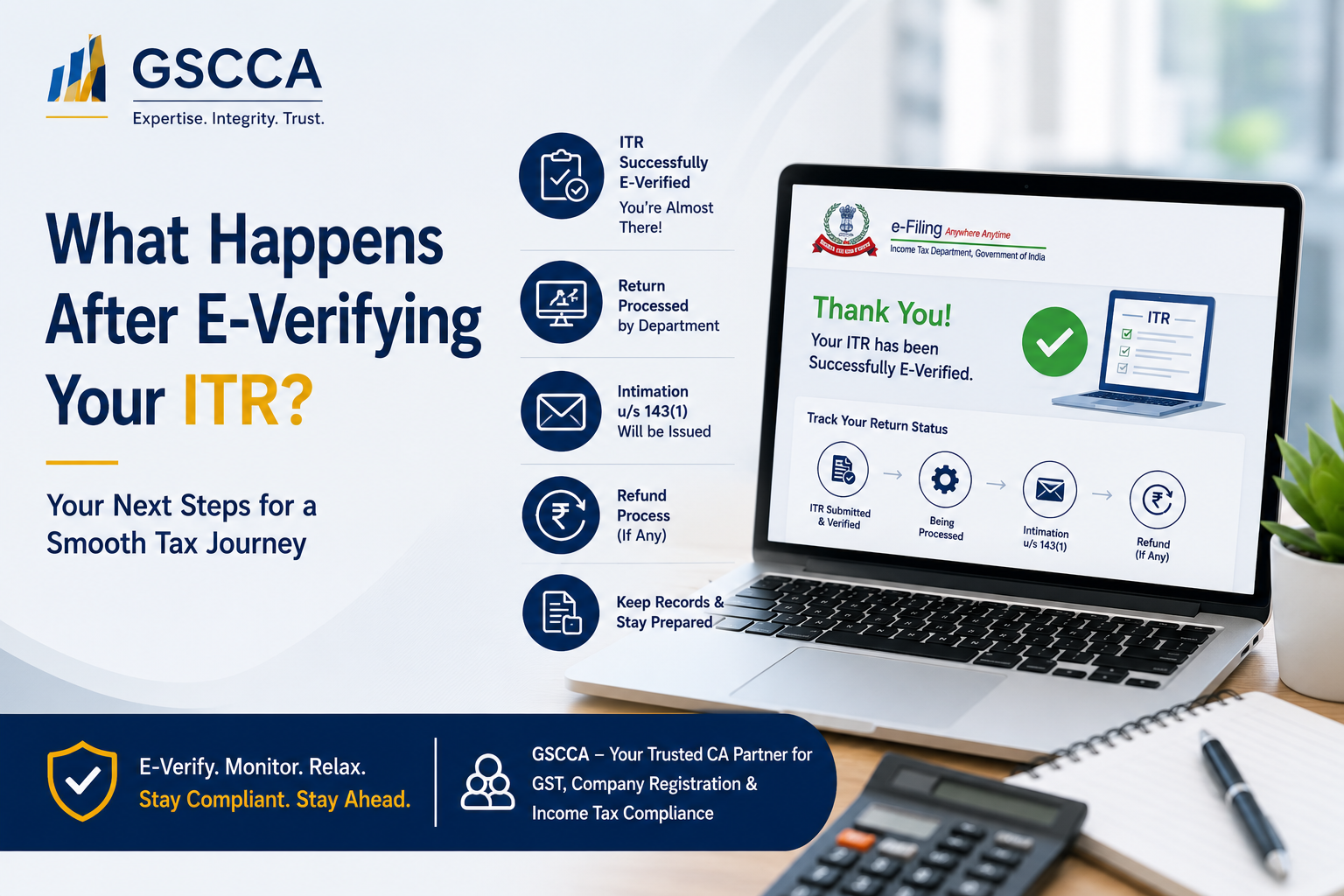
Once your return is e-verified, the next step includes tracking its status on the Income Tax portal. At first, it mayshow the status that it is “ITR Submitted and Verified”.
It may then be updated to “ITR Processed” as the processing continues. This way you would know where exactly your package is and nothing goes wrong or delayed in the process.
Regular monitoring keeps yourself abreast and can lead to a swift response wherever action is needed from your side.
Notification U/S 143(1)
After successfully placing your return, the Income Tax department forwards a intimation under Section 143(1). This record will verify either your return has been accepted as filed, or it shows a discrepancy.
If all else is matching, nothing needs to be done. But if there are discrepancies in income, deductions or tax computations, you may need to reconcile it and respond.
After the e-verification, it becomes essential to read this intimation carefully
Refund Processing
In order to get a tax refund, this will be done only after your return has been validated and adopted. The refund is generally credited to the registered bank account directly.
Ensuring correct bank details are pre-validated on the portal. Delay in refund can occur due to wrong details.
Tracking the refund status keeps the individuals informed about when to expect the amount.
Times When You May Need to Golf Your Way Out of Trouble
In most cases, you take no further action.
When there are discrepancies, the department may issue a notice asking for clarification or supplementary documents. In these situations, it is important to react as soon as possible so penalties are not incurred.
An example of this might be numb bulker, where processing takes longer than expected; checking the status and verifying everything is in order can help solve the issue.
Importance of Record Keeping
Remember to save copies of your ITR, acknowledgment and supporting documents even after e-verification; however, they may not be required for physical verification. Such records are also useful for future reference, audits and Financial applications.
That is why keeping your documentation in check will make you ready for whatever needs doing down the line.
Role of Professional Guidance
This process can be a pretty easy one for most taxpayers, but it can turn complex as well – especially if you receive multiple types of income or need to factor in various deductions.
GSCCA is a CA firm registered with GST, company registration and also assists in income tax compliance. They prioritize accuracy, documentation, and consistent follow-up.
GSCC ensures a properly handled process from filing to post-verification, making it less likely that you will experience errors (and even if there are such errors) delays or escalations.
Common Mistakes to Avoid
Taxpayers, who have often completed the process by filing and e-verifying, may not keep track of their return anymore. Thereby sacrifices updates or responses delayed.
A common mistake is to not react to emails or messages you receive from the Income Tax Department. Any of these communications could provide critical information about your return.
Being alert and taking action prevents potential hassles.
Conclusion
Knowing whether to e-verify or move on with the next step in filing of tax post submission of ITR helps you complete your filing up very well and escorted. On most occasions, once we have finished verifying your return you need not take any action whatsoever.
E-verification is just one step and therefore its a first step of the process, next you need to monitor your ITR status, Intimation notices and verification details bank. These measures ensure easy execution and timely refunds.
GSCCA aims to help taxpayers avoid common pitfalls and proper awareness along with guidance from professionals will assist them in ensuring smooth compliance. Although ITR is mandatory, filling it in effectively lays the groundwork for being financially savvy.