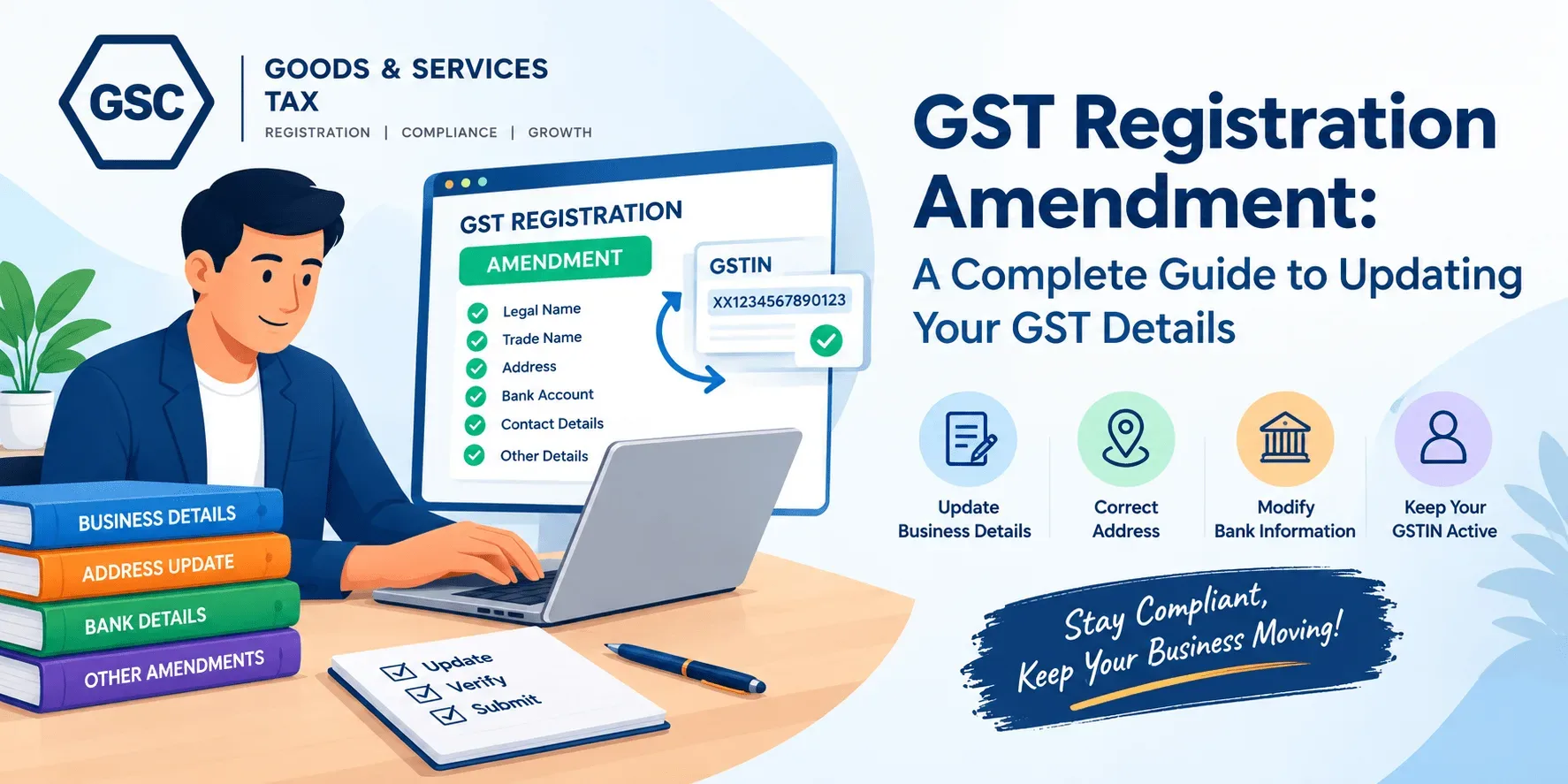
GST registration is an important part of running a business in India. Not only does it help companies adhere to the rules and regulations associated with Goods and Services Tax; but also enables them to generate valid tax invoices as well as maintain accurate accounting/financial records. As business operations continue to grow, change occurs in many aspects of the company. Companies may move their office locations; alter their corporate name; designate a different individual as the authorized representative/signatory; or require corrections to the information initially provided when registering for GST. When any of these changes occur, a taxpayer will utilize the process of amending their GST registration to provide updated/correctible information that was included in their original registration.
Business owners who are good at making changes to their GST returns will be able to correctly report their GST liabilities, and minimize the chance of compliance problems.
What Is GST Registration Amendment?
GST amendment is a method to update the relevant data on an already active GST registration, whenever the initial details submitted have become inaccurate or changed. In general, rather than requiring the submission of a new registration form each time there are allowed modifications to be made, a registered taxpayer can usually submit an amendment request via the official GST portal.
Depending on what type of information is being updated, there are two different ways to amend your tax return. Changes that do not need to be verified or approved by a tax official may be made without any prior approval. Other changes must be verified and approved by a tax official before they can take effect. Businesses will need to determine which category of amendment applies to their change request prior to completing the application process.
When Do Businesses Need a GST Registration Amendment?
There are many reasons why a business may need to update its GST registration. Updating the principal place of business, adding a new business location, or modifying eligible business information are examples of when a registration may need to be modified. In addition, businesses may find themselves needing to modify their authorized signatory details, contact information, or other registration information that is acceptable.
As an example, if you change locations of your company’s offices, you will likely have to update your registered address using applicable documentation. Also, any changes to the details of the eligible business should be reflected in the GST records, as they relate to the consistency of those records with other relevant legal and financial documents.
Types of GST Registration Amendments
In general, there are two types of amendments to a GST registration: Core Amendments and Non-Core Amendments. Knowing what each type means is important as the processes involved with making an amendment can be different, as can the approval process for each.
Core Field Amendments
The core amendments relate to the specified important registration particulars. Depending upon the applicable rules and nature of change, some examples of these would be the main place of business, additional places of business or some of the business identity details. A few of the core amendments will have to undergo review and approval by the GST officer.
Businesses need to make sure all of the data submitted is correct, and supported with the correct documentation. If you submit incorrect data, or do not provide complete documentation for your submission, there can be delays or questions regarding your submission.
How to Apply for GST Registration Amendment Online
The GST Portal offers a web-based service for making eligible registration amendments. Taxpayers are required to use their GST credentials to access the Portal and go directly to the registration amendment tab.
First, determine if the required modification applies to core or non-core fields. Then, select the correct option from the drop-down menus within Services, Registration, and the proper Amendment type. You need to go through the details you have filled earlier and make necessary changes to the areas that need to be rectified.
The next step is to prepare and upload all relevant documentation needed to support the specific type of change. Then, complete the verification section and choose an authorized signatory (if applicable) and then use the allowed authentication methods, such as DSC or EVC, to submit your application.
Documents Required for GST Registration Amendment
The required documents vary depending upon what type of change is being made. For example, if you are making a change to your address then you will need to provide some form of proof of that new address. If you are changing the name of your business or the structure of your business , finally, if you are changing the people who are authorized to sign on behalf of your business, or if you are changing other aspects of your business, then you will have to provide supporting documentation such as ID cards, authorizations, etc.
Compare the proposed changes with the existing records before filing, and verify that all supporting documents provide the correct information for the update. The requirements can be different based upon the type of change you are making and what the governing regulations allow.
Common Mistakes to Avoid During GST Amendment
One of the most frequent errors made when filing is submitting information before cross-checking with your backup documentation. Such errors as incorrect addresses, inconsistencies in the way you refer to your company name, lack of supporting documentation, and incomplete forms can result in unnecessary problems.
Another error is the assumption that each and every amendment will follow the same approval procedure. It is important to choose the right category as core and non-core amendments may require different things. Business entities should also keep track of the ARN (Application Reference Number) and check the status of applications, as opposed to assuming that all amendments submitted have been approved.
Why Professional Assistance Can Help
Depending on the type of amendment being made and how the business is registered with the GST department, there may be different types of requirements for amending a GST return. Professional support will allow a business to determine which amendment category applies, review all relevant documentation required to support the application, submit accurate applications for amendments to the GST department, and provide clarification if the GST department raises questions during the application process.
Grover S & Company can provide you with GST compliance guidance so that you will be able to handle registration related issues. When your business has to change some of the registration details that may affect its eligibility for GST, then you should consider using our GST Registration Amendment Services as a way to assist you through the process of making amendments.
Conclusion
When a business’s relevant information changes, it is able to keep its GST registration records up-to-date through a GST registration amendment. By knowing the difference between a core and non-core amendment, having all of the necessary documentation, and understanding how to complete the process online, a business may find completing this task to be much simpler than if they were unaware of what needed to be done.