
Introduction
Annual compliance is just as crucial for businesses registered under GST as monthly or quarterly filings. One such important requirement is GSTR 9 in GST which is the annual return prepared based all transactions related to that particular financial year. This return is vital information and understanding of it can help maintain your record keeping process as well as compliance during tax regime in India.
Taxpayers were often puzzled by GSTR 9 because of its detailed nature and reporting requirements. But with the correct knowhow, this is a relatively simple process in GST return filing.
What is GSTR 9?
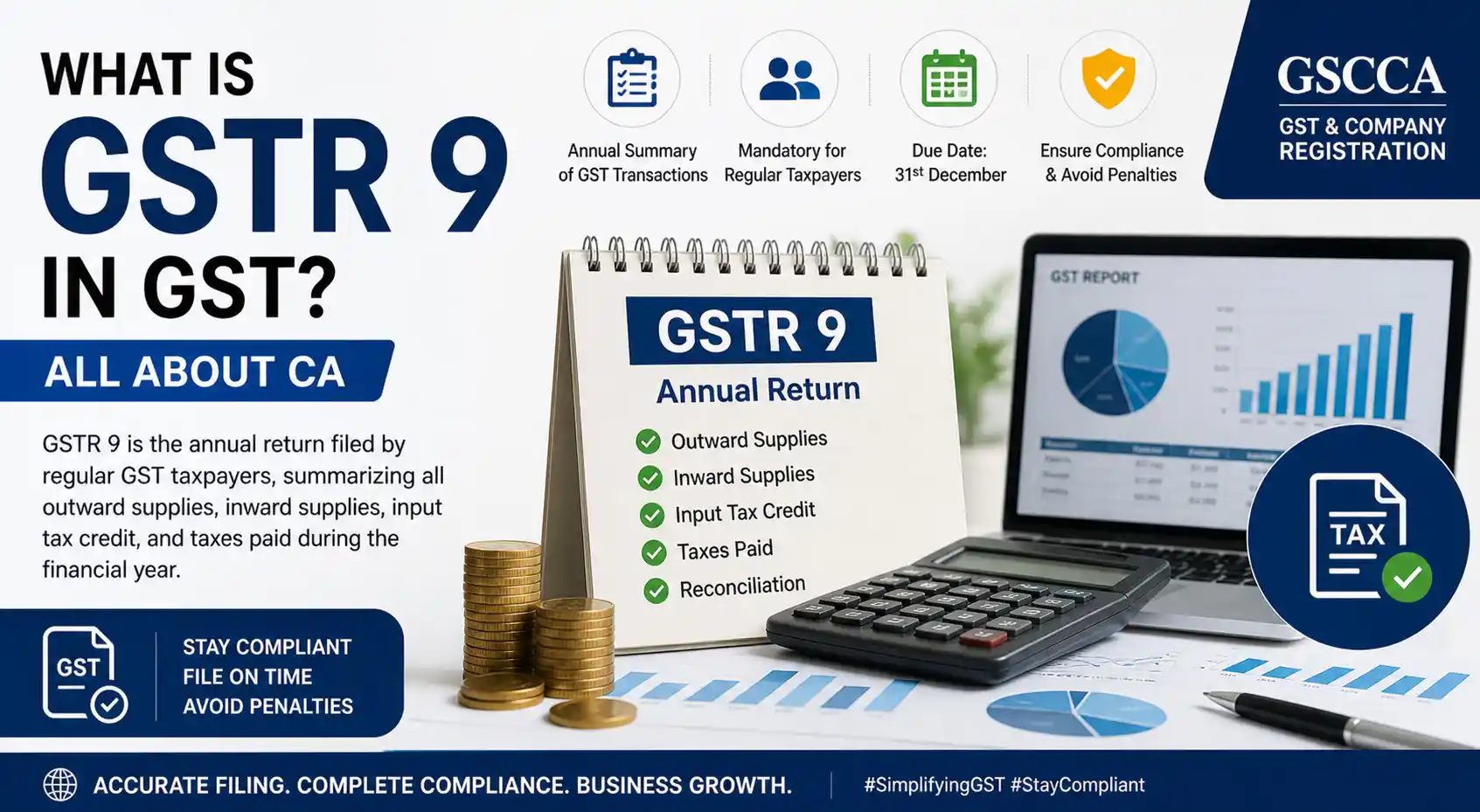
GSTR 9 is an annual return that all the taxpayers need to file if they are registered under the GST system. It aggregates data reported in monthly or quarterly returns like GSTR-1 and GSTR-3B.
GSTR 9 in GST is basically a comprehensive collated view of outward supplies and inward supplies, input tax credit (ITC) and taxes paid for that particular financial year. This, of course, is to make sure the data reported throughout the year aligns with final books.
This return serves as a summary of all the taxable activity taken place under GST for business.
Who Needs to File GSTR 9?
Not every GST registered taxpayer has to file GSTR 9. In general, this is required for all regular taxpayers registered under GST.
But certain categories include composition scheme taxpayers, casual taxable persons and non-resident taxpayers are exempted from filing of returns. Composition dealers will file GSTR-9A instead of GSTR 9.
Know your eligibility so that you do not face the penalties and compliance submission issues later.
Structure of GSTR 9
GSTR 9 has been segmented into different sections according to the aspect of it. It carries outward supplies, inward supplies, tax paid in a financial year along with input tax credit claimed and adjustments done during the year.
The form also necessitates reconciliation of data between different GST returns. This way identify the discrepancies and also rectify them before submission.
GSTR 9 in GST is complicated and requires preparation because it is extensive in format.
Importance of GSTR 9 Filing
Filing of GSTR 9 is not only a mandatory compliance requirement but also serves the vital purpose of ensuring transparency and accuracy in financial reporting. Still, it lets companies look back at the entire year of transactions and find any wrong-doings or discrepancies.
Filing on time avoids penalties and interest. As a result, this will also ensure that your GST records match in case of audits or assessments.
If any business is doing this for a long period, compliance boosts confidence.
Frequent Problems in Filling of GSTR 9
The complex structure of GSTR 9 creates a lot of challenges for various businesses while filing the same. A common problem is with matching multiple returns data — as long as there are differences.
Mistakes or other shortcomings in input tax credit claims and transaction reporting can also give rise to issues. Moreover, some businesses who did not keep proper records during the year are likely to face difficulties when putting together accurate information.
That is primarily due to the issues associated with bookkeeping and GST filing assessment.
GSTR 9 Filing: How to Prepare?
Preparation Makes GSTR 9 Filing Simple Hence, the businesses first need to start reconciling Monthly and Quarterly returns with Financial statements.
Recording all invoices, tax payments and input credits accurately reduces mistakes. You should also check up on amendments and corrections filed during the year.
Integrating accounting software and keeping orderly records can speed up the process and help save time.
Role of Chartered Accountants
Due to such complex nature of GSTR 9, and being applicable under GST many businesses take help from professionals to prepare the return. The accuracy in filing and compliance is maintained to a large extent by using chartered accountants.
Firms like GSCCA focus on GST and company registration services can assist in deciding what are the requirements, calibrating data and filing correct returns. This minimizes the chance of making mistakes and guarantees compliance with all necessary legal requirements.
Businesses with complicated transactions may find it well worth getting professional assistance even though it’s not strictly necessary.
Penalties for Non-Compliance
If GSTR 9 is not filed within the due date, penalty will be levied. A maximum limit applies to late fees, charged for each day of delay.
For instance, the tax authorities may send notices to non-compliant taxpayers and conduct further scrutiny. Thus, it is crucial to file the return timely and accurately.
However, compliance is more than a regulatory obligation to avoid penalties, and goes towards the smooth running of your business.
Conclusion
GSTR 9 In GST : It is Mandatory for Every GST Registered Business in India. It provides a 360-degree perspective of the annual records and guarantees every filing is also accurate and clear.
Sounds a bit intimidating, but it’s an easily achievable task if you’re prepared and keep records. Reliable professionals like GSCCA can smoothen your GSTR 9 filing and ensure everything it transformed into tax-compliance.