
Introduction
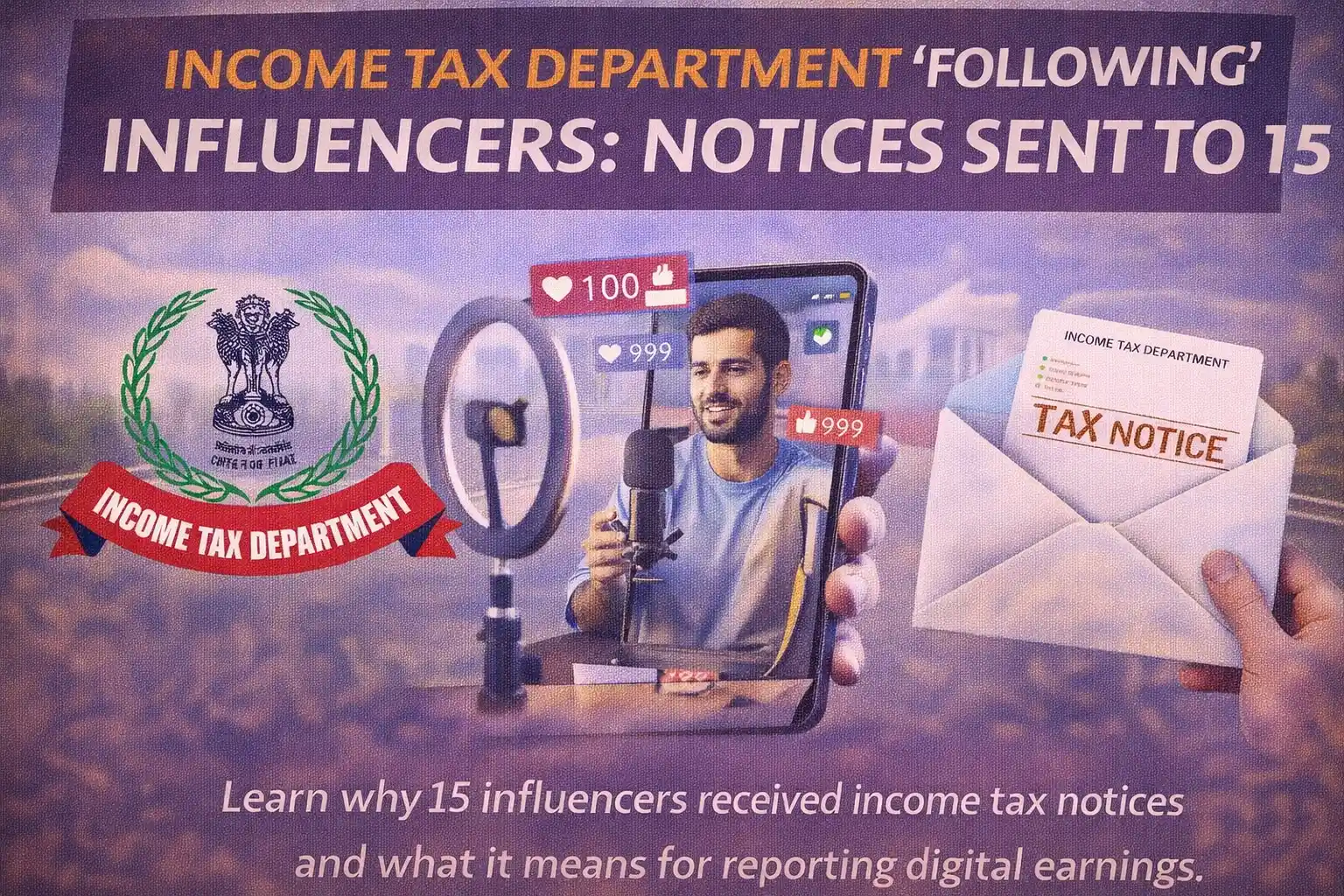
The emergence of large social media platforms, such as Facebook and Tik Tok, has led to a new class of earners: digital influencers. Influencers make a fortune online through brand promotions, affiliate marketing and paid collaborations. Of late, news of a few influencers receiving notices from the Income Tax Department has created a stir, and so has the issue of how digital income is tracked and taxed. This move reiterates the need to report transactions as income correctly and the compliance thereof under Indian Income Tax laws.
Why tax scrutiny on influencers?
Influencers generate their income from several avenues, including from brand deals, sponsorships, ad revenue, and other promotions. In most case, your revenue is received in various forms, such as money, transfer to bank account, or gifts and free products.
The Income Tax Department has now stepped up surveillance of such transactions to ensure that income is correctly disclosed. As data tracking is becoming overly sophisticated, and they can track how much money someone can make, it has become easier to catch someone under-reporting income.
Ways Influencers Make Money
Many influencers have multiple sources of income. Some common examples of monetization are sponsored posts, YouTube monetization, affiliate sales, and appearances at events.
Free products, travel such as cruises, even expensive gifts that are considered a non-cash benefit are taxable if they have value. Thus, record keeping of every dollar earned becomes extremely important for influencers.
Importance of Declaring Digital Income
Most influencers are generally novice at tax matters and not informed about tax obligations. Not declaring income is a big sin and will lead to notices, penalties, legal matters.
All income must be included under Indian tax laws, whether it comes in the form of an online job or offline work. Accurate ITR filing ensures transparency in the system which can save the assesse from the probing.
What Triggered the Notices?
The notices sent recently to influencers and could be part of a wider strategy to bolster tax compliance within the digital economy sector. The authorities might have noticed discrepancies between reported earnings and the transactions done.
Such notices are triggered in cases of high-value transactions, or sudden spikes in income, or a difference in the numbers noted by the GST return as compared to what the suppliers have filed. This should be a reminder of the importance of bookkeeping for influencers.
The Importance of Data Analytics in Tax Monitoring
Given the use of technology and data analytics to track financial activities by the Income Tax Department these days? Banks, Payment gateways, and social media platforms can also be scrutinized to pin-point tax evasion.
Influencers with highly visible online activities have a tough time hiding income due to this digital tracking.
GST Implications for Influencers
Apart from the income tax, the influencers may also be liable to GST if the income exceeds the specified limit. Brand promotions, advertisement, etc., are all taxable services.
This brings the importance of proper registration and filing of GST returns in order to stay compliant. Failure to comply with GST obligations will incur additional penalties.
How Influencers Can Stay Compliant
The first step to compliance is maintaining proper records of sources of income. Such as bills, payment confirmations, and non-cash benefit specifications.
In addition to the filing timely tax returns, accurate tax returns with timely tax payments is critically important as well. A professional gives many influencers the ability to be smart with their finances.
Groupon Sign-up and Compliance: Ensuring Your Tax Compliance with GSCCA
GSCCA, an organization that specializes in GST and the company registration, helps individuals and businesses understand their tax obligations. It is simply worth reiterating interesting/confusing content such as GSCCA type firms that are sifting through these complicated income streams such as digital influencers.
Handling of Income tax & returns online presents a lot of challenges ensuring that everything is reported correctly without inviting any notices or penalties.
Common Mistakes to Avoid
One of the most common errors is to report less income, particularly if it is a trivial transaction. Every such (even the tiniest) profit accumulates and needs to be filed.
A second and common error is not considering non-cash benefits, which are more often than not forgotten, but nevertheless subject to tax. Inadequate documentation can also lead to problems during audits.
Impact on the Influencer Industry
These recent notices are a clear signal from the government that it wants to tackle the issue of digital income seriously. View here, which can open the doors for more transparency and accountability within influencer industry.
Though the competence appears controversial in nature, it is a gain in the ecosystem when it comes to ethical practices and adhering to regulations.
Conclusion
The Income Tax department keeping an eye on influencers is an indication that earnings earned digitally are being monitored. Accountability for tax as the definition of income has changed drastically from influencer to influencer, stream of income to stream; it is now up to the influencer to manage it.
Influencers need to stay out of trouble by keeping records, filing returns accurately, and seeking advice from professionals at the right time, and work on growing their digital presence in a disciplined manner.