The GST Annual Return Filing is a mandatory compliance requirement for all businesses registered under the Goods and Services Tax (GST) regime in India. The process also provides a platform to the registered taxpayers to provide information regarding their annual sales, purchases, input tax credits (ITCs), taxes paid and any other GST related information for a given financial year. Additionally, filing an annual return allows businesses to review their monthly and quarterly GST returns and check for any discrepancies before filing their annual compliance obligations.
While you are doing GST Annual Return Filing process, you are not just filing an annual return with the GST Department. They also need to review all their financial records, reconcile their GSTR-1 and GSTR-3B filings, verify the accuracy of their Input Tax Credit and ensure that the information they are submitting to the GST Department is correct. Any errors or missing data could result in notices from the GST Department, additional tax liability, and compliance problems.
Grover S & Company provides businesses in need of professional help, the opportunity to utilize their GST Annual Return Filing Services. These services will allow businesses to learn about the filing requirements, as well as provide assistance with the GST reconciliation process, and ultimately help ensure that they are compliant with all applicable laws regarding their annual returns.
What Is GST Annual Return Filing?
The GST Annual Return filing is the process of filing a single consolidated report of all your GST transaction details for each specific financial year. This is a summary of your outward supplies, inward supplies, tax paid, input tax credits claimed and other relevant information submitted by you during the year.
As per Section 44 of the GST Act, 2017 all the registered taxpayers falling under the category of “eligible registered taxpayers” have to file their annual return (in the prescribed form) to the tax authorities. These returns will be filed online through the GST portal in most cases.
The main purpose of filing an annual return for Goods and Services Tax (GST) is to make sure that the information provided in each of your monthly or quarterly returns matches your business’s accounting system and other financial records.
Which Forms Are Required for GST Annual Return Filing?
The registration type of a tax payer and the amount of money they make in sales per year determine how much detail is required when filing an annual GST return. Regular taxpayers file two main types of returns – GSTR-9 and GSTR-9C.
The GSTR-9 is a year-end return that is filed by all applicable regular tax payers. It compiles the information submitted throughout the year via GSTR-1 and GSTR-3B (i.e. sales, purchases, taxes due and input tax credits).
GSTR-9C is a reconciliation statement that must be filed by registered taxpayers with an aggregate turnover of more than ₹5 crore per year. This statement provides a way to verify if the information reported in the annual returns matches the financial statements for the same period. The GSTR-9C can be filed electronically by the taxpayer.
Composition taxpayers usually file their annual return via GSTR-4 and not GSTR-9. There are some groups of registered people that are exempt from filing returns according to the GST regulations.
Who Needs to File a GST Annual Return?
Annual return filing under GST is applicable to those registered tax payers that are required by the GST Act to file an annual return. Taxpayers (regular) registered under GST have to check if they have to file an annual return each financial year.
If you have an annual aggregate turnover of more than ₹5 crores, then you need to assess your GSTR-9C requirement. However, whether or not you are required to file an annual return and/or if you qualify for an exemption depends on the financial year and government notifications applicable to that financial year.
Small business should not believe that they will be able to file without restriction. The turnover limit and exemption for a certain financial year may vary based upon specific notifications given.
What Is the Due Date for GST Annual Return Filing?
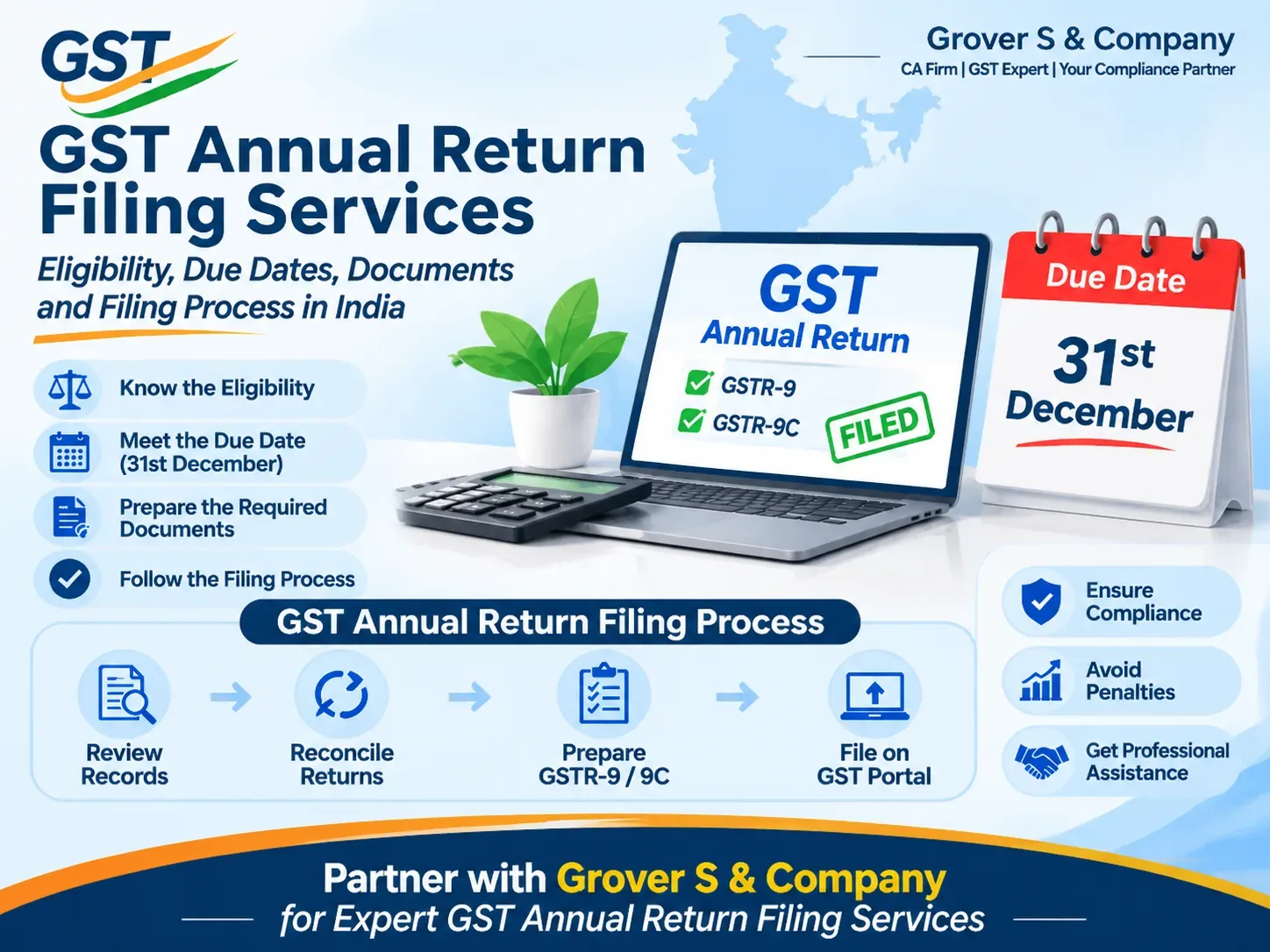
As per Rule 80 of CGST Rules, 2017, GSTR-9 is required to be filed by December 31 of each year after the end of the relevant financial year. Apart from GSTR-9, if GSTR-9C is applicable then GSTR-9C has to be filed within the same stipulated time period.
The normal deadline to submit your tax return for FY 2025–26 would be on 31 December 2026 unless there is a change of due date via an extension or notification by the government.
Businesses must have completed all of their GST reconciliation and documentation prior to the due date so that they do not make any error-prone filings at the last minute.
Documents Required for GST Annual Return Filing
Businesses must have all relevant GST documentation available when completing and filing their GST annual returns. This includes but is not limited to: business’ GST registration information; copies of filed GSTR-1 and GSTR-3B returns; business’ sales and purchases registers; business’ tax invoices, debit/credit notes; business’ input tax credit (ITC) records; business’ electronic cash/credit ledger details; and business’ annual financial statements.
For GSTR-9C, businesses must have on hand all of the applicable financial statements and reconciliation documents that will be used to reconcile the GST data against the business’ financial books.
GST Annual Return Filing Process
The annual return filing process for GST begins by checking the business’s GST registration information as well as their financial data. After that, you will need to compare your sales and purchase data to what was reported in both GSTR-1 and GSTR-3B.
The input tax credit that was claimed for the financial year is compared with existing records as well as relevant GST regulations. Prior to completing the annual returns, all discrepancies in tax liability, turnover or ITC must be reviewed.
Once the reconciliation is complete, the required GSTR-9 and GSTR-9C information is compiled and verified. At this point, the taxpayer can use the electronic submission method on the GST portal to submit these forms using the specified verification procedure.
Why Is Professional Assistance Important for GST Annual Return Filing?
Annual filing for GST will require you to review numerous documents, find any errors in reporting, and verify that the data on your annual return accurately reflects what you reported during the previous year. If there is even the slightest discrepancy between your financial statements and your GST returns, you may be required to do additional compliance work.
Professional help is available for businesses to review their GST records, reconcile input tax credit, find reporting inconsistencies and complete all necessary annual returns documentation. In addition, professional help will assist business owners in understanding what they need to do to file their GST returns and to resolve potential non-compliance issues prior to filing.
GST Annual Return Filing Services by Grover S & Company
Grover S & Company offers GST-related professional assistance to businesses that need help with annual return preparation and compliance. We will review your GST records, check return details, reconcile your financial information and assist you in understanding the applicable filing requirements.
Businesses looking for help with their GST Annual Return Filing Services can go to our website’s service page to find out more about what we have to offer.