
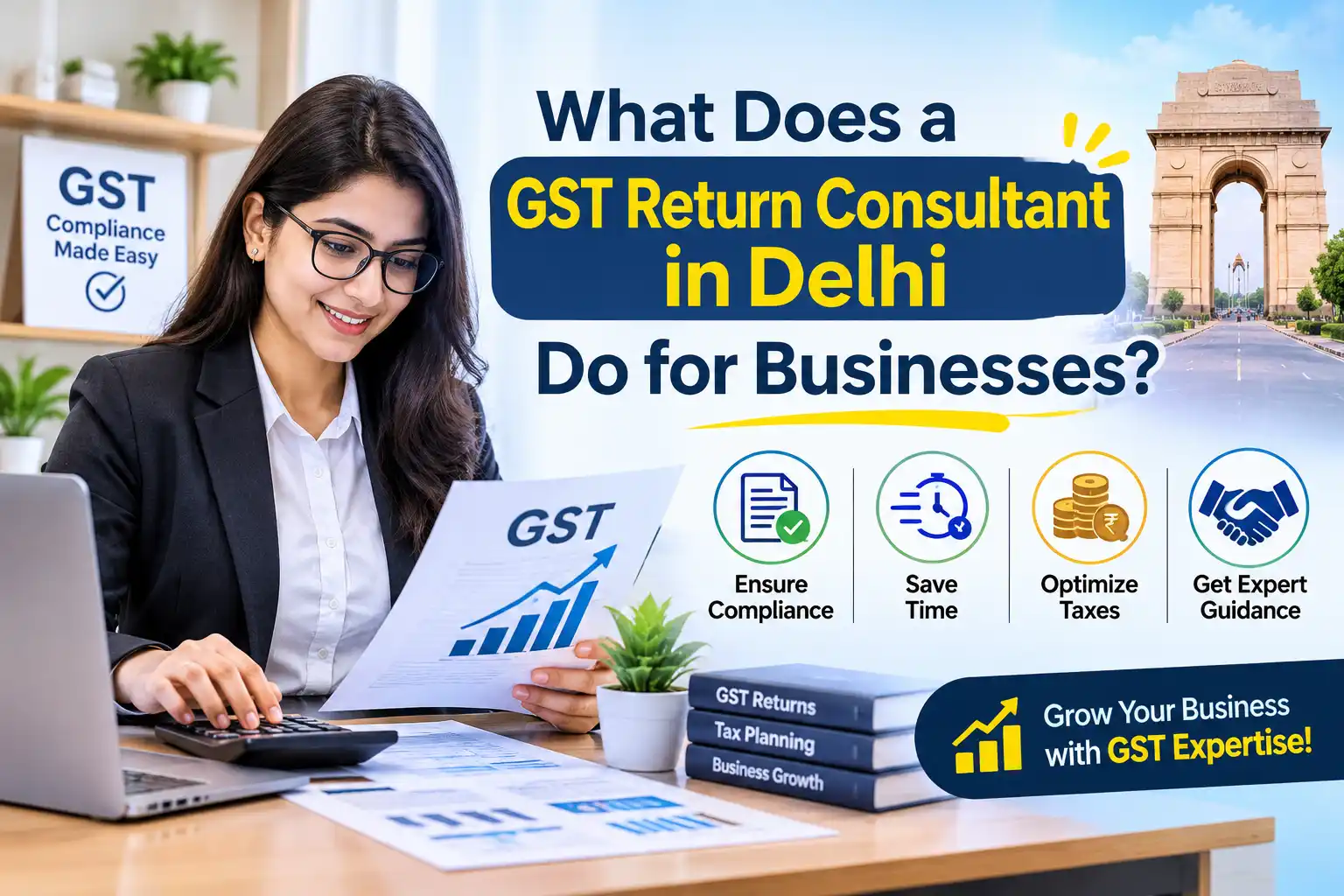
Managing Goods and Services Tax (GST) compliance is an important responsibility for businesses operating in India. From calculating tax liabilities to filing returns and maintaining accurate financial records, every step requires attention to detail. This is where a GST Return Consultant in Delhi becomes valuable. These professionals help businesses manage their GST obligations, avoid filing mistakes, understand tax regulations, and maintain compliance with government requirements. Whether you run a small business, a startup, a retail store, or an established company, working with an experienced consultant can simplify tax management and allow you to focus on business growth.
Understanding the Role of a GST Return Consultant in Delhi
A GST return consultant is a tax professional who assists businesses with different aspects of GST compliance. Their primary responsibility is to ensure that tax returns are prepared accurately and submitted within the applicable deadlines.
GST regulations require registered businesses to report details of their sales, purchases, input tax credit, and tax payments through prescribed returns. Managing these requirements without professional assistance can become challenging, particularly for businesses handling numerous transactions.
A consultant understands the GST framework and helps businesses follow the applicable rules. Their services generally include reviewing financial records, calculating tax liabilities, reconciling invoices, preparing returns, and identifying discrepancies before submission.
They also guide business owners when GST regulations change or new compliance requirements are introduced. This professional support reduces administrative pressure and helps businesses maintain organized tax records throughout the financial year.
1. Preparing and Filing GST Returns Accurately
One of the most important responsibilities of a GST Return Consultant in Delhi is preparing and filing GST returns. Every registered taxpayer must follow the return requirements applicable to their registration category and business activities.
Different GST returns serve different purposes. For example, GSTR-1 contains details of outward supplies, while GSTR-3B is a summary return used for reporting tax liabilities and discharging applicable tax payments.
A consultant reviews business transactions and prepares the necessary information before filing. They check sales invoices, purchase records, debit notes, credit notes, and other relevant documents to reduce reporting errors.
Their filing responsibilities may include:
- Collecting and organizing sales and purchase invoices.
- Preparing outward supply details for applicable returns.
- Reviewing tax calculations and input tax credit claims.
- Filing applicable GST returns within prescribed deadlines.
- Checking filing acknowledgements and maintaining records.
Timely and accurate filing helps businesses avoid unnecessary penalties, interest, and compliance complications. It also ensures that their GST records remain consistent with their accounting information.
2. Managing Input Tax Credit (ITC) and Reconciliation
Input Tax Credit is an important feature of the GST system. It allows eligible registered businesses to claim credit for GST paid on qualifying business purchases, subject to applicable conditions and restrictions.
However, claiming ITC requires proper documentation and verification. Incorrect claims, missing invoices, or differences between purchase records and supplier-reported information can create compliance problems.
A consultant helps businesses review their purchase registers and compare them with relevant information available through GST portal statements, including GSTR-2B.
This reconciliation process helps identify missing invoices, mismatched tax amounts, duplicate entries, and potentially ineligible credit claims. Consultants also guide businesses in understanding the conditions for claiming and reversing ITC under applicable GST provisions.
Proper ITC management offers several advantages. It helps businesses reduce avoidable tax costs, maintain accurate accounts, and prevent discrepancies during departmental assessments or audits.
For companies dealing with multiple suppliers and frequent purchases, regular reconciliation is particularly important because even small errors can affect overall tax calculations.
3. Providing GST Registration and Compliance Guidance
GST registration is another area where professional assistance can make a difference. Businesses meeting the applicable registration requirements must complete the registration process and obtain a GST Identification Number (GSTIN).
A GST Consultant in Delhi helps business owners understand whether registration is required based on their turnover, business activities, nature of supplies, and applicable provisions.
The consultant can also assist with preparing registration documents, completing online applications, responding to clarification notices, and making necessary amendments to registration details.
Beyond registration, businesses may require guidance on several ongoing compliance matters, such as:
- Understanding applicable GST rates and HSN or SAC classifications.
- Maintaining proper tax invoices and supporting documents.
- Updating business details when relevant information changes.
- Understanding reverse charge mechanism requirements.
- Following e-invoicing and e-way bill provisions where applicable.
This guidance is especially helpful for newly established businesses that may not be familiar with GST procedures. Professional support ensures that business owners understand their responsibilities instead of relying on assumptions or incomplete information.
4. Handling GST Notices, Errors, and Compliance Issues
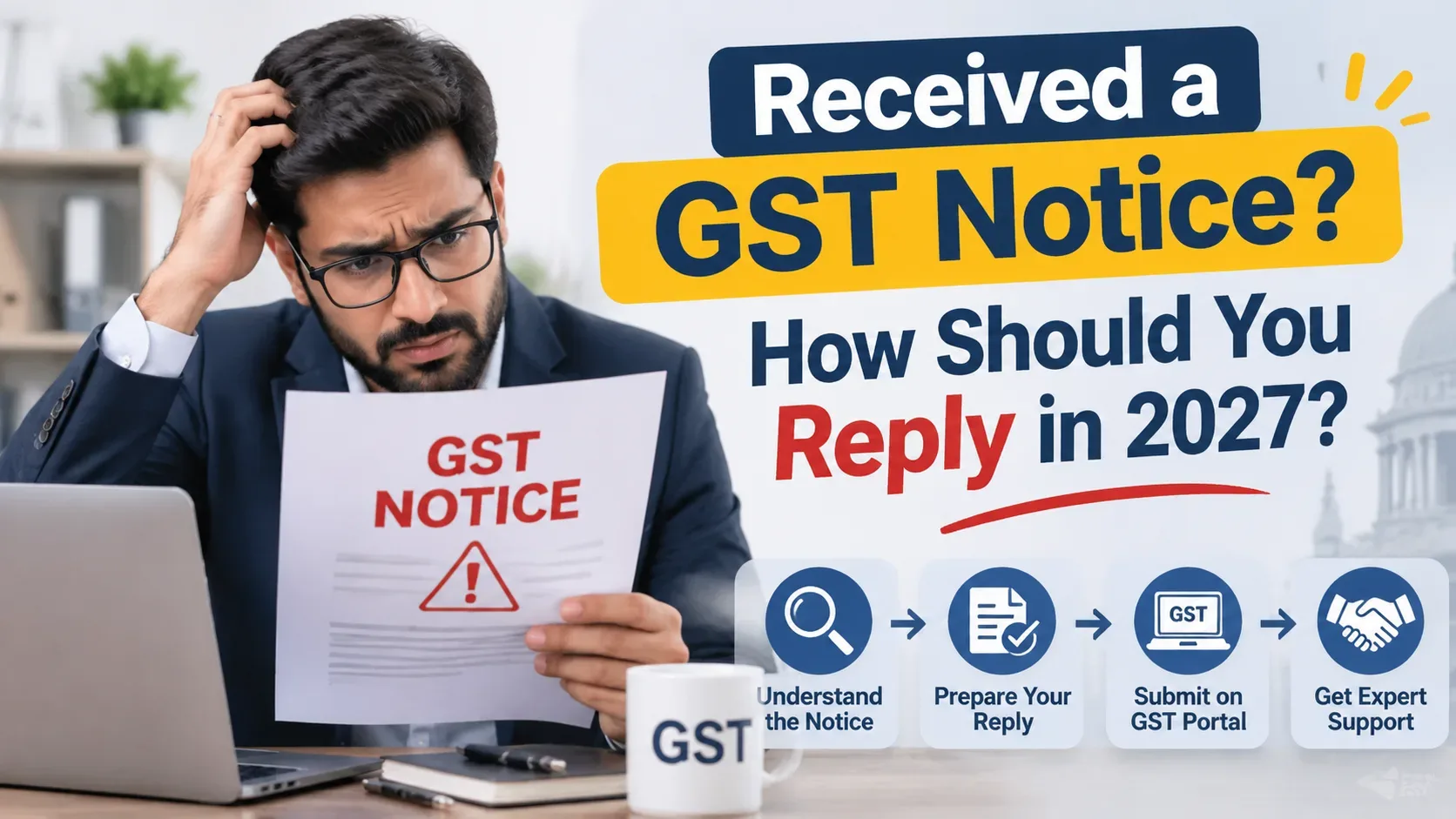
Receiving a GST notice can be stressful for business owners, particularly when they do not understand the reason behind it. Notices may relate to differences in reported turnover, incorrect ITC claims, delayed returns, unpaid tax liabilities, or other compliance concerns.
A consultant helps businesses understand the nature of the notice and identify the information or documents required to address it.
They review relevant GST returns, invoices, payment records, and accounting statements to understand the issue. Depending on the situation, they may assist in preparing replies, correcting eligible reporting errors, and guiding businesses through the appropriate response process.
Professional assistance is also useful when businesses discover mistakes in previously filed returns. Consultants can explain the available correction mechanisms, applicable deadlines, and legal requirements.
However, not every GST notice indicates wrongdoing. Some notices arise from data mismatches or documentation issues. Understanding the actual reason is important before taking corrective action.
5. Maintaining Financial Records and GST Documentation
Accurate documentation is essential for effective GST compliance. Businesses must maintain relevant records of purchases, sales, stock, tax payments, and other transactions as required under GST law.
A consultant helps businesses establish an organized record-keeping process so that financial information remains accessible and consistent.
This includes reviewing accounting entries, checking invoice details, maintaining purchase and sales registers, and ensuring that supporting documents are properly recorded.
Well-maintained documentation offers multiple benefits. It makes return preparation easier, supports eligible ITC claims, and helps businesses respond to departmental queries with relevant evidence.
It also improves financial transparency. Business owners can understand their tax expenses, identify accounting discrepancies, and make better financial decisions.
For growing companies, maintaining accurate GST records becomes increasingly important as transaction volumes and compliance responsibilities increase.
6. How a Professional GST Consultant in Delhi Supports Business Growth
GST compliance is not limited to submitting returns. It also affects financial planning, cash flow management, supplier relationships, and everyday business operations.
A consultant provides guidance that helps businesses understand their tax responsibilities and avoid preventable compliance difficulties.
For example, incorrect tax classification may result in reporting problems, while delayed reconciliation can affect eligible ITC claims. Professional review helps identify such issues before they become more complicated.
Businesses working with the Best GST Return Consultant in Delhi can benefit from organized filing schedules, regular compliance reviews, and guidance based on their business requirements.
A reliable consultant can also coordinate with accountants and finance teams to ensure that GST information matches the company’s accounting records.
This support is particularly beneficial for small and medium-sized enterprises that may not have a dedicated in-house tax department. Instead of spending valuable working hours understanding every procedural requirement, business owners can focus on sales, customer service, operations, and expansion.
When Should a Business Hire a GST Return Consultant?
Not every business has the same level of GST complexity. Some small businesses may manage basic compliance internally, while others require regular professional assistance.
Hiring a consultant becomes particularly useful when transaction volumes increase, multiple GST registrations are involved, or the business faces difficulties with return filing and reconciliation.
You should consider professional assistance when:
- Your business frequently misses GST filing deadlines.
- You experience differences between purchase records and GSTR-2B.
- You are unsure about applicable GST rates or tax calculations.
- Your business receives GST notices or departmental queries.
- You want to improve financial documentation and compliance practices.
- You are expanding operations and need better tax management.
An experienced consultant can assess your business requirements and suggest suitable compliance support. Choosing the right professional at the appropriate stage can prevent avoidable errors and make tax management more efficient.
How to Choose the Right GST Return Consultant in Delhi?
Selecting a consultant requires more than comparing service charges. Businesses should consider professional experience, knowledge of GST regulations, communication, and the ability to handle their specific compliance requirements.
The right consultant should understand your industry, transaction structure, and filing responsibilities. They should also explain tax-related matters clearly rather than using complicated terminology that business owners may struggle to understand.
Before selecting a consultant, consider the following factors:
Experience and GST Knowledge: Check whether the professional has experience handling GST registration, return filing, ITC reconciliation, and notice-related matters.
Accuracy and Timely Filing: Ask about their process for collecting documents, reviewing transactions, and completing returns before deadlines.
Transparent Fees: Understand the services included in the quoted fees and whether additional charges apply to specific compliance activities.
Communication and Support: Choose someone who responds to queries, provides filing updates, and explains relevant compliance requirements.
Business-Specific Assistance: Ensure that the consultant can handle your transaction volume, industry requirements, and future compliance needs.
Businesses looking for dependable tax support can explore professional accounting and GST compliance services offered by Grover S & Company. The goal should always be to establish a reliable working relationship that supports accurate reporting and long-term compliance.
Conclusion
A GST return consultant plays an important role in helping businesses manage taxation responsibilities without unnecessary complications. From return preparation and ITC reconciliation to registration, documentation, and notice management, professional guidance makes GST compliance more organized and manageable.
Working with a GST Return Consultant in Delhi can help businesses reduce filing errors, maintain accurate financial records, and understand their statutory obligations. Choosing an experienced professional also allows business owners to spend more time improving operations and achieving sustainable growth.
Frequently Asked Questions (FAQs)
1. What does a GST return consultant do?
A GST return consultant helps businesses prepare and file GST returns, manage ITC, maintain tax records, and address compliance-related issues.
2. Is hiring a GST consultant mandatory for businesses?
No, hiring a consultant is generally not mandatory. However, professional assistance can simplify GST compliance and reduce filing mistakes.
3. How often should businesses file GST returns?
Filing frequency depends on the taxpayer’s registration category and applicable scheme. Returns may be monthly, quarterly, or required at other prescribed intervals.
4. Can a GST consultant help with GST notices?
Yes. A consultant can review GST notices, examine relevant records, and assist with preparing appropriate replies and corrective actions.
5. How can I find a reliable GST consultant in Delhi?
Look for a professional with relevant GST experience, transparent pricing, accurate filing practices, and the ability to provide timely compliance support.
2 Responses