For salaried employees, self-employed professionals and business owners in India, choosing the right income tax regime is a key financial decision. If you are looking for CA in Rohini Sector 16, the knowledge of the difference of the two tax regimes can help you in making better financial decisions. Old vs New Tax Regime Calculator Compare your estimated tax liability under income, eligible deductions and exemption for Tax Year 2026-27.
Both regimes have different tax rates and tax saving provisions. Compare them so you can make a better choice about which option to go for your money.
Old Tax Regime vs New Tax Regime: What’s the difference?
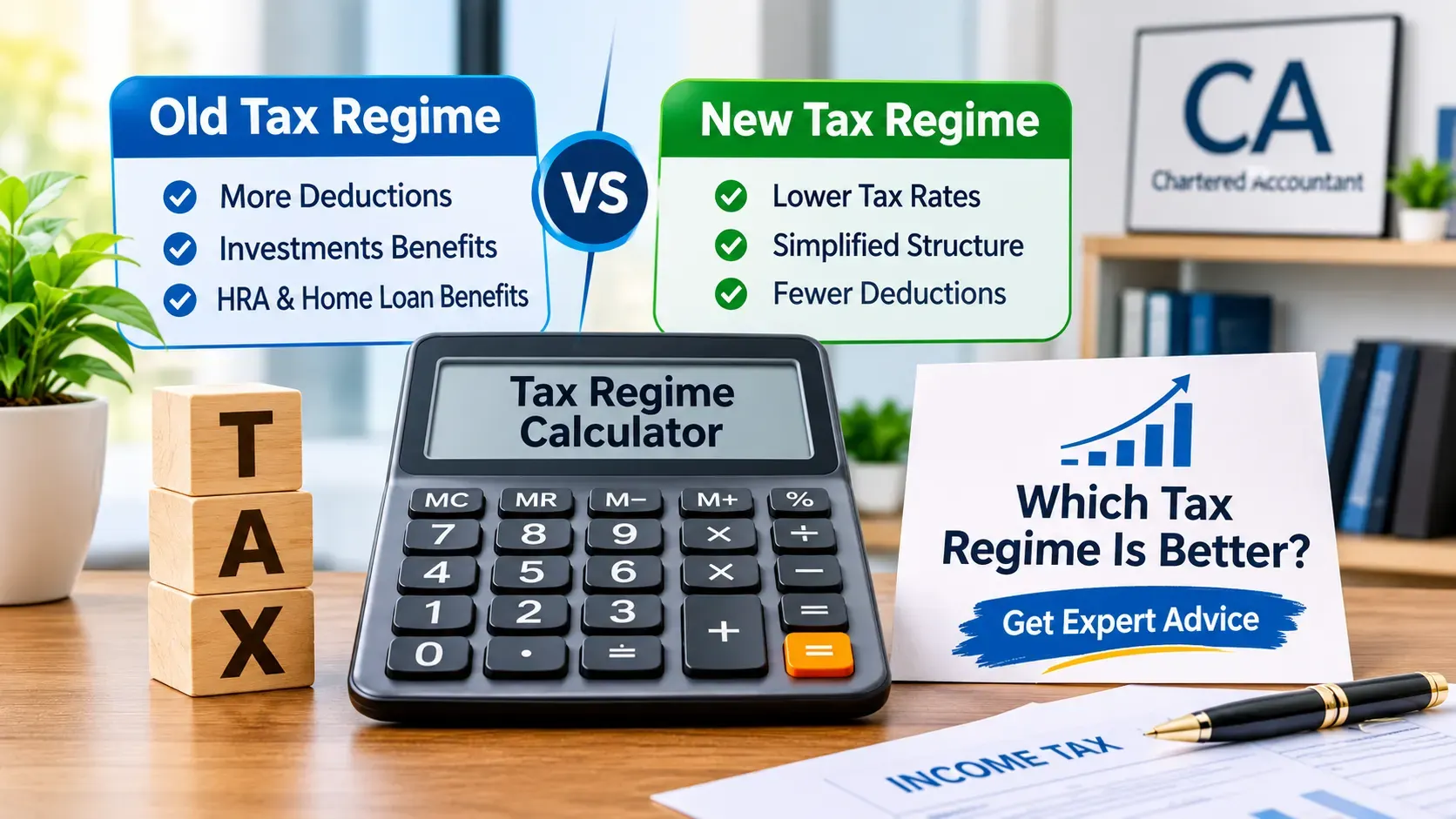
For eligible individual taxpayers, India offers two tax regime options. The Old Tax Regime allows taxpayers to claim various eligible deductions and exemptions whereas the New Tax Regime has revised income tax slabs with lesser deductions.
Under the Old Tax Regime, taxpayers can claim eligible investments, health insurance premiums, House Rent Allowance (HRA) exemptions and deductions for qualifying home loan interest. Such benefits are deductible from taxable income under the applicable conditions.
The New Tax Regime offers lower tax rates across the income slabs, but it limits several deductions available in the Old Tax Regime. It is the default option but eligible taxpayers can choose Old Tax Regime as per applicable rules.
The Income-tax Act, 2025 shall come into force from 1st April, 2026 for the Tax Year 2026-27 and onward.The new law will make the new tax regime the default tax option.
New Tax Regime Income Tax Slabs for 2026-27
The income tax slabs under the New Tax Regime for Tax Year 2026-27 are as follows:
| Taxable Income | Tax Rate |
|---|---|
| Up to ₹4 lakh | Nil |
| ₹4 lakh to ₹8 lakh | 5% |
| ₹8 lakh to ₹12 lakh | 10% |
| ₹12 lakh to ₹16 lakh | 15% |
| ₹16 lakh to ₹20 lakh | 20% |
| ₹20 lakh to ₹24 lakh | 25% |
| Above ₹24 lakh | 30% |
Individuals resident in India and having total income up to ₹12 lakh may be eligible for a rebate of up to ₹60,000 under the relevant provisions of rebate, subject to conditions of eligibility. Where income is above the specified threshold there may also be marginal relief available. Different rules apply to income at a special rate.
Final Tax to be paid is based on Taxable Income , Deductions Eligible , Rebate , Surcharge and Applicable Cess .
How Old vs New Tax Regime Calculator Helps?
Taxpayers can use Old vs New Tax Regime Calculator to estimate their income tax liability under both the tax regimes. It considers relevant income details, eligible deduction and exemptions to provide a comparison of estimated tax payable.
For instance, let’s say you have a salaried employee who earns ₹15 lakh a year. If the employee has considerable eligible investments, health insurance premiums, HRA exemptions and home loan interest that qualifies, then the Old Tax Regime may be worth considering. But it may be more beneficial to an employee having fewer eligible deductions under the New Tax Regime.
The actual result will depend on your income and the tax provisions that apply. You can compare your tax liability under both regimes for the relevant tax year using the official Income Tax Department Calculator.
Which is a Better Tax Regime for Salaried Employees?
The right tax regime depends on your salary structure, investment habits and financial commitments. The Old Tax Regime may be more beneficial for those employees who invest regularly in the eligible tax saving instruments, pay rent or get the home loan benefits.
In contrast, employees with lower deductions may opt for the New Tax Regime because of its revised tax slabs and simplified structure. Salaried persons should consider their total taxable income and eligible benefits while choosing a regime.
What are the Deductions available under Old Tax Regime?
There are several ways to reduce the taxable income under the Old Tax Regime by availing permissible deductions and exemptions.
Under the old Income-tax Act, some of the popular tax saving provisions were Section 80C for eligible investments such as contribution to Public Provident Fund and eligible life insurance premiums and Section 80D for eligible health insurance premiums. Salaried employees can also enjoy HRA exemption and home loan interest deduction subject to terms and conditions.
The Income-tax Act, 2025 has been updated with Statutory references and provisions for Tax Year 2026-27.Taxpayers should review the relevant provisions under the new law before claiming deductions. Most commonly used deductions are restricted in the New Tax Regime although specified benefits are available. Eligible salaried taxpayers shall be entitled to claim the applicable standard deduction as per relevant rules.
Why hire CA in Rohini Sector 16 for income tax planning?
Choosing a tax regime is more than just looking at income tax rates. Your final tax liability will be greatly affected by your income sources, investments, exemptions, and financial obligations.
A CA professional in Rohini Sector 16 will help you understand the applicable tax provisions, compare both the tax regimes, prepare the income tax returns and help you identify the eligible tax-saving opportunities. Salaried employees, self-employed people and business owners can also get help with their tax obligations from professional guidance.
We are Professional CA Services and we can help you in GST Compliance, Accounting, Financial Reporting, Tax Documentation, Income Tax Planning and ITR Filing.Ensure you are compliant with all applicable tax rules and maintain good financial records to avoid compliance errors.
Choose the Correct Tax Option 2026/27
To decide between old and new tax regime, you need to know your income, deductions you can claim and your financial objectives. Old vs new tax regime calculator is a good tool but you have to see the whole financial picture.
Tax Planning ITR Filing Chartered Accountant in Rohini Sector 16 Financial Compliance & Smart Financial Decisions.