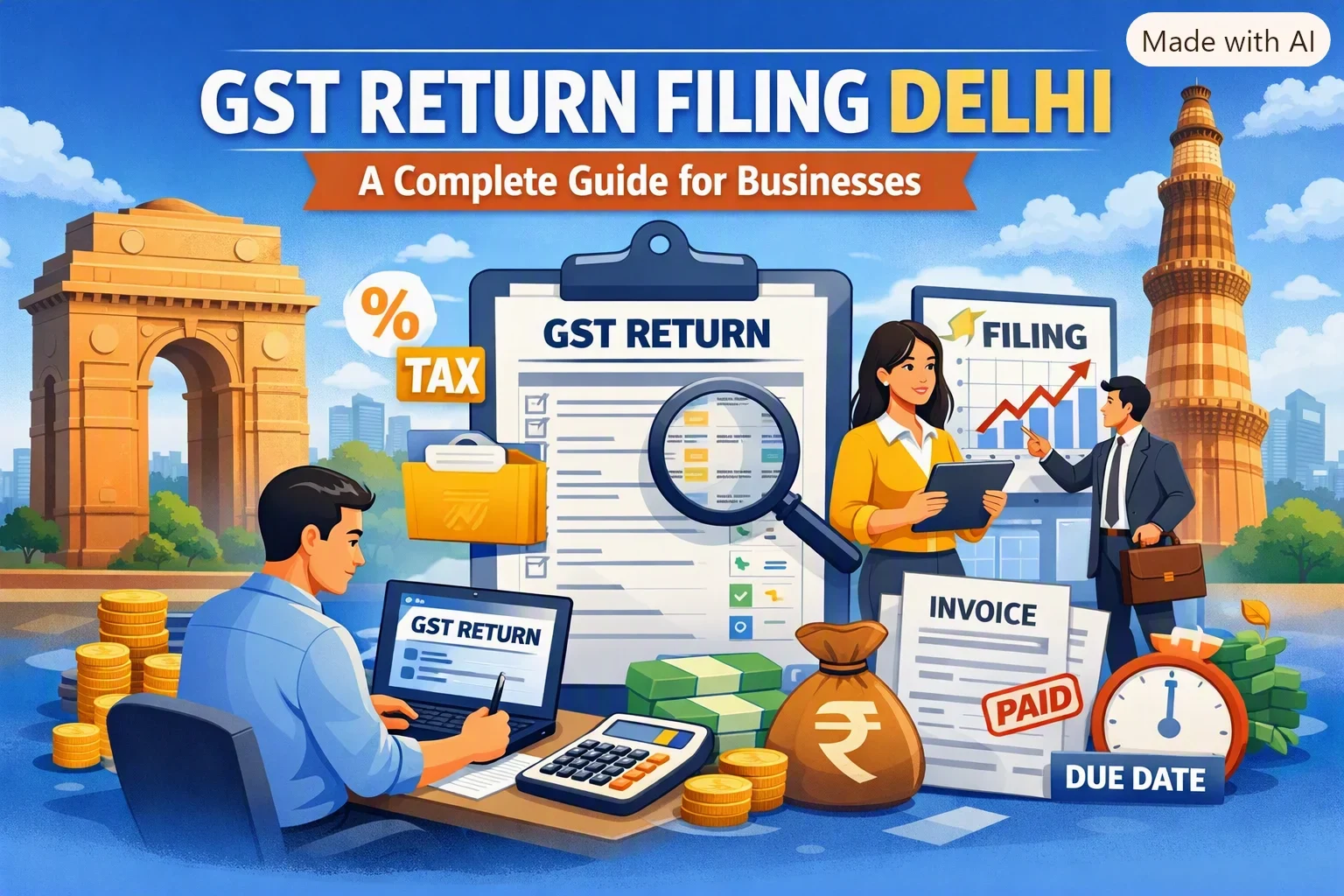
In case you have enrolled your business under the Goods and Services Tax (GST) regime in India, then filing your GST returns is your responsibility. Whether you are a startup, retail business, trading company or a consulting firm in Delhi, timely and accurate filing will ensure compliance, allow you to use your input tax credits and save you costly mistakes.
Professional GST Return Filing Services in Delhi for Business dealing with Invoices, Purchases & Taxes.These services will help with records organization and make it easier to meet compliance requirements.
What is filing GST returns?
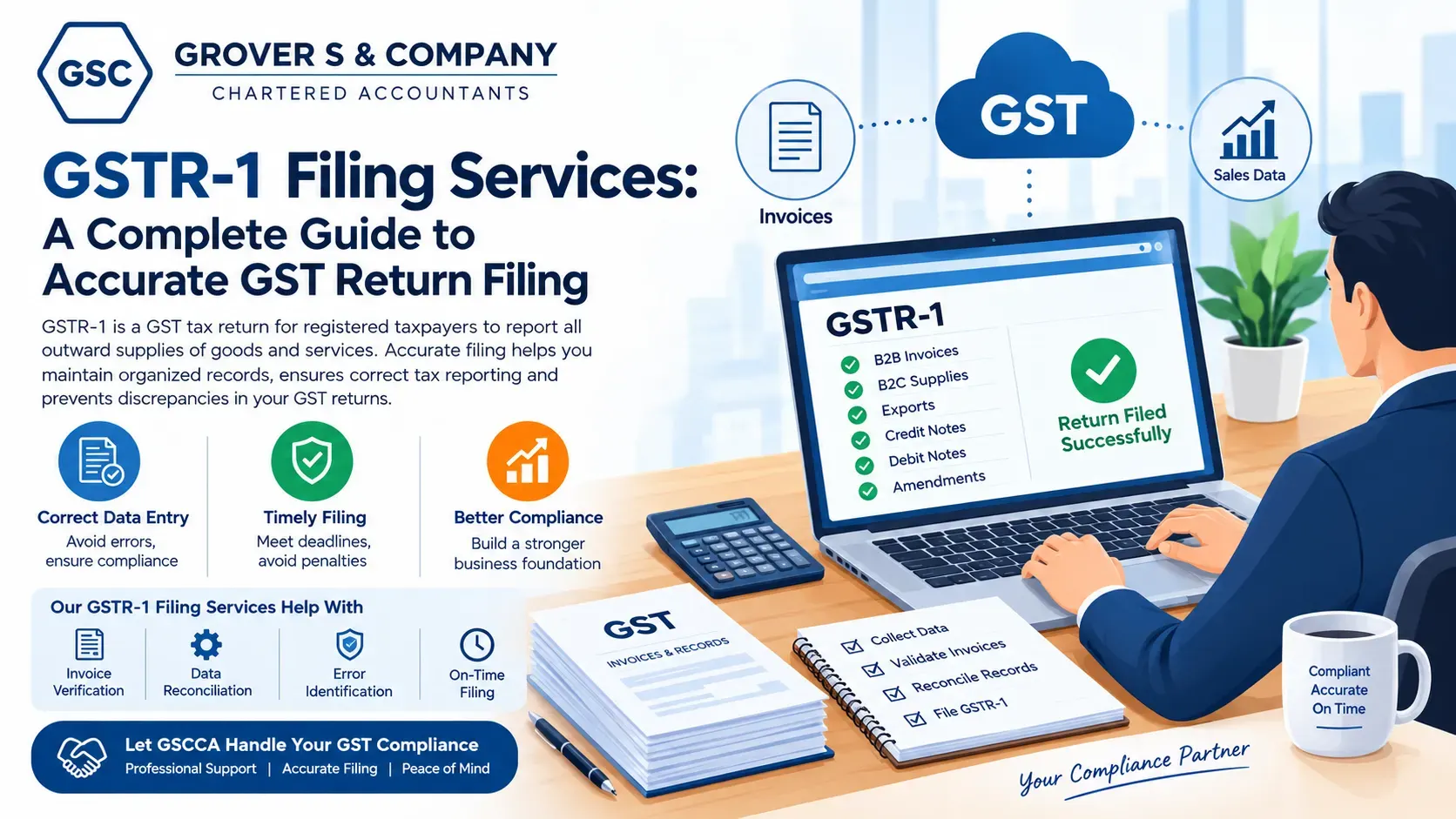
GST Return Filing refers to the process of filing reports with the government regarding business transactions, sales, purchases, tax liabilities, and potential input tax credits, using specific GST forms. What kind of returns a taxpayer will file depends upon the taxpayers category (e.g. regular, composition) and the type of business activity they engage in.
The majority of taxpayers file a GSTR-1 to report the outward supply made by them, and file a GSTR-3B to declare the tax liability that they owe and the eligible input tax credits available to them. It is recommended for businesses to confirm the specific filing requirements applicable to them via the official GST portal.
Why GST Return Filing Is Important for Businesses in Delhi
The business environment in Delhi includes many different types of businesses such as; traders, retailers, manufacturers, start-ups, and service providers. Accurately keeping track of GST records allows businesses to accurately record transactions, as well as being able to match up invoices to their respective accounting records.
A trading company, for instance, which does not produce a sales invoice can result in inaccurate information reported on their GST return. Reconciling records regularly will help to find these inaccuracies and ensure that the company reports accurately.
How to File GST Returns for a Small Business in Delhi
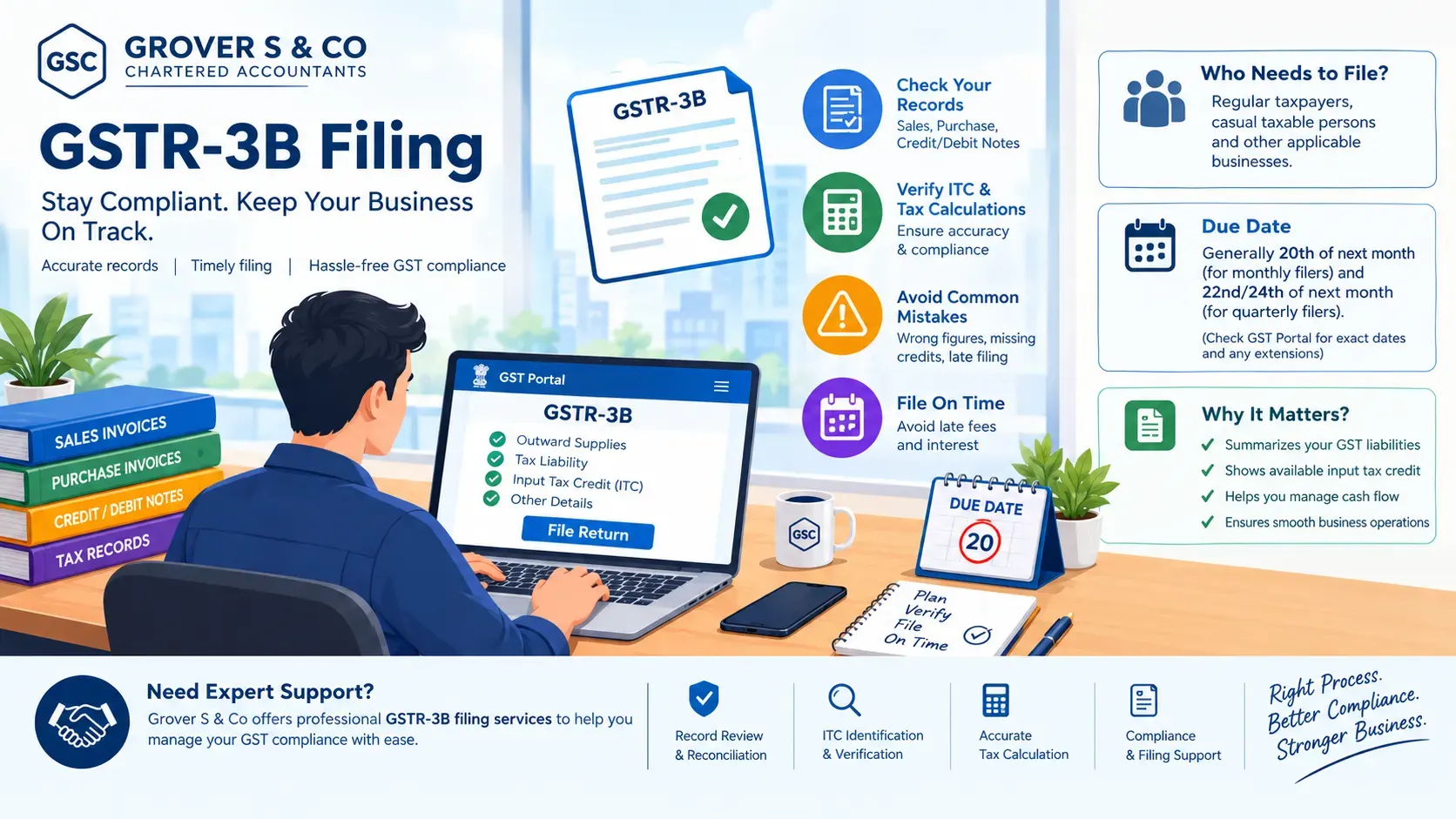
The process starts by organizing all sales invoices, purchasing invoices, debit notes, credit notes, and any other financial accounting documentation. In case of a scrutiny of input tax credits, organizations would have to match their records with the GST portal’s records, which include GSTR-2B.
After verifying the accuracy of the transaction, as well as the amount of taxes that may be due on those transactions, the taxpayer then fills out the appropriate tax return, double-checks the data provided within the return, and files the return using the established filing procedure. It is also important to maintain copies of all filed tax returns and supporting documentation.
If a company is new to this process, it may wish to take the help of a qualified professional experienced in preparing and reviewing such documents.
Documents Required for GSTFiling of Return?
Records are based on what the company does and how many transactions have occurred. Some of the most common records that are required include sales invoices, purchase invoices, debit notes, credit notes, expense records, and applicable accounting reports.
E-commerce businesses selling across state lines will likely require more transaction-level detail. Previous tax returns & GST ledgers will help with reconciliations.
Keeping these records in order all month long will help a business find any missing invoices, incorrect GSTINs, and differences in taxable value prior to submitting.
Common GST Return Filing Mistakes and How to Avoid Them
Common errors include not creating sales invoices, typing in an incorrect GSTIN, using the wrong tax rate, and reporting amounts that do not correspond to the accounting records.
As well as creating a risk of non-compliance, errors with input tax credits can lead to other compliance issues. Therefore, businesses should examine their GSTR-2B; confirm that they have all the required documentation; and ensure that they qualify for the tax credits based upon the relevant sections of the GST law prior to claiming them.
Compliance calendars and regular review of records can assist with reducing risks associated with missing filing deadlines (e.g., late fees, possible interest charges, etc.).
Businesses need to know if they must file a ‘nil’ return when there has been no business activity during that time.
Understanding GST Return Filing Due Dates
The due date for filing GST returns will depend on the return form being used, the type of taxpayer (i.e. individual vs business), and whether the taxpayer files monthly or quarterly. Monthly GSTR-1 returns are typically due by the eleventh of each month. However, quarterly filed GSTR-1 returns are generally due by the thirteenth of the month following the end of each quarter. GSTR-3B has its own applicable deadlines.
The deadline for filing of returns should be confirmed by each business using the GST Portal or relevant notification, as there may be extensions and/or special provisions.
How GST Compliance Services in Delhi Can Help
The professional services for GST compliance will assist with the preparation of returns, reconciliation of data, review of input tax credits, calculation of taxes, as well as the identification of error in reports.
The creation of a systematic filing process will help small business owners and start-ups alleviate administrative burdens, as well as enhance their ability to maintain records. Regardless, small business owners and start-ups must continue to document transactions thoroughly and accurately in order to facilitate proper filing procedures.
Choose Reliable GST Return Filing Services in Delhi
As long as you’re doing accurate bookkeeping, reconciling your accounts on a regular basis, and knowing what GST is required for your business, you’ll be well-positioned to maintain an ongoing level of compliance. It’s much better to prepare your records ahead of time than to wait until the last minute before filing.
Grover S & Company is a CA firm located in North Delhi that may be contacted regarding filing GST returns and other tax compliance issues. The type of assistance provided will depend on several factors including: the business’s registration category; the frequency with which the business files its tax returns; and the volume of transactions the business conducts.
Contact Grover S & Company so we can help you with your GST compliance needs, as well as determine what type of expert service would be best for your company.