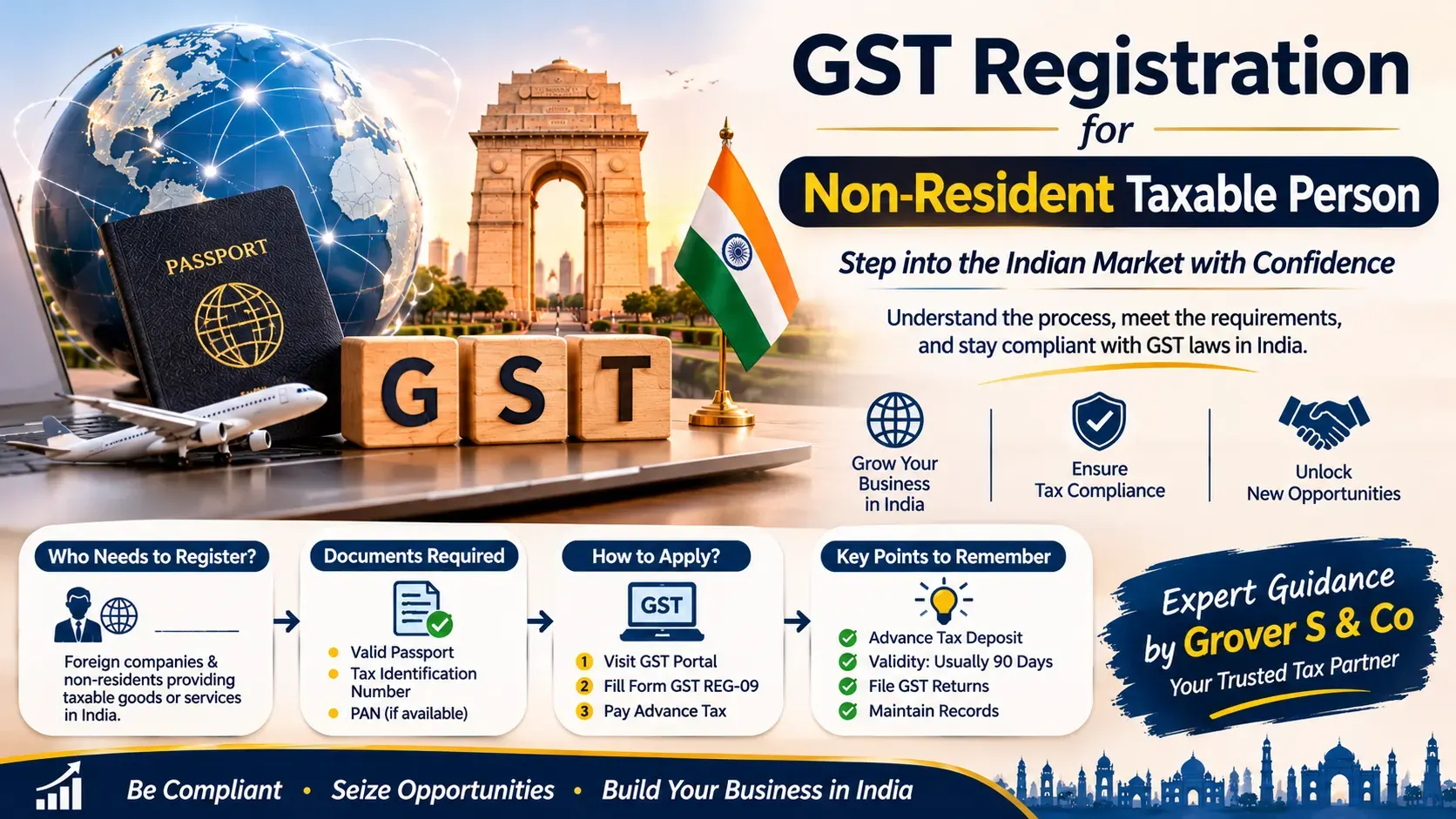
GST Registration for Non-Resident Taxable Person
International traders and entrepreneurs coming from abroad to enter the Indian market provide a wide range of potential opportunities for foreign companies. It is important to understand the tax laws of the country to run a business in India.One such law that can impact businesses overseas is the registration requirement for non-resident taxable persons under Goods and Services Tax (GST).
This unique category of registration will apply to non-residents (individuals or entities) who occasionally provide taxable goods and services in India, but do not have a permanent establishment or residential address within the country. The specific requirements for being registered under this category depend upon the type of business and transaction being undertaken by the non-resident.
For example, if a foreign company is participating in an Indian trade show and wants to sell their goods, they will have to apply for the registration before commencing any taxable business operations.
Who is a Non-Resident Taxable Person required to register for GST?
Foreign companies planning to do business temporarily in India should verify if they are covered under the definition of “non-resident taxable persons” under the Central Goods and Services Tax Act.
This may cover overseas sellers selling their products at exhibitions, foreign companies participating in brief term sales events and international businesses making taxable supplies that are eligible for taxation in India.
The general requirement for registration under Section 24 of the CGST Act is applicable to non-resident taxable persons (as defined under this section) regardless of whether they have generated sales in excess of the specified turnover limit or not. As such, businesses must understand that having a lower level of sales does not necessarily eliminate the obligation to register.
There are however other regulations that will govern businesses that operate via the internet, export their services to customers in India, or have established a business in India. Reviewing the business model prior to application can assist with identifying which GST registration category is appropriate.
Documents Required for GST Registration
Preparing the necessary documentation prior to applying for registration will allow for a smoother application process. Under Rule 13 of the CGST Rules, the applicant is normally required to submit Form GST REG-09 with a self-attested copy of a valid passport.
The applicant’s Tax Identification Number or any other form of identification used by the applicant’s home country would usually need to be included. If the applicant has a Permanent Account Number (PAN), that could be useful as well.
An authorized signatory who lives in India and has a current PAN must sign or verify via electronic signature the application. All applicants must verify their business information and required documentation for accuracy prior to submitting the application.
How to Apply for GST Registration
The application process for the registration under the GST (Goods and Service Tax) Act, 2017 should start prior to the commencement of taxable supply by the applicant in India. All eligible applicants can apply online using Form GST REG-09 through the official website of GST portal i.e., www.gst.gov.in. Applicants have to file this application at least 5 days prior to starting their business operations.
Upon initiation of the application, the portal provides a temporary reference number to provide the opportunity to make an early payment of the estimated tax liability. This required payment must be completed prior to issuing the application acknowledgement.
The tax authorities may confirm the accuracy of the provided information prior to giving an approval for registration. In the event that further explanations or additional documents are needed from the applicant, the applicant will need to reply to the request within the stated time frame.
Foreign businesses need to be proactive with their planning for the process, instead of being reactive and doing so at the last minute. Being proactive will give them more time to collect necessary documentation, determine their possible tax liabilities, and identify any possible problems that may arise during the application process.
Advance Tax Deposit and Registration Validity
The most significant aspect of the registration process under the GST for non-resident taxable persons is that they need to make a prepayment of the estimated tax payable on their transactions during the registration period. The provisions in Section 27 of the CGST Act require the applicant to pay in advance an amount equivalent to the estimated GST liability for the duration of the registration.
The estimated amount of taxable sales that will be made during a period of time should be calculated. This estimate should also include the rate at which the goods and services tax (GST) is likely to apply. If the estimate of either of these two items is not accurate, there could be cash flow issues or additional work required to comply with regulations at a later date.
Registration is usually effective for the amount of time indicated on the application form, or for ninety (90) days after the effective date of the registration, whichever occurs first. If an applicant wishes to extend their registration they must submit the appropriate application prior to the expiration of the current registration, as well as meet all requirements that apply to extensions.
Businesses need to monitor their registration duration if an exhibition, trade show, or short term business activity lasts longer than expected.
GST Returns and Compliance Responsibilities
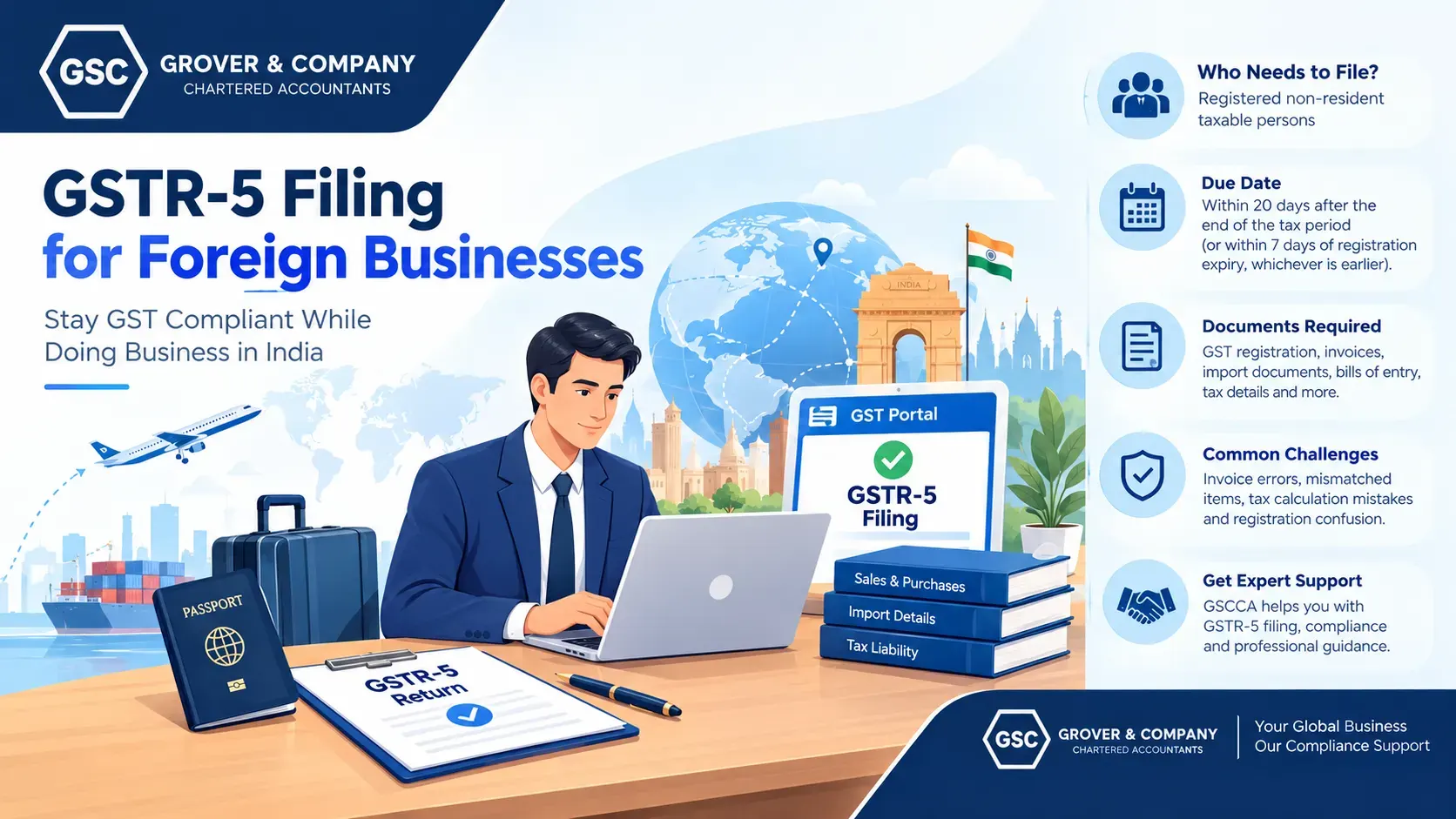
Receiving a GST registration certificate is only part of the compliance process. Non-resident taxable persons have to make appropriate tax payments, file returns and maintain records.
Businesses need to have precise sales invoices, transaction records and tax records. In addition, businesses are required to file reports on their taxable supplies, as well as pay any applicable GST in a timely manner. Businesses should verify the correct return forms and filing requirements based upon the most recent regulations.
Record keeping is especially vital for companies that engage in transactions with foreign currency, over seas suppliers, or on a global basis. Accurate records will provide companies the ability to accurately assess their sales and determine what taxes are owed. Additionally, the company will be able to answer any questions from the taxing authority.
How Grover S & Company Can Help
For an international business entering the Indian market for the first time, GST processes could be confusing. Selecting the appropriate registration type, collecting the necessary documentation, determining the amount of advance tax owed, and knowing what is required to file a return will take some thought.
Grover S & Co will provide professional advice to overseas companies regarding the need for GST registration, compliance with applicable laws, preparation of required documents and planning of future tax liabilities prior to commencing business activities.
Conclusion
An essential requirement for those non-resident taxable persons (foreign business entities) who are providing taxable goods or services in India is to obtain a GST registration. Obtaining a clear understanding of what is involved in this process, including the need to make an advance tax deposit, how long the registration remains valid, and what types of on-going compliance will be necessary can assist with avoiding potential problems.